Er

Reviewed by

Eran Yorkovsky · Founder, PickGrade

Head-to-head

Anker Nebula X1 vs Hisense PX3-Pro: Long-Throw or Laser TV?

On the numbers this is not a close fight, and we should say so plainly before explaining why you might still buy the projector that loses it.

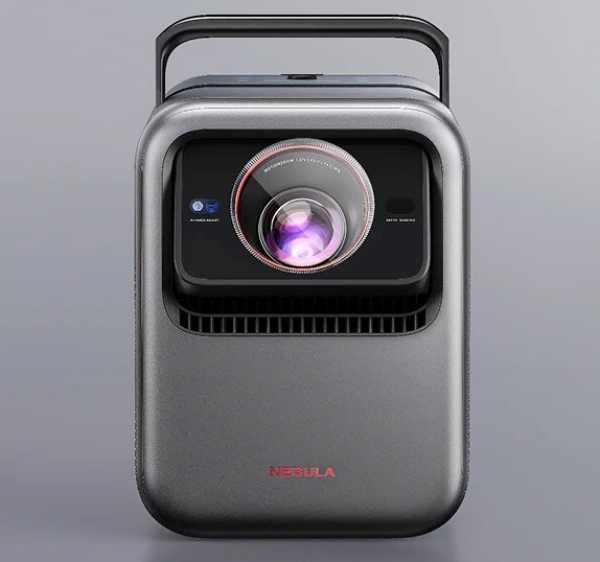
The Anker Nebula X1 measures brighter (3,074 to 3,491 ANSI against the PX3-Pro's 2,700 to 3,400), matches or beats it on native contrast (up to 6,432:1 against up to 6,350:1, which is close enough to call even), runs the same Google TV, and sells for around $2,199 against $3,499. The PX3-Pro also wants a matched ambient-light-rejecting screen to look its best, which adds several hundred dollars more. Spec for spec and dollar for dollar, the X1 wins.

And yet the PX3-Pro is the right projector for a lot of people, because it answers a question the X1 cannot answer at all: where does this thing go?

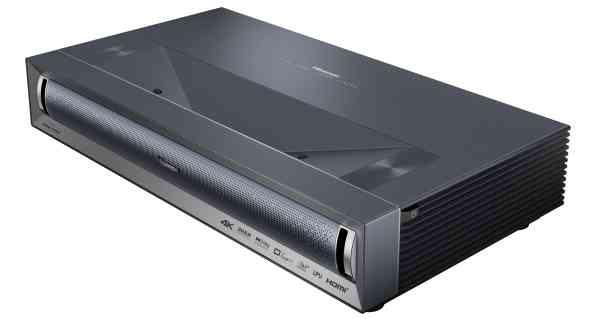
An ultra-short-throw laser TV sits on a console, inches from the wall, and throws an 80 to 150-inch image. No ceiling mount. No HDMI cable running the length of the room. No one walking through the beam on their way to the kitchen. It is furniture. It replaces the television, and it looks like it belongs where the television was. The X1 is a long-throw projector: it needs to be roughly nine feet back, on a table or a shelf or a mount, with power and signal reaching it, and someone standing up will cast a shadow.

That is the entire decision, and it has almost nothing to do with picture quality.

Where the PX3-Pro does win on merit is HDR coverage and gaming. It supports every format including HDR10+ (the X1 skips it), it measures near-full BT.2020 with ΔE around 0.9, and it is the first 'Designed for Xbox' UST with a 240Hz low-latency mode. The X1 is locked to 60Hz. If you game, that is a real gap.
Verdict
Anker Nebula
A 6-blade iris gives it the deepest blacks and richest color of any ~$3,000 all-in-one, and it hits its rated 3,500 lumens with no green 'boost' cheat. But it's 60Hz — great for movies and sport, not for gaming — and the gimbal lacks true lens shift.
Hisense
Near-full BT.2020 color, every HDR format, and 240Hz Xbox gaming make it the best all-round UST at the price — a real big-TV replacement inches from the wall. But like all USTs it wants a pricey ALR screen, has no lens shift, and its black floor trails a dark-room projector.
Best for
Anker Nebula
you want the best picture and black levels in the ~$3,000 class and effortless setup indoors or out
Hisense
you want a big-TV replacement that sits inches from the wall, with rich color and 240Hz Xbox gaming
Avoid if
Anker Nebula
you're a gamer who needs high refresh rates, or you must place it off-axis and need real lens shift
Hisense
you can't add a matched ALR screen, or you want the deep black levels of a dark-room long-throw projector
Score breakdown
setup
Anker Nebu
8.0
Hisense
7.0
value
Anker Nebu
8.5
Hisense
8.0
contrast
Anker Nebu
8.0
Hisense
7.5
color hdr
Anker Nebu
9.0
Hisense
9.0
brightness
Anker Nebu
8.5
Hisense
8.0
resolution
Anker Nebu
8.0
Hisense
8.0
smart sound
Anker Nebu
9.0
Hisense
8.5
Specs
HDR
Dolby Vision, HDR10, HLG
Dolby Vision, HDR10+, HDR10, HLG, IMAX Enhanced
Setup
Motorized micro-gimbal (25° tilt); no lens shift
Sound
40W (2x15W + 2x5W + 2 passive radiators); optional 4.1.2 Atmos satellites
50W Harman Kardon, Dolby Atmos
Weight
~6.2 kg
19.8 lb (9 kg)
Imaging
0.47" DLP, 4K via XPR pixel-shift
Smart OS
Google TV (native Netflix)
Google TV (native Netflix), AirPlay
Fan noise
<26 dB
Laser life
30,000 hours
25,000 hours
Color gamut
110% BT.2020, ISF-certified
~98% BT.2020, ~99.8% DCI-P3 (ΔE≈0.9)
Throw ratio
0.9–1.5:1 (optical zoom)
0.22:1 (80–150" screen)
Connectivity
2x HDMI (1x eARC), USB-A, USB-C, BT 5.1
3x HDMI (2x 2.1, 1x eARC), Wi-Fi 6E, BT 5.3, Ethernet
Light source
RGB triple laser, liquid-cooled
TriChroma RGB triple laser (LPU)
Refresh rate
60Hz
Native contrast
5,000:1 rated (6-blade dynamic iris)
3,000:1 rated (measured up to ~6,350:1)
Brightness (rated)
3,500 ANSI lumens
3,000 ANSI lumens
Brightness (measured)
~3,000–3,500 ANSI lumens
~2,700–3,400 ANSI lumens
Type
Ultra-short throw (laser TV)
Gaming
240Hz low-latency; Designed for Xbox

PickGrade may earn a commission from purchases made through links on this page, at no extra cost to you. This never affects our grades. Full disclosure.

PickGrade

The independent grading authority for the things you buy. Research once, decide fast — no sponsored top-10 lists.

Affiliate disclosure — PickGrade participates in affiliate programs, including Amazon Associates and partnerships managed through affiliate networks. We may earn a commission from qualifying purchases at no extra cost to you. This never affects our grades. Full disclosure.

Explore

Contact

Questions, feedback, or partnership inquiries?

admin@pickgrade.com

Company

© 2026 PickGradeNo sponsored placements · Ever

Final verdict

If your room can take a long-throw projector, buy the Anker Nebula X1. It is brighter, its blacks are at least as good, it needs no special screen, and it costs $1,300 less. That is not a close call. Buy the Hisense PX3-Pro when the room decides for you: no space behind the seating, no way to mount, no tolerance for cables, or a partner who is not having a projector on the ceiling. A laser TV that lives on the console and turns on like a TV is worth paying for, and the PX3-Pro is the best one at the price. Just budget for the ALR screen, and buy it for the geometry, not because you think it has the better picture. It does not.

Was this comparison useful?