Reviewed by
Eran Yorkovsky · Founder, PickGrade
Head-to-head
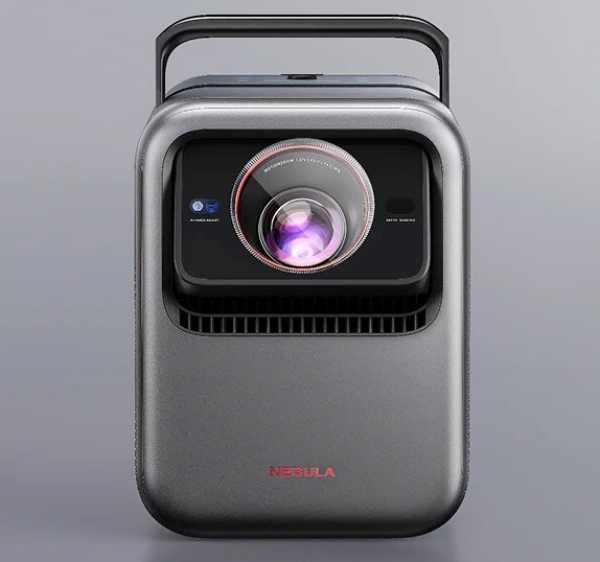
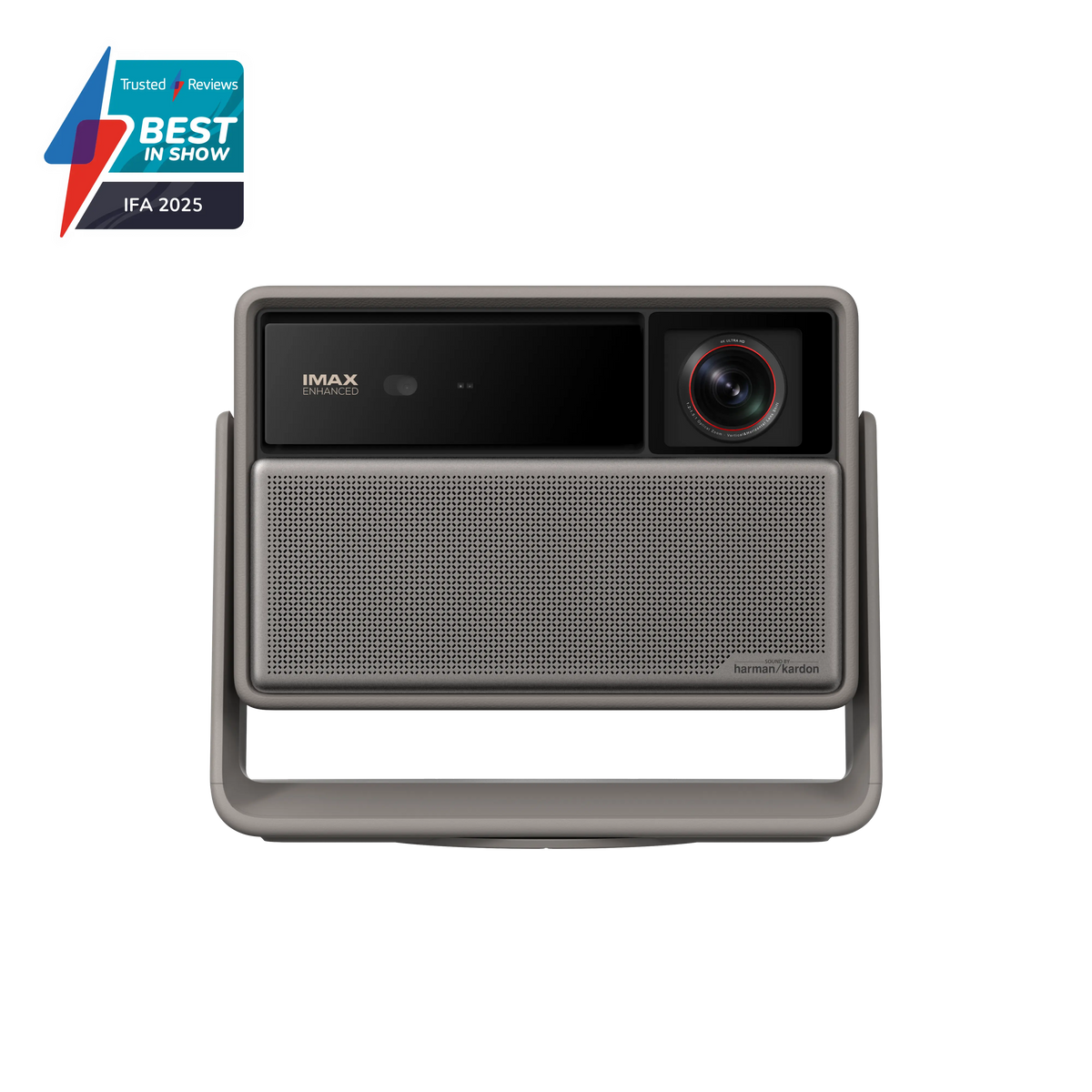
Anker Nebula X1 vs XGIMI Horizon 20 Max: Contrast vs Placement
This is the flagship matchup of the all-in-one triple-laser class, and the box numbers are useless for settling it. XGIMI rates the Horizon 20 Max at 5,700 ISO lumens and Anker rates the X1 at 3,500 ANSI. Measure them in a mode you would actually watch and the gap collapses: ProjectorJunkies recorded 3,242 ANSI for the Horizon and 3,074 for the X1; ProjectorCentral got 2,932 and 3,187 respectively. The Horizon's extra headroom is real, but it lives in a bright-green High Power mode with the fans howling, which is not a mode anyone watches a film in.
So ignore brightness. Two things actually separate these projectors.
The first is black level, and it is not close. The X1 carries a 6-blade dynamic iris, hardware borrowed from far pricier projectors, and ProjectorJunkies measured its native contrast up to 6,432:1, the highest they have ever recorded on a DLP projector. The Horizon 20 Max measures about 1,510:1. In a dark room the X1 renders shadow detail with depth; the Horizon renders it gray.
The second is placement, and here the Horizon wins outright. It has motorized zoom, motorized focus, and true lens shift, plus or minus 120% vertical, which is genuinely rare on a lifestyle projector. You can park it off to one side of the room and still square up a clean 120-inch image with no digital keystone and no lost pixels. The X1's motorized gimbal is clever and fast, but it is not lens shift: put it off-axis and you are cropping the image digitally to fix the geometry.
The rest goes to preference. Both run Google TV, both cover roughly 110% BT.2020 with sub-1 Delta-E accuracy out of the box. The Horizon adds HDR10+ and IMAX Enhanced, and games at 1080p/240Hz with 1ms lag. The X1 is locked to 60Hz but has the better speakers (40W, expandable to a 4.1.2 Atmos system against the Horizon's 24W Harman Kardon), and at the moment it is the cheaper of the two, around $2,199 against $2,599.
PickGrade may earn a commission from purchases made through links on this page, at no extra cost to you. This never affects our grades. Full disclosure.
Final verdict
Buy the Nebula X1 for the picture. Four times the native contrast is the single biggest visible difference between these two, it matches the Horizon's real-world brightness, its sound is better, and it currently costs less. Buy the XGIMI Horizon 20 Max for the room. If your only viable spot is off to one side, or on a shelf, or anywhere that is not centered on the screen, true lens shift solves a problem the X1 simply cannot solve, and 240Hz gaming is a bonus the X1 does not offer at all. Ignore the 5,700-lumen claim in either direction: it is not the reason to choose this projector, and it is not a reason to reject it.
Was this comparison useful?