Er

Reviewed by

Eran Yorkovsky · Founder, PickGrade

Head-to-head

Canon EOS R50 vs Nikon Z5 II

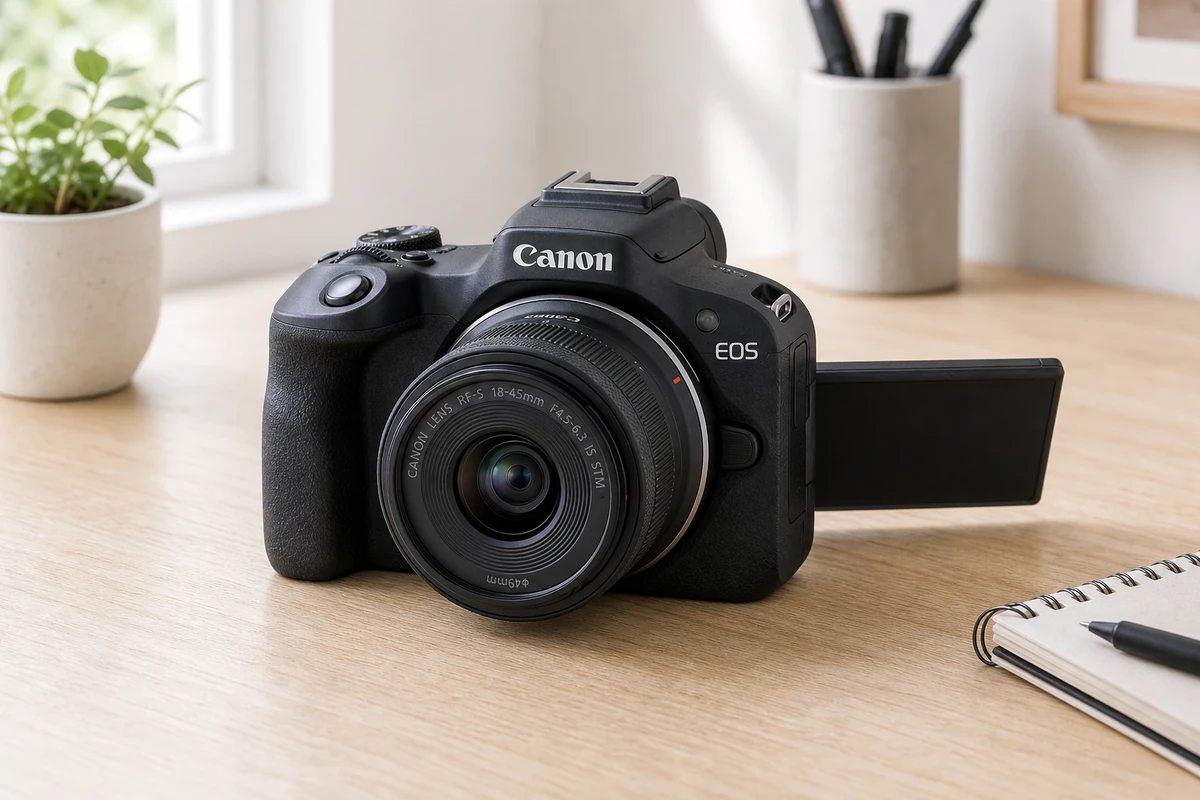
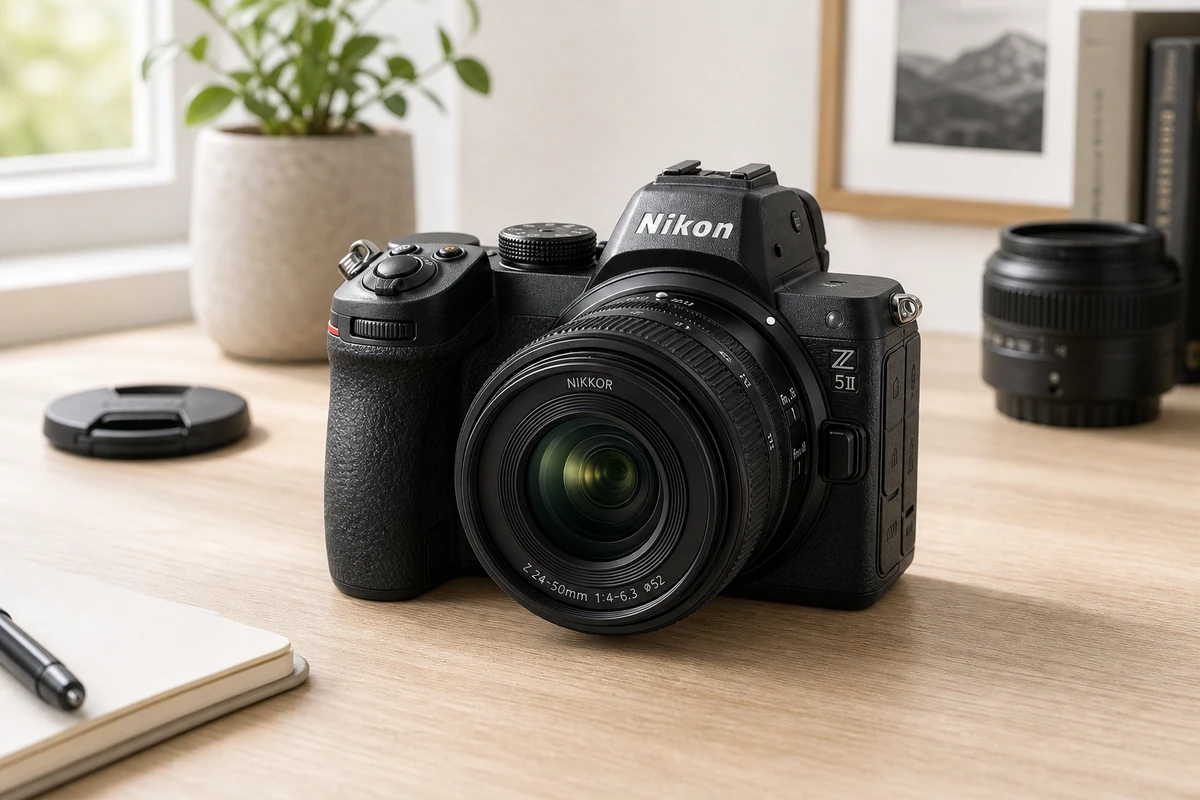
The Canon EOS R50 and Nikon Z5 II both make great first "real cameras," but they sit on opposite sides of one line — sensor size — and that gap is bigger than it looks. The Z5 II's full-frame sensor has roughly 2.5 times the surface area of the R50's APS-C chip (about 858 mm² versus 332 mm²), which is the real reason it pulls cleaner low-light shots and that creamy background blur. It also punches above its price elsewhere: it runs the same EXPEED 7 processor as Nikon's pricier Z6 III, so it inherits flagship-grade AI subject-detection autofocus, and it adds 5-axis in-body stabilization and weather sealing — neither of which the R50 has. The Canon's answer is portability and price. At about 375g it's roughly half the weight of the ~700g Z5 II body, its APS-C lenses are smaller and cheaper, its Dual Pixel CMOS AF II is excellent for people and video, and it costs around a thousand dollars less. Here's how to choose.
Verdict
Canon EOS R50
A friendly first step up from a phone. The R50 is tiny but borrows Canon's flagship autofocus, so it tracks faces, pets, and kids reliably and shoots clean 4K. Native lenses are thin and there's no in-body IS, but as a first real camera it's a great pick.
Nikon Z5 II
The full-frame value that punches up. The Z5 II borrows the autofocus and processor from Nikon's $4,000 flagships, adds in-body stabilization, and stays under $1,700. It's not small and 24MP limits big crops, but as one do-everything body it's the easy call.
Best for
Canon EOS R50
Families, students, and first-time mirrorless buyers who want an approachable camera for photos, travel, and light creator work.
Nikon Z5 II
Beginners and enthusiasts who want full-frame image quality, modern autofocus, and room to grow without jumping to pro pricing.
Avoid if
Canon EOS R50
You want full-frame image quality, advanced video controls, or a body with more room for professional growth.
Nikon Z5 II
You mostly shoot casual phone-style video, need the smallest travel body, or want the cheapest possible camera kit.
Score breakdown
fit
Canon EOS
9.0
Nikon Z5 I
9.3
ease
Canon EOS
9.2
Nikon Z5 I
8.8
value
Canon EOS
9.1
Nikon Z5 I
9.0
quality
Canon EOS
8.6
Nikon Z5 I
9.3
Specs
price
~$679 body / ~$749-799 kit
~$1,699 (body)
video
4K30 oversampled from 6K, 10-bit; FHD120
4K30 no crop; 4K60 (1.5x crop); 10-bit, N-RAW; FHD120
sensor
24.2MP APS-C CMOS
24MP BSI full-frame CMOS
weight
Very compact and light
autofocus
Dual Pixel CMOS AF II; people/animal/vehicle detection
Subject-detection AF + 3D tracking (flagship-derived)
processor
DIGIC X
EXPEED 7 (same as Z8/Z9)
viewfinder
Built-in EVF; fully articulating touchscreen
stabilization
None in-body (relies on lens IS)
In-body (IBIS)
storage
Dual card slots; articulating screen
weight note
Not a compact travel body

PickGrade may earn a commission from purchases made through links on this page, at no extra cost to you. This never affects our grades. Full disclosure.

PickGrade

The independent grading authority for the things you buy. Research once, decide fast — no sponsored top-10 lists.

Affiliate disclosure — PickGrade participates in affiliate programs, including Amazon Associates and partnerships managed through affiliate networks. We may earn a commission from qualifying purchases at no extra cost to you. This never affects our grades. Full disclosure.

Explore

Contact

Questions, feedback, or partnership inquiries?

admin@pickgrade.com

Company

© 2026 PickGradeNo sponsored placements · Ever

Final verdict

Choose the Canon EOS R50 if you want the lightest, most affordable way into interchangeable-lens photography — for travel, family, and everyday video it's the easier, cheaper, more pocketable starting point. Choose the Nikon Z5 II if image quality is the goal: its full-frame sensor, in-body stabilization, weather sealing, and flagship-derived autofocus are a genuine step up you can grow into for years, if you accept the extra size, weight, and cost. Beginners on a budget go Canon; quality-first buyers willing to invest go Nikon.

Was this comparison useful?