Reviewed by
Eran Yorkovsky · Founder, PickGrade
Head-to-head
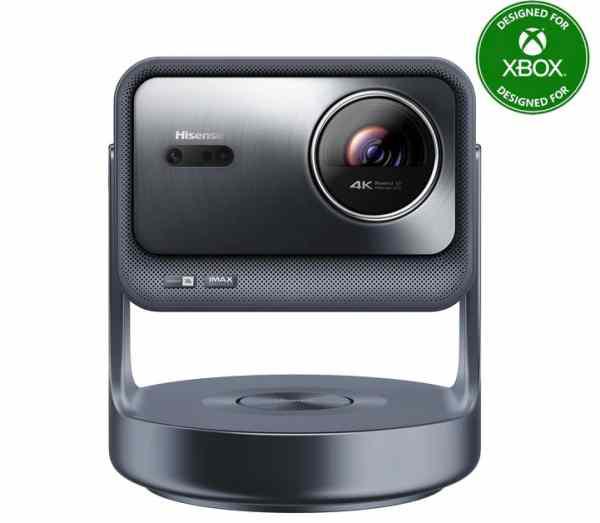
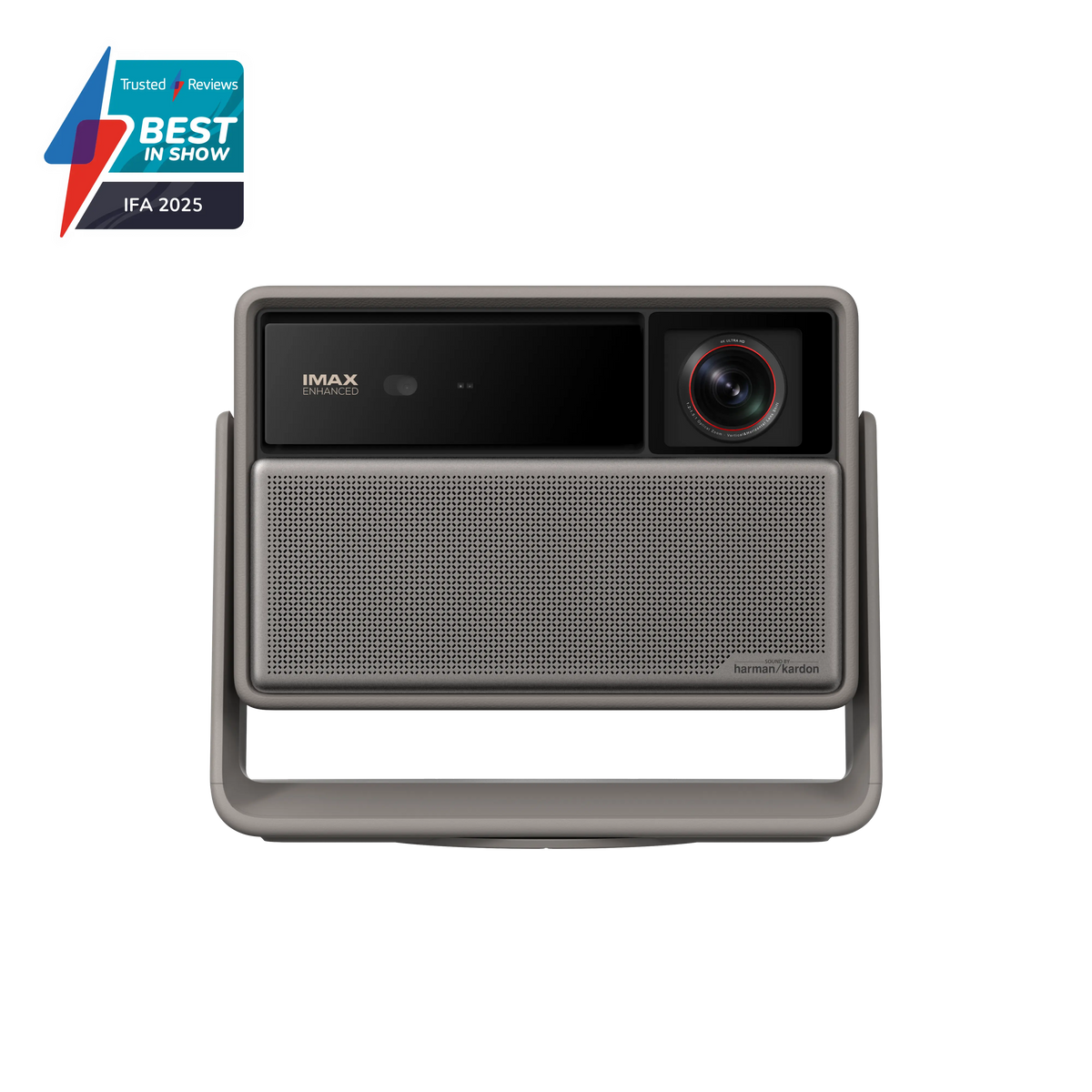
Hisense C2 Ultra vs XGIMI Horizon 20 Max: $100 Apart, Same Picture
These two get cross-shopped constantly, and for once the reason is sound: they are close to identical. Both are compact RGB triple-laser 4K projectors on a gimbal. Both are rated for roughly 110% BT.2020 color. Both support Dolby Vision, HDR10+, and IMAX Enhanced. Both game at 240Hz. They are $100 apart.
Even brightness, the spec XGIMI shouts about, refuses to separate them. Tom's Guide measured the C2 Ultra at 3,231 ANSI lumens. ProjectorJunkies measured the Horizon 20 Max at 3,242. That is a difference of eleven lumens, which is to say no difference at all. XGIMI's 5,700-lumen rating only appears in a bright-green High Power mode that no one watches anything in, and Hisense's honest 3,000 rating is one the projector actually beats.
So the choice comes down to three real differences.
Placement. The Horizon 20 Max has motorized zoom, focus, and true lens shift, plus or minus 120% vertical. The C2 Ultra has a 360-degree gimbal and a 1.67x optical zoom that fills 65 to 300 inches. Both are flexible, but they solve different problems: the zoom lets the Hisense fill any screen size without cropping pixels, while lens shift lets the XGIMI sit off-center without digital keystone. If your projector cannot go in the middle of the room, that is the whole argument.
Sound and software. The C2 Ultra has a JBL 2.1 system with a real 20-watt subwoofer, and it is the better speaker by a clear margin. But it runs Vidaa, which is fast and includes Netflix, and also puts ads on your home screen and has a smaller app store. The Horizon runs Google TV with 24 watts of Harman Kardon. You are trading a subwoofer for a cleaner platform.
Black level. Neither is good here. The C2 Ultra measures around 1,600:1 native, the Horizon around 1,510:1. Both lean on dynamic dimming, and in a properly dark room both show gray where a cinema projector shows black. If black level is what you care about, neither of these is your projector.
PickGrade may earn a commission from purchases made through links on this page, at no extra cost to you. This never affects our grades. Full disclosure.
Final verdict
At an eleven-lumen difference and $100 apart, this is not a performance decision, it is a fit decision. Buy the XGIMI Horizon 20 Max if you need lens shift or you want Google TV instead of an ad-supported home screen. Buy the Hisense C2 Ultra if you want the better sound out of the box, the wider optical zoom range, and $100 back. We give the narrow edge to the C2 Ultra on the strength of that JBL subwoofer and the price, but anyone who tells you one of these is clearly better than the other is selling something. And if you are choosing between them because you want the best picture under $3,000, look at the Anker Nebula X1 instead: it measures as bright as both and has four times the native contrast of either.
Was this comparison useful?