Er

Reviewed by

Eran Yorkovsky · Founder, PickGrade

Head-to-head

Hisense PX3-Pro vs PT1: Is the Laser TV Upgrade Worth $1,300?

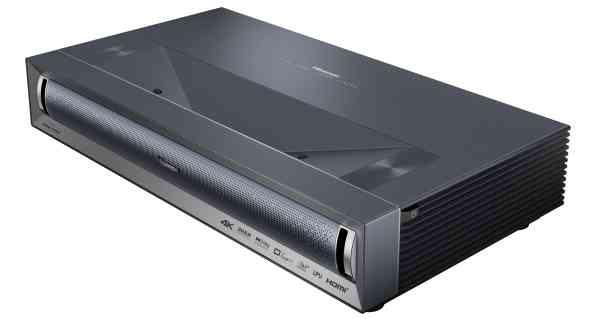
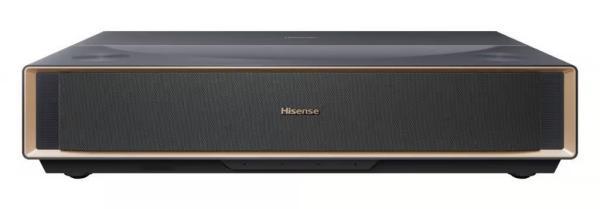
Hisense sells these two ultra-short-throw laser TVs side by side, and they share more than they don't: the same TriChroma RGB triple-laser engine, the same 0.47-inch DLP chip pixel-shifted to 4K, the same Google TV, the same complete HDR stack (Dolby Vision, HDR10+, HDR10, HLG, IMAX Enhanced), and the same ability to throw an 80 to 150-inch image from inches off your wall. The PT1 is around $2,200. The PX3-Pro is around $3,499. That is $1,300 for what is, on paper, a very similar projector.

Here is what the $1,300 actually buys.

About 700 lumens. The PT1 is rated at 2,500 ANSI and measures about 2,600. The PX3-Pro is rated at 3,000 and measures between 2,700 and 3,400 depending on who tested it. Both are honest ratings, which is rarer than it should be. But 2,600 lumens is a light-controlled-room number, and 3,000-plus is a lights-on number. If your living room has big windows and you want to watch the game on a Sunday afternoon, that gap is the whole ballgame.

Xbox gaming. The PX3-Pro is the first UST certified 'Designed for Xbox,' with a 240Hz low-latency mode. The PT1 has ALLM and low-ish lag and is fine for casual play, but there is no 240Hz mode and no certification. Console gamers should stop reading and buy the PX3-Pro.

A slightly better everything else. 50 watts of Harman Kardon against the PT1's 46-watt 2.0.2 array. Near-full BT.2020 measured, against the PT1's claimed 110%. Three HDMI ports on both, but a touch more measured contrast on the PX3-Pro (up to 6,350:1 in testing).

What the PT1 keeps is the part most people assume they are paying extra for: the color and the black level. Reviewers single out the PT1's blacks as a genuine strong suit, unusual at this price, and its RGB-laser color is the same family as its bigger sibling's. In a dim or dark room, the two look far more alike than $1,300 suggests.
Verdict
Hisense
Near-full BT.2020 color, every HDR format, and 240Hz Xbox gaming make it the best all-round UST at the price — a real big-TV replacement inches from the wall. But like all USTs it wants a pricey ALR screen, has no lens shift, and its black floor trails a dark-room projector.
Hisense
It borrows the PX3-Pro's RGB-laser color, every HDR format, and strong blacks for about $800 less — the value laser TV. The trade is brightness: at 2,500 lumens it wants a light-controlled room, and it drops the 240Hz Xbox gaming. Bright room or gaming? The PX3-Pro.
Best for
Hisense
you want a big-TV replacement that sits inches from the wall, with rich color and 240Hz Xbox gaming
Hisense
you want flagship-grade RGB-laser color and strong black levels for less, in a dim or dark room
Avoid if
Hisense
you can't add a matched ALR screen, or you want the deep black levels of a dark-room long-throw projector
Hisense
your room has lots of ambient light, or you want 240Hz console gaming
Score breakdown
setup
Hisense
7.0
Hisense
7.0
value
Hisense
8.0
Hisense
9.0
contrast
Hisense
7.5
Hisense
7.5
color hdr
Hisense
9.0
Hisense
8.5
brightness
Hisense
8.0
Hisense
6.5
resolution
Hisense
8.0
Hisense
8.0
smart sound
Hisense
8.5
Hisense
8.0
Specs
HDR
Dolby Vision, HDR10+, HDR10, HLG, IMAX Enhanced
Type
Ultra-short throw (laser TV)
Sound
50W Harman Kardon, Dolby Atmos
46W 2.0.2ch, Dolby Atmos + DTS:X
Gaming
240Hz low-latency; Designed for Xbox
ALLM, MEMC, low lag (no 4K/120)
Weight
19.8 lb (9 kg)
15.9 lb (7.2 kg)
Imaging
0.47" DLP, 4K via XPR pixel-shift
Smart OS
Google TV (native Netflix), AirPlay
Google TV, AirPlay, WiSA-ready
Laser life
25,000 hours
25,000 hours
Color gamut
~98% BT.2020, ~99.8% DCI-P3 (ΔE≈0.9)
110% BT.2020 (Pantone Validated)
Throw ratio
0.22:1 (80–150" screen)
0.2:1 (80–150"; 100" at ~17")
Connectivity
3x HDMI (2x 2.1, 1x eARC), Wi-Fi 6E, BT 5.3, Ethernet
3x HDMI (2x 2.1, 1x eARC), Wi-Fi, BT 5.3
Light source
TriChroma RGB triple laser (LPU)
TriChroma RGB triple laser (ALPD 4.0)
Native contrast
3,000:1 rated (measured up to ~6,350:1)
3,000:1 rated (measured above)
Brightness (rated)
3,000 ANSI lumens
2,500 ANSI lumens
Brightness (measured)
~2,700–3,400 ANSI lumens
~2,600 ANSI lumens

PickGrade may earn a commission from purchases made through links on this page, at no extra cost to you. This never affects our grades. Full disclosure.

PickGrade

The independent grading authority for the things you buy. Research once, decide fast — no sponsored top-10 lists.

Affiliate disclosure — PickGrade participates in affiliate programs, including Amazon Associates and partnerships managed through affiliate networks. We may earn a commission from qualifying purchases at no extra cost to you. This never affects our grades. Full disclosure.

Explore

Contact

Questions, feedback, or partnership inquiries?

admin@pickgrade.com

Company

© 2026 PickGradeNo sponsored placements · Ever

Final verdict

The PT1 is the smart-money laser TV, and for most people in a room they can dim, it is the right buy. It has the same color engine, the same HDR support, the same throw, genuinely good blacks, and it saves you $1,300 that is better spent on the ambient-light-rejecting screen both of these projectors need to look their best. Buy the PX3-Pro in exactly two situations: your room has real ambient light you cannot control, or you are going to game on it. Both are honest reasons and both are worth the money. What is not a reason is a vague sense that the pricier one must have a better picture. In a dark room, it barely does.

Was this comparison useful?