Er

Reviewed by

Eran Yorkovsky · Founder, PickGrade

Head-to-head

Bambu Lab A1 Mini vs Elegoo Centauri Carbon 2

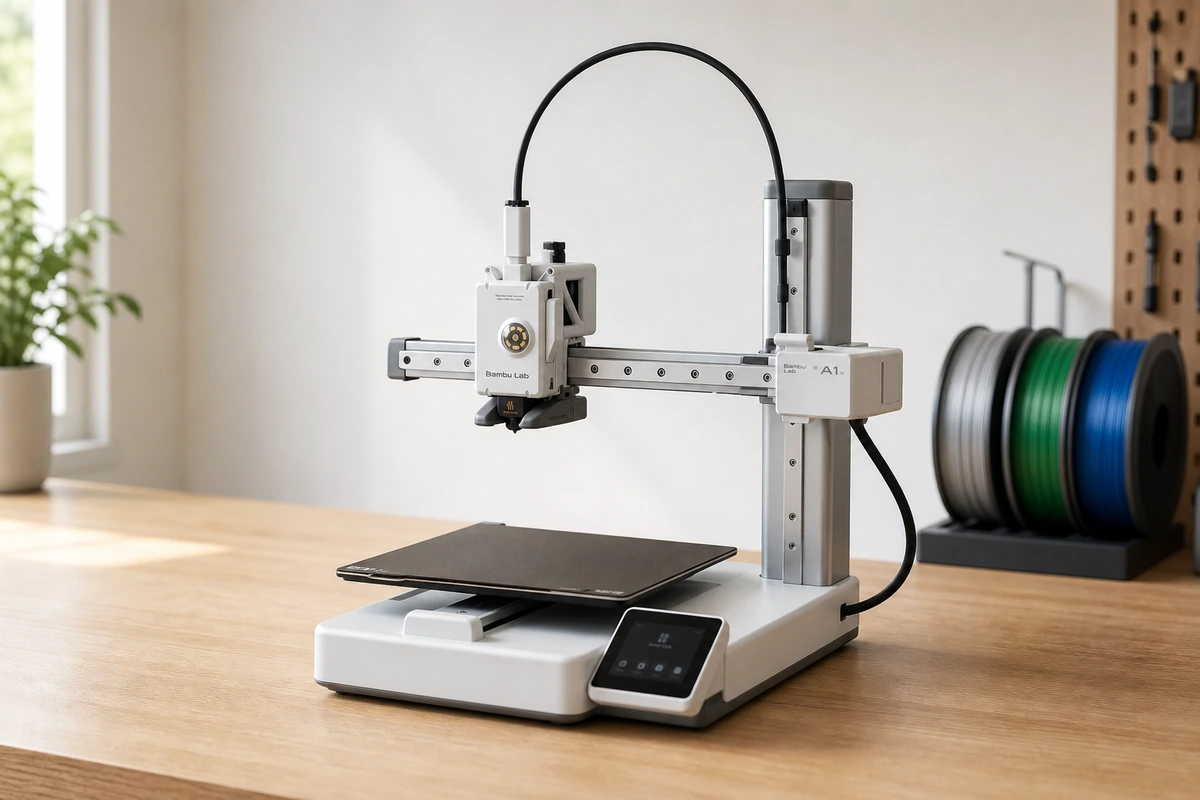
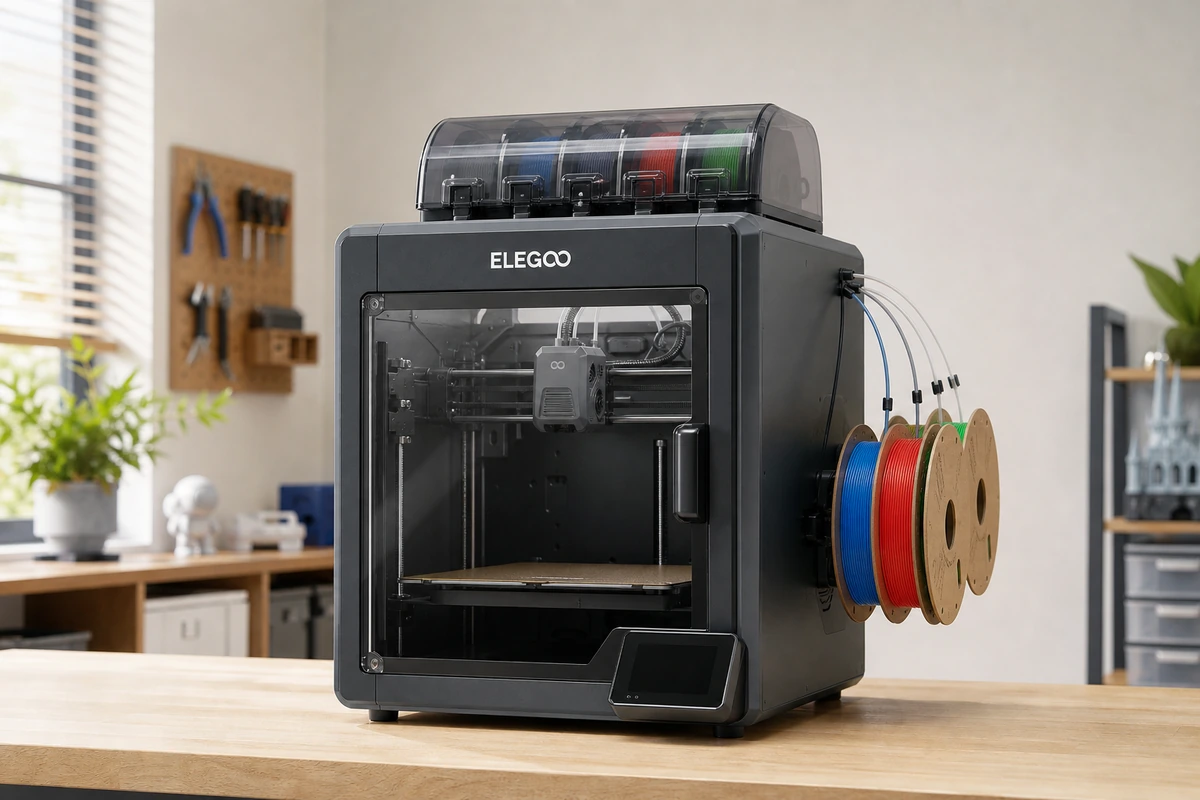
The Bambu Lab A1 Mini and Elegoo Centauri Carbon 2 are two of the most recommended affordable 3D printers of 2026 — but they sit at different points. The A1 Mini is the cheapest easy on-ramp into the hobby: around $200, open-frame, auto-calibrating, and dead simple. The Centauri Carbon 2 costs roughly twice as much and gives you a fully enclosed CoreXY with a 350°C hardened nozzle, four-color printing, and a much bigger build area. Here's how they compare and which one makes sense for you.
Verdict
Bambu Lab
The best first printer in 2026. Small and PLA/PETG-only, but nothing else is this easy or this good at the price. Get the Combo for multicolor.
Elegoo
The value champion: enclosed CoreXY, high-temp materials, and four-color printing for around $400. Software isn't as slick as Bambu's, but the hardware is a steal.
Best for
Bambu Lab
Complete beginners and anyone who wants a printer that just works out of the box for small models, toys, and easy multicolor prints.
Elegoo
Budget-minded makers who want an enclosed CoreXY that prints high-temp and carbon-fiber filaments and does multicolor, without paying Bambu prices or signing into a cloud.
Avoid if
Bambu Lab
You need a larger build area, want to print ABS or engineering materials, or plan to run an automated print farm — look at the full-size A1 or an enclosed CoreXY like the P2S.
Elegoo
You want the most polished software and app experience, or you need a tidy, compact multicolor footprint — a Bambu P2S Combo is smoother, if pricier.
Score breakdown
speed
Bambu Lab
8.5
Elegoo
8.8
value
Bambu Lab
9.5
Elegoo
9.4
materials
Bambu Lab
7.5
Elegoo
9.0
ease of use
Bambu Lab
9.6
Elegoo
8.2
build volume
Bambu Lab
5.5
Elegoo
7.5
print quality
Bambu Lab
8.8
Elegoo
8.7
Specs
Type
Open-frame bedslinger (FDM)
Enclosed CoreXY (FDM)
Noise
≤48 dB
Hotend
Quick-swap all-metal, 300°C
Materials
PLA, PETG, TPU (no ABS/ASA)
PLA, PETG, TPU, ABS, ASA, PC, PA, carbon-fiber
Max speed
500 mm/s
500 mm/s (20,000 mm/s² accel)
Multicolor
Up to 4 colors with AMS Lite (Combo)
4-color CANVAS system (built in)
Calibration
Full auto (bed, Z-offset, flow, vibration)
Build volume
180 × 180 × 180 mm
256 × 256 × 256 mm
Bed
Up to 110°C
Nozzle
Hardened steel, up to 350°C
Connectivity
LAN mode, no cloud required

PickGrade may earn a commission from purchases made through links on this page, at no extra cost to you. This never affects our grades. Full disclosure.

PickGrade

The independent grading authority for the things you buy. Research once, decide fast — no sponsored top-10 lists.

Affiliate disclosure — PickGrade participates in affiliate programs, including Amazon Associates and partnerships managed through affiliate networks. We may earn a commission from qualifying purchases at no extra cost to you. This never affects our grades. Full disclosure.

Explore

Contact

Questions, feedback, or partnership inquiries?

admin@pickgrade.com

Company

© 2026 PickGradeNo sponsored placements · Ever

Final verdict

If you just want the simplest, cheapest way to start printing — and you'll mostly use PLA and PETG — the A1 Mini is the smarter buy and leaves money in your pocket. Step up to the Centauri Carbon 2 if you already know you'll want an enclosure for ABS and ASA, a larger build volume, or carbon-fiber materials. It's far more printer than its price suggests, with a slightly steeper learning curve.

Was this comparison useful?