Reviewed by
Michal Zucker · Fitness, Movement & Wellbeing Editor
Head-to-head
Herman Miller Aeron vs Steelcase Series 1
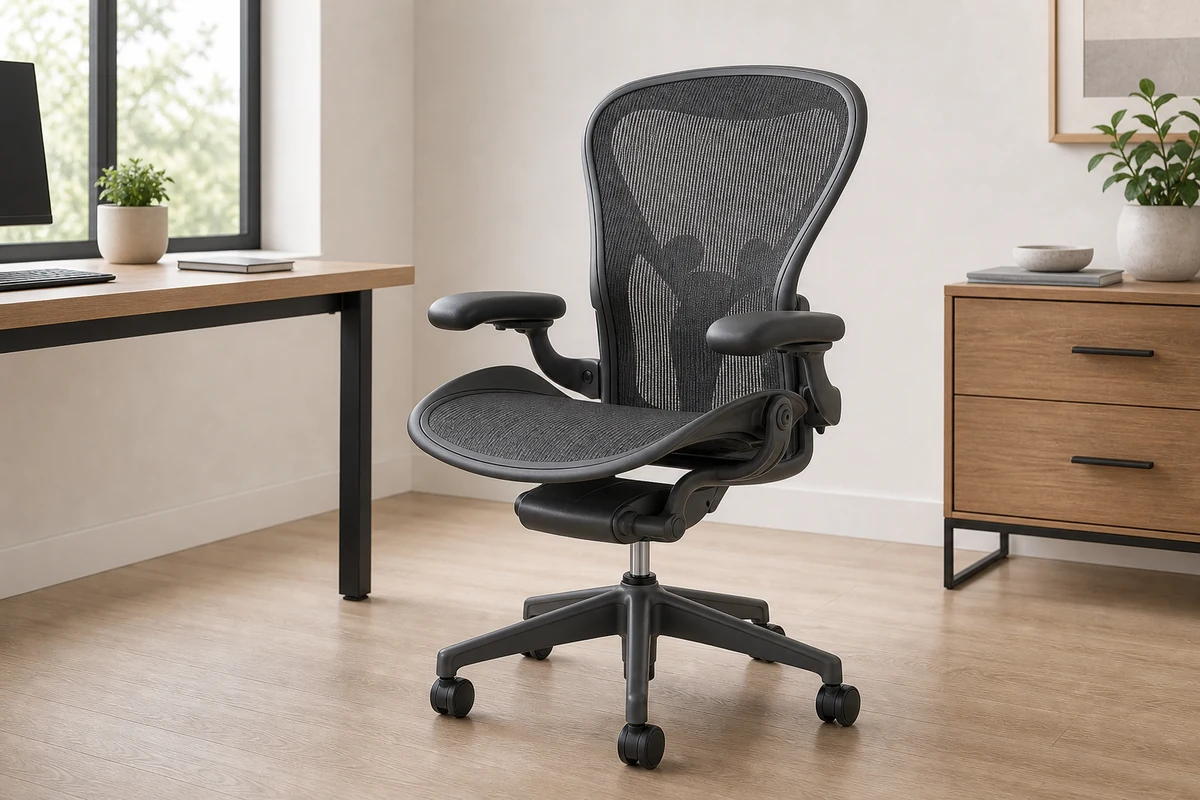
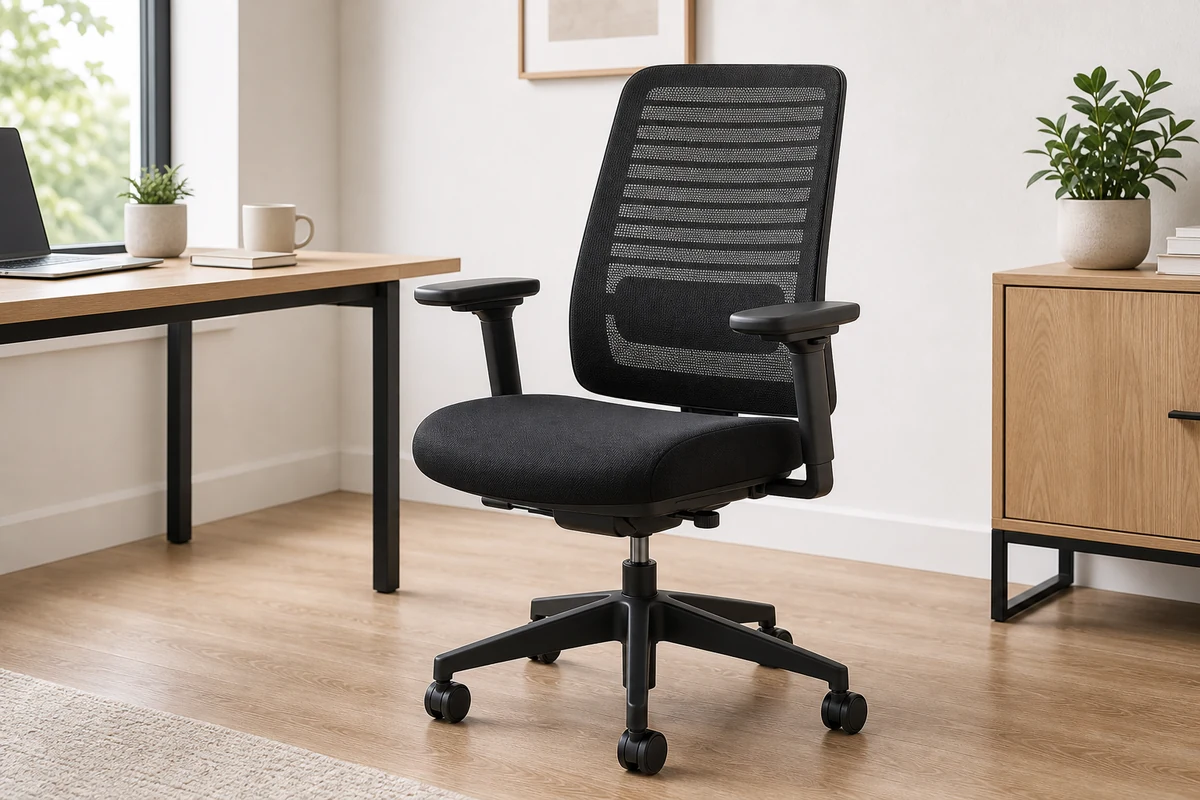
On paper the Herman Miller Aeron ($799) and Steelcase Series 1 (~$499) look like a clean premium-versus-value split — but the spec sheets hide a few surprises worth knowing before you spend. Both carry the exact same 12-year warranty, so you're not buying longer coverage with the Aeron. And here's the counterintuitive part: the cheaper Series 1 includes a seat-depth adjustment, while the Aeron does not — with the Aeron you instead pick one of three sizes (A, B, or C, identified by 1, 2, or 3 braille-like dots under the backrest) and live with that fixed depth. The most-ordered Aeron, size B, is rated to 350 lb; the one-size Series 1 holds up to 400 lb. Where the Aeron pulls ahead is materials and engineering: its 8Z Pellicle suspension is woven into eight distinct tension zones and tested to 200,000 sit-stand cycles, and the chair is roughly 94% recyclable with a 20-year-plus lifespan. The Series 1 answers with a genuinely commercial build — BIFMA Level 3, multi-shift 24/7 rated — and a weight-activated recline that tunes tension to your body automatically. Here's how to choose.
PickGrade may earn a commission from purchases made through links on this page, at no extra cost to you. This never affects our grades. Full disclosure.
Final verdict
Buy the Steelcase Series 1 if you want a commercial-grade chair with the adjustments most people actually use — including the seat-depth tuning the Aeron lacks — for around $300 less. It's the smarter buy for the majority of home offices, and its weight-activated recline auto-tunes tension to your body instead of a knob you set once and forget. Step up to the Herman Miller Aeron if you run warm (its open mesh breathes better than almost anything), need size-specific fit for an unusually small or tall frame, or simply want the most refined, best-built task chair made — one engineered to last two decades-plus. The Aeron is the better chair; the Series 1 is the better value, and for most buyers the gap is smaller than the price difference suggests.
Was this comparison useful?