Head-to-head
LG Dual Inverter vs GE ClearView: Buy the Compressor or the Glass
Two premium 8K-class window units, two completely different bets on what you'll care about in July. LG bets on the compressor: its dual-rotor inverter ramps smoothly instead of cycling, holds 44 dB in sleep mode, and carries an Energy Star rating a claimed 35% better than the federal floor. GE bets on the glass: the ClearView's below-sill design keeps your view and your daylight, adds a condensate pump so there's no drip or tilt, and reports energy use through the best app of the two — mixed ThinQ reviews are a running theme for LG. Mechanically the LG is the easier machine: a conventional drop-in install against the ClearView's 80-pound, three-attempt reputation, and a 380 sq ft envelope against 350. Price closes the gap from the other side: the GE street price of $381.99 undercuts the LG's $459, and the GE is routinely discounted from a $469.99 list. The question this page settles is whether a clear window is worth a harder install and a higher power bill.
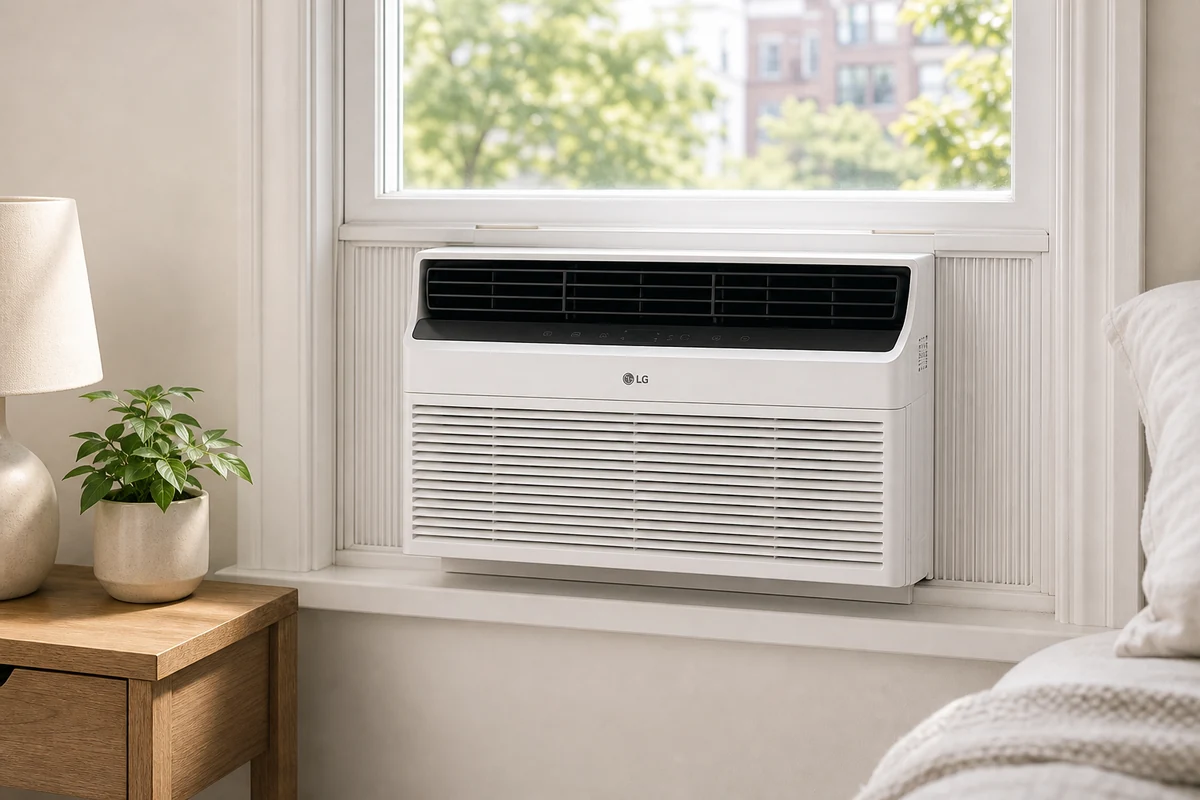 LG Dual Inverter Smart Window AC (8,500 BTU, LW8024IVSM) LG | 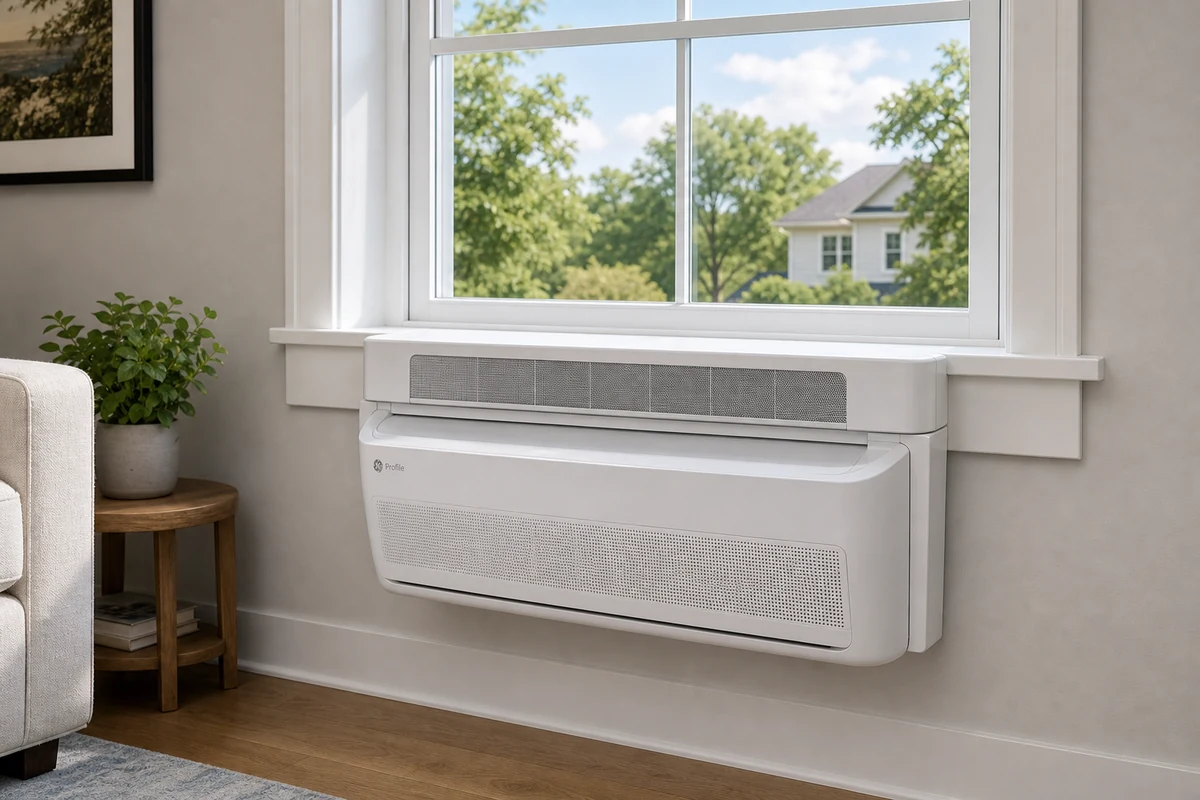 GE Profile ClearView Smart Window AC (8,300 BTU, AHTT08BC) GE Profile | |
|---|---|---|
| Score | 8.5 | 8.0 |
| Price | $459 | $381.99 |
| Verdict | The LW8024IVSM gets you 90% of the Midea U+'s quiet and efficiency in a conventional body that drops into the window like a normal AC. Pick it if the U's bracket install or recall history puts you off — just accept the ThinQ app's mediocre reputation. | Hanging below the sill, the ClearView keeps the view and daylight every other unit blocks, at 41 dB with a built-in condensate pump. The pick when the window itself is the point — if your wall is under 13.75 in thick and you have help with the fussy install. |
| Best for | you want inverter quiet and efficiency in a normal window-AC body with a normal install | your window is the room's main light source and you refuse to board it up for the summer |
| Avoid if | you want to keep using your window during the season, or you're buying primarily for a polished app experience | your wall is thicker than 13.75 in, there's furniture under the window, or you're installing solo |
| Score breakdown | ||
| value | 8.3 | 7.4 |
| quietness | 9.0 | 9.0 |
| cooling power | 8.5 | 7.8 |
| smart features | 8.0 | 8.5 |
| installation fit | 7.8 | 6.8 |
| energy efficiency | 8.8 | 7.6 |
| Specs | ||
| model | LW8024IVSM | AHTT08BC |
| warranty | 1 year | 1 year |
| compressor | LG Dual Inverter (variable speed) | — |
| fan speeds | 4 (with Auto Cool) | — |
| window fit | 22–36 in wide, min 13 in tall | 20–40 in wide, min 13 in opening height, min 10 in from floor |
| noise level | As low as 44 dB (sleep mode) | As low as 41 dB |
| air direction | 4-way | — |
| room coverage | Up to 380 sq ft | Up to 350 sq ft |
| smart control | LG ThinQ app, Alexa, Google Assistant | GE SmartHQ app, Alexa, Google Assistant; energy reporting and geofencing |
| cooling capacity | 8,500 BTU | 8,300 BTU |
| energy certification | Energy Star; up to 35% better than DOE minimum CEER | Energy Star |
| modes | — | Cool, Dry, Eco, Sleep; 3 fan speeds |
| condensate | — | Built-in automatic pump |
| wall thickness | — | Flex-depth fits 4.5–13.75 in walls |
| Buy → | Buy → | |
Final verdict
The LG is the better machine for the money in this pair — quieter under load, far more efficient, easier to live with mechanically, and the winner on four of our six criteria. The ClearView's argument is singular but real: no other AC gives you back the glass. If the room's daylight and view are worth $80 less and a fight with the install (plus higher running costs every summer), the GE is a defensible luxury. If you're buying an air conditioner rather than a window treatment, buy the LG.
PickGrade may earn a commission from purchases made through links on this page, at no extra cost to you. This never affects our grades. Full disclosure.