Reviewed by
Dr. Yocheved Yorkovsky · Science Editor, Health, Chemistry & Environment
Head-to-head
PUR Plus vs Culligan FM-25 Faucet Filter
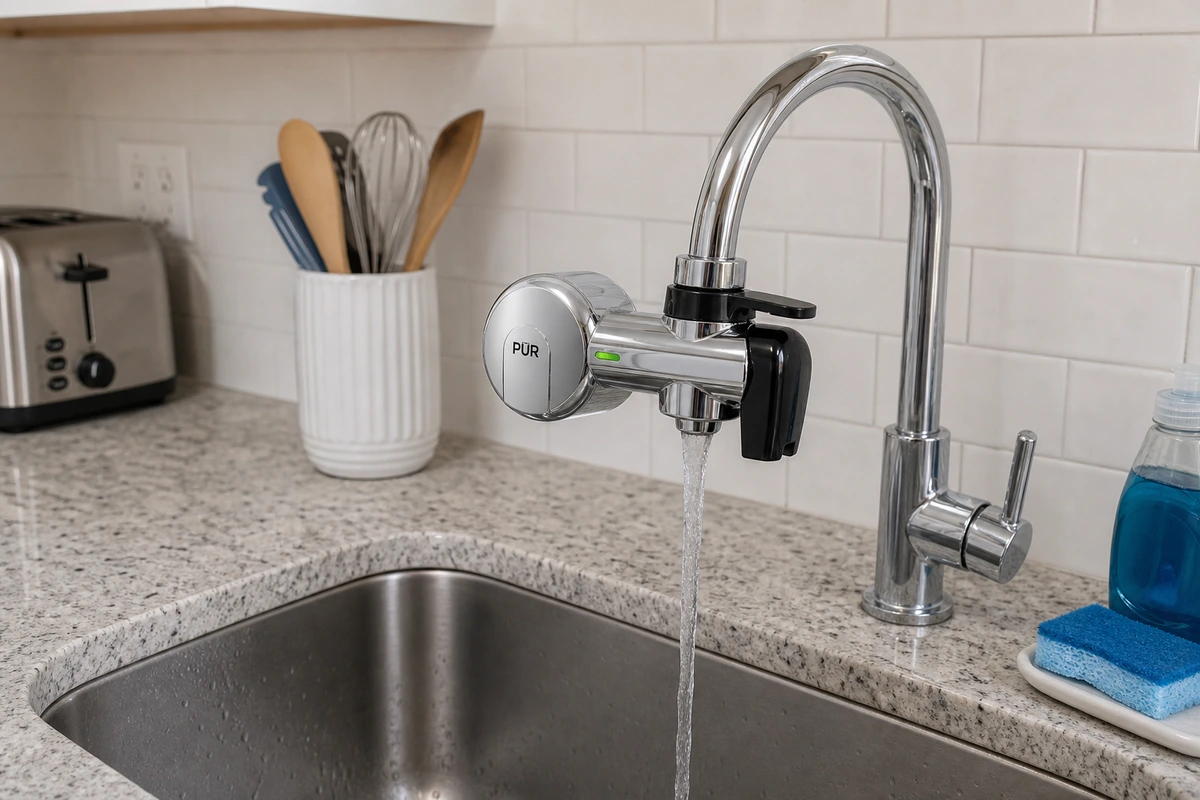
Faucet filters look interchangeable, but the difference between the PUR Plus and Culligan FM-25 hides in the certification fine print — and it's the single most useful thing to understand before buying. Many faucet filters carry only NSF/ANSI 42, which certifies that the filter improves taste and odor; it says nothing about lead, pesticides, or pharmaceuticals. The PUR Plus goes much further: it's certified by both NSF and WQA to NSF/ANSI 42, 53, and 401 — and that 401 standard is the rare one, covering "emerging contaminants" like trace pharmaceuticals, herbicides, BPA, and DEET. All told, it's certified to reduce more than 70 contaminants including lead, mercury, chlorine, and microplastics — more than any other faucet filter we've seen — using a Mineral Core cartridge that also improves taste, with a roughly 100-gallon (3-month) life. The Culligan FM-25 is the value answer. It's the budget-friendly pick that nails the essentials — independent testers rate it best-in-class specifically for lead reduction — for noticeably less money. Both click onto a standard faucet tool-free in about five minutes (neither fits pull-out or sprayer faucets), and both filter cold water only. Here's how to choose.

PickGrade may earn a commission from purchases made through links on this page, at no extra cost to you. This never affects our grades. Full disclosure.
Final verdict
Choose the PUR Plus if you want the broadest verified protection: its NSF 42/53/401 certifications and 70-plus reduced contaminants — including emerging compounds like pharmaceuticals that most filters don't even test for — make it the safest bet when you're not sure what's in your water. Choose the Culligan FM-25 if lead and chlorine are your main concern and value matters: it's rated best-in-class for lead reduction at a lower price. Look up your water report first — if it shows mainly chlorine and lead, the Culligan is plenty; if you want everything covered, go PUR.
Was this comparison useful?