Buying guide
Best Recumbent Exercise Bike for Recovery and Comfort
Reviewed by
Michal Zucker · Fitness, Movement & Wellbeing Editor
A recumbent bike's reclined, back-supported seat changes who it's for: recovery, joint-friendly cardio, and anyone who finds upright saddles or hunched handlebars uncomfortable. Here's when a recumbent is the right call and the pick that nails the essentials.
 Take the exercise bike quiz →
Why a recumbent, not an upright
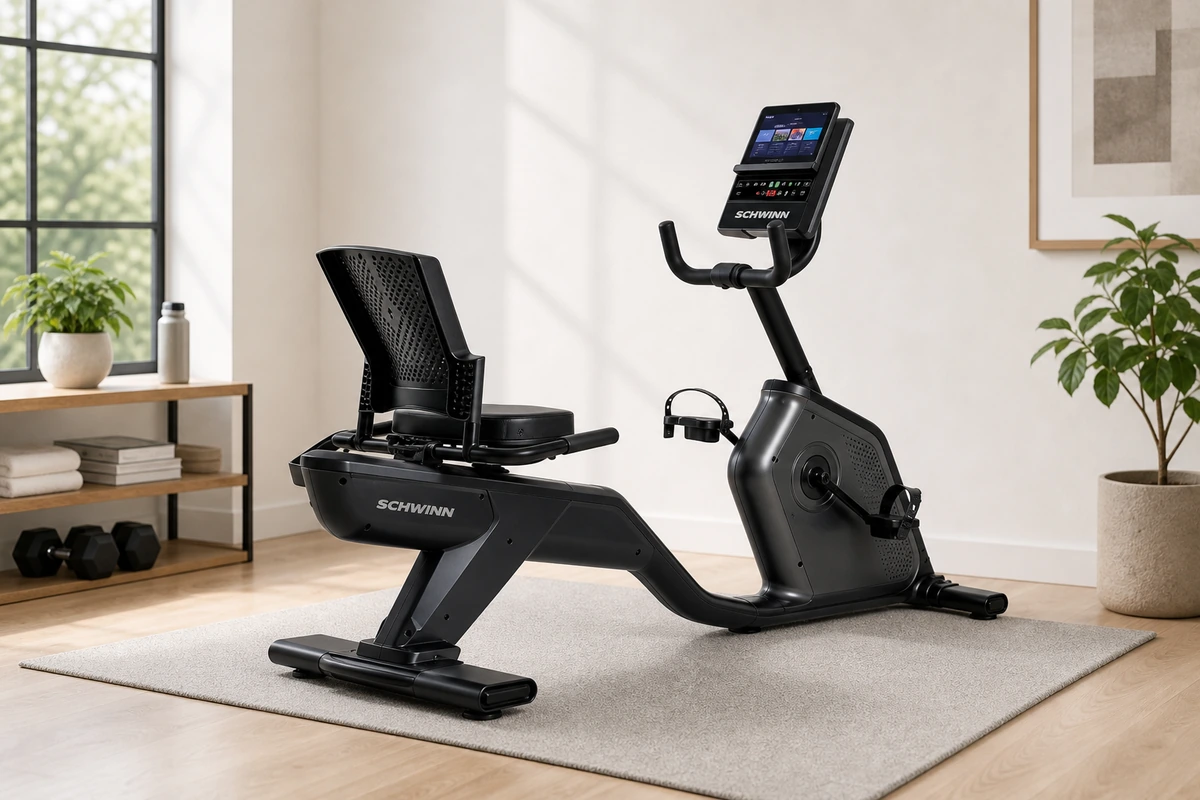
A recumbent bike seats you in a reclined position with your legs out in front and your back supported by a seat back. That single design change reshapes who it's for:
- Your lower back is supported, not hunched over handlebars — a major reason recumbents are recommended for back issues and longer steady sessions.
- Weight is off your wrists, hands, and saddle. No sore sit bones, no leaning on your wrists.
- The step-through frame is easy to get on and off, which matters for limited mobility, rehab-adjacent cardio, and older riders.
The trade-off is intensity: you can't stand up and sprint, and the workout is steady rather than studio-hard. That's a feature, not a bug, for the people who need a recumbent.
Who should choose a recumbent
- Recovery and joint-friendly cardio. Low-impact by design, easy on knees and hips.
- Back pain sufferers who find upright saddles or hunched handlebars uncomfortable.
- Anyone prioritizing comfort for long, steady rides over short intense ones.
If that's not you and you want hard cardio or classes, an indoor cycling bike is the better tool.
Our pick
Schwinn 290 Recumbent. Supportive reclined seat, low step-through frame, quiet magnetic resistance with preset programs, and Bluetooth app sync. It covers the recumbent essentials without overcomplicating things — the comfortable, sustainable choice for steady low-impact cardio.
Set it up to actually help
Comfort comes from fit: adjust the seat so your knee has a slight bend at full leg extension (not locked straight), keep resistance in a range you can sustain for your whole session rather than spiking it, and start with shorter rides and build up. The point of a recumbent is consistency without strain.
A note on health: low-impact cardio is gentle, but if you're riding as part of recovery from an injury or a medical condition, check with your doctor or physical therapist on duration and intensity — a bike supports a plan, it doesn't replace one. To match a bike to your situation and budget, take the exercise bike quiz.
Still choosing?
- Best Peloton Alternatives: Keep What You Want, Drop the Price
- Schwinn IC4 vs BowFlex C6: The Same Bike, Twice
- Best Budget Exercise Bikes Under $300: Cheap, Not Junk
- Peloton Bike+ vs Schwinn IC4 (2026)
- Schwinn 290 Recumbent Bike
- Sunny Health & Fitness Upright Bike
Our exercise bike picks
Frequently asked
What's the difference between a recumbent and upright bike?
A recumbent supports your lower back and takes pressure off your wrists and sit bones, with a reclined seat and step-through frame. An upright is more compact and better for intense, studio-style riding.
Are recumbent bikes good for back pain?
They can be a good low-impact option. The supported, reclined position reduces strain on the lower back compared to hunching over upright handlebars — but check with your doctor or physical therapist if you're recovering from an injury.
Are recumbent bikes good for recovery?
Yes — they're a popular choice for joint-friendly, low-impact cardio. The seated, supported position is gentle on knees and hips, making steady sessions sustainable.
How do I set up a recumbent bike correctly?
Adjust the seat so your knee has a slight bend at full extension, keep resistance sustainable for the whole ride, and build duration gradually. Comfort and consistency matter more than intensity here.