Buying guide
Best Self-Emptying Robot Vacuums
Reviewed by
Dr. Yocheved Yorkovsky · Science Editor, Health, Chemistry & Environment
A self-emptying dock is usually sold as convenience, but the better reason is quieter: the moment you skip, tipping a bin of fine dust into the trash, is the moment you re-breathe what the robot just captured. A sealed dock does that job for you, contained. Here's how to pick one, and what it really costs to run.
 Find your robot vacuum →
The short answer
For the lowest-maintenance setup overall, a vacuum-and-mop with a self-empty and self-wash dock like the Dreame X60 Max Ultra ($1,499) does the most between cleanings. For strong value, the Eufy E25 Omni ($680) keeps a full self-empty/wash dock at a mid price. And the cheapest way into a real auto-empty dock is now the Eufy C10 (~$250): vacuum-only, but independently tested top-tier on carpet.
- Most hands-off: Dreame X60 Max Ultra, $1,499. Self-empty, self-wash, self-dry; the least you'll touch it.
- Best value: Eufy E25 Omni, $680. A full self-clean dock at half a flagship price.
- Cheapest real auto-empty: Eufy C10, ~$250. Vacuum-only, no obstacle avoidance, but a rare sub-$300 self-empty robot.
- Budget vacuum plus mop: Yeedi M14+, ~$500. Adds a self-washing roller mop.
- Flagship for complex homes: Roborock Saros 20, $1,599. Best navigation and threshold climbing.
The old trade-off, pay up for a dock or buy dockless to save money, has mostly closed: at ~$250 the Eufy C10 means you no longer empty a bin by hand just to stay on budget.
The real case for a sealed dock: your air
I'll make the argument the marketing doesn't. A robot vacuum collects exactly the material you don't want re-airborne: fine dust, pet dander, dust-mite allergen, and pollen. On a robot without a dock, all of that ends up in a small bin that you tip into the trash by hand, and that motion re-aerosolizes a puff of the finest particles right into your breathing zone. A self-emptying dock transfers it into a sealed bag for you, and the better docks run that captured material through a HEPA-grade filter on the way. If anyone in the home has allergies or asthma, that containment is the feature, not the time saved. It's why I'd rank the dock's seal and filtration alongside its convenience, not below it.
None of that removes the rest of the upkeep (more on that below), but it's the reason a dock is worth more than the "less effort" pitch suggests.
The picks in depth
Dreame X60 Max Ultra: the most hands-off
Self-empty, self-wash, and self-dry dock · ~89% embedded-carpet pickup (Vacuum Wars) · camera obstacle avoidance · $1,499
The Dreame X60 Max Ultra does the most between the times you think about it: it empties the bin, washes and dries the mop, and cleans well enough on carpet (~89% of embedded debris in independent testing) that you're not re-running it. Its camera avoidance dodges the cords and bowls that strand cheaper robots. The costs are honest: it's expensive, and a mop-and-water dock is one more system to maintain. If "touch it as little as possible" is the goal, this is it.
Eufy E25 Omni: the value flagship
Full self-empty and self-wash dock · roller mop · $680
The Eufy E25 Omni brings most of the hands-off dock experience, self-empty and self-wash, at roughly half a flagship price. For a home that wants the sealed, low-maintenance dock without the four-figure sticker, it's the sweet spot. You give up a little edge-case navigation smarts versus the Dreame, but for most floor plans that's a fair trade.
Eufy C10: the cheapest real auto-empty
Auto-empty dock · LiDAR mapping · top-tier tested carpet pickup · no mop · no obstacle avoidance · ~$250
The Eufy C10 is the one that closed the price gap: a genuine self-emptying dock and LiDAR mapping for around $250, with independently tested top-tier carpet and pet-hair pickup. The trade-offs are clear: no mop, and no obstacle avoidance, so it wants a floor you tidy before it runs. If you mainly want the sealed-bin benefit without the flagship price, this is the value of the category.
Yeedi M14+: budget vacuum and mop
Self-washing roller mop · self-empty dock · ~$500
If you want mopping too without paying flagship money, the Yeedi M14+ adds a self-washing roller mop and a self-empty dock for around $500, the affordable way into a do-both machine.
Roborock Saros 20: for complex homes
Class-leading navigation · threshold-climbing chassis · ultra-slim · $1,599
For a big, cluttered, multi-surface home, the Roborock Saros 20 is the navigator: it maps and routes better than anything here and climbs thresholds that beach other robots. Flagship price for flagship getting-around.
Self-emptying handles the bin, not the chemistry of the bags
Here's the ongoing cost people forget: self-emptying docks use disposable bags, and a shedding or dusty home swaps them at the fast end of the makers' "every 1 to 2 months." The Eufy C10's bags run about $3 each, and flagship docks vary. A robot that's cheap up front but pricey on bags can cost more over a couple of years. We priced the whole thing, dock premium plus three years of OEM bags, brand by brand, in our data study, The Self-Empty Tax: the identical convenience runs $64 to $440 depending on whose dock you buy. It doesn't change whether to get self-empty; it changes which one.
Maintenance reality
The dock automates the bin, not everything. You'll still clean the brushes, wipe the sensors, rinse or replace the filters (this is what keeps the exhaust clean, so don't skip it), and occasionally empty the dock canister or swap the bag. Budget a few minutes every couple of weeks and the robot keeps performing like day one; skip it and suction and filtration both fade.
The panel: two lenses I don't own
The air and the upkeep are mine, but the money and where the thing physically lives aren't. So I asked my co-editors.
Eran Yorkovsky, Value & Longevity lens: "Price the bags, not just the robot. Self-emptying is worth it, but the dock is a razor-and-blades model: we found the same convenience runs $64 to $440 over three years depending on the brand. Check the bag cost before you commit; the cheap dock with pricey proprietary bags can be the expensive one."
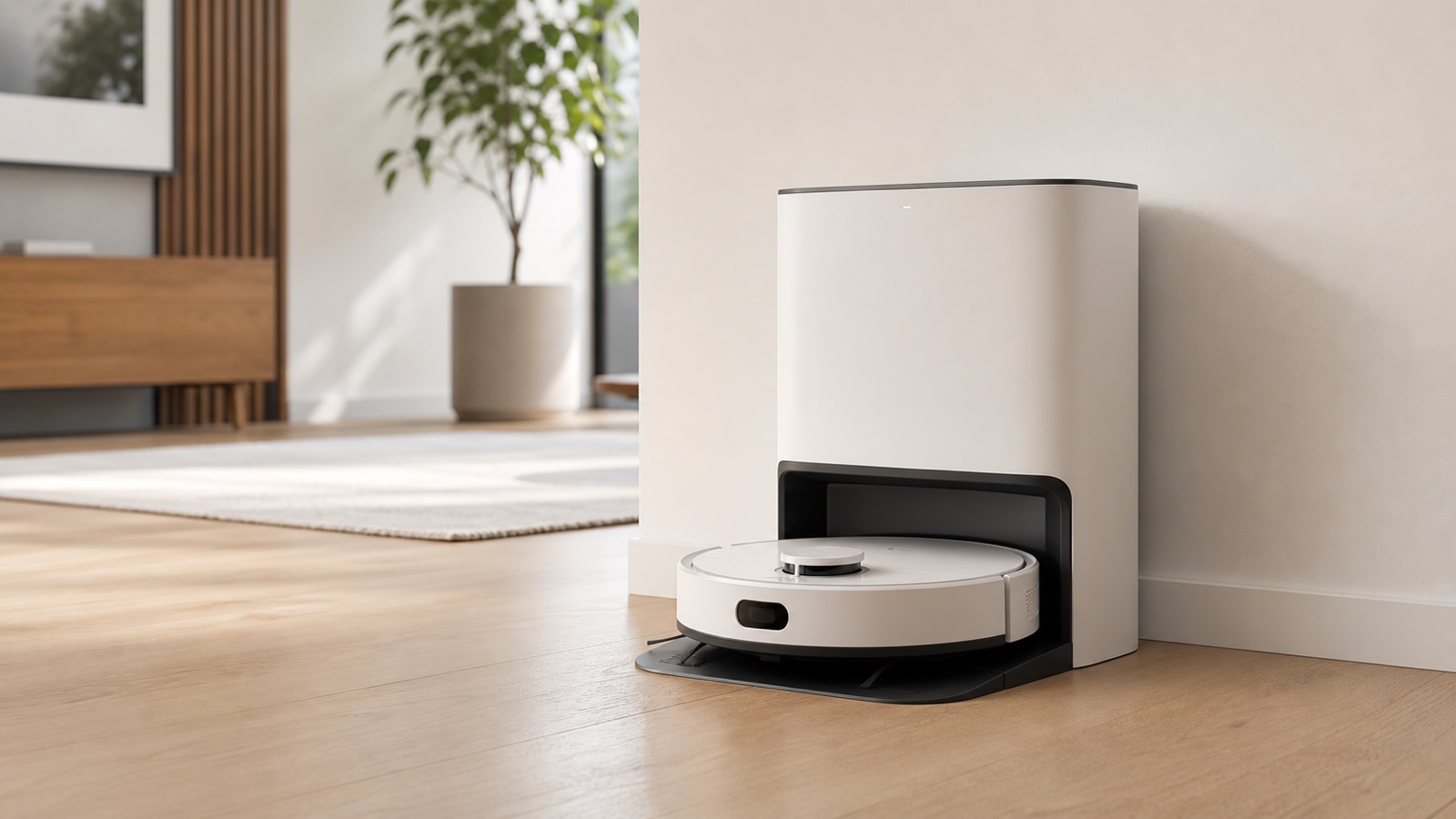
Michal Zucker, Design & Fit lens: "A self-empty dock is a piece of furniture, so plan for it. The all-in-one mop docks are tall and wide and need a spot against a wall with a bit of clearance, ideally near where the robot cleans and not in a walkway. Measure the space before you buy the flagship; a smaller auto-empty dock like the C10's disappears more easily in an apartment."
How we picked
No lab, no theater. Here's the process, so you can weigh it.
- Dock seal and filtration weighed alongside convenience, because containment of captured dust is the real health benefit.
- Cleaning performance graded on independent tests (Vacuum Wars embedded-carpet and pet-hair results), not suction claims.
- Cost of ownership modeled, including three years of dock bags, in our Self-Empty Tax study.
- Graded on PickGrade's three lenses: Value & Longevity, Design & Fit, and Health & Environment.
- We don't fake hands-on testing. PickGrade doesn't run its own lab and never pretends to. My job is to hold the claims up against the independent data and the health reality.
Last updated: July 2026.
Still choosing?
Tell the quiz your home layout, floor type, pets, maintenance tolerance, mopping needs, and budget, and it separates simple robots from the lower-maintenance dock systems.
Frequently asked
Is a self-emptying robot vacuum worth it?
For most homes, yes, and not just for the time saved. A self-emptying dock transfers captured dust and allergens into a sealed bag instead of a bin you tip out by hand, which avoids re-aerosolizing fine particles into the room (a real benefit for allergy or asthma households). With the Eufy C10 starting around $250, the dock no longer carries a big price premium. Just budget for the disposable bags.
Are self-emptying docks good for allergies?
They help, because emptying a robot's small bin by hand puffs the finest dust and dander back into your breathing zone. A sealed dock contains that transfer, and better docks filter the exhaust through a HEPA-grade filter. It's one of the strongest reasons to choose a dock. Keep the dock's filter clean so it keeps containing rather than leaking.
Do self-emptying robot vacuums still need cleaning?
Yes. The dock automates the bin, not the rest: you still clean the brushes, wipe the sensors, rinse or replace filters, and occasionally empty the dock canister or swap the bag. Skipping the filter cleaning is the common mistake, since it's what keeps the exhaust and suction strong. Plan a few minutes every couple of weeks.
How often do you replace the dock bags, and what do they cost?
Most homes swap the bag every one to two months, sooner in a shedding or dusty home. Costs vary by brand: the Eufy C10's run about $3 each, while some flagship docks use pricier proprietary bags. Over three years the total ranges from roughly $64 to $440 depending on the dock, so check the bag price before buying, not just the robot's sticker.
Should I get a robot vacuum with mopping too?
Mopping helps with light floor maintenance and daily dust on hard floors, but it won't replace a real scrub on stuck-on messes. If you have hard floors and want both handled hands-off, the Yeedi M14+ (budget) or Dreame X60 (flagship) add self-washing mops. If your home is mostly carpet, a strong vacuum-only self-empty robot like the Eufy C10 is the more efficient buy.