The Upgrade Tax: When the New Version Is Worth It, and When Last Year's Model Wins
Every new model arrives with a confident reason to buy it. I put seven of them against the version they replaced — and "newest" turned out to be the better value less than half the time. A marketer's guide to spotting the upgrade tax.
By Eran Yorkovsky · July 1, 2026 · Last updated July 1, 2026
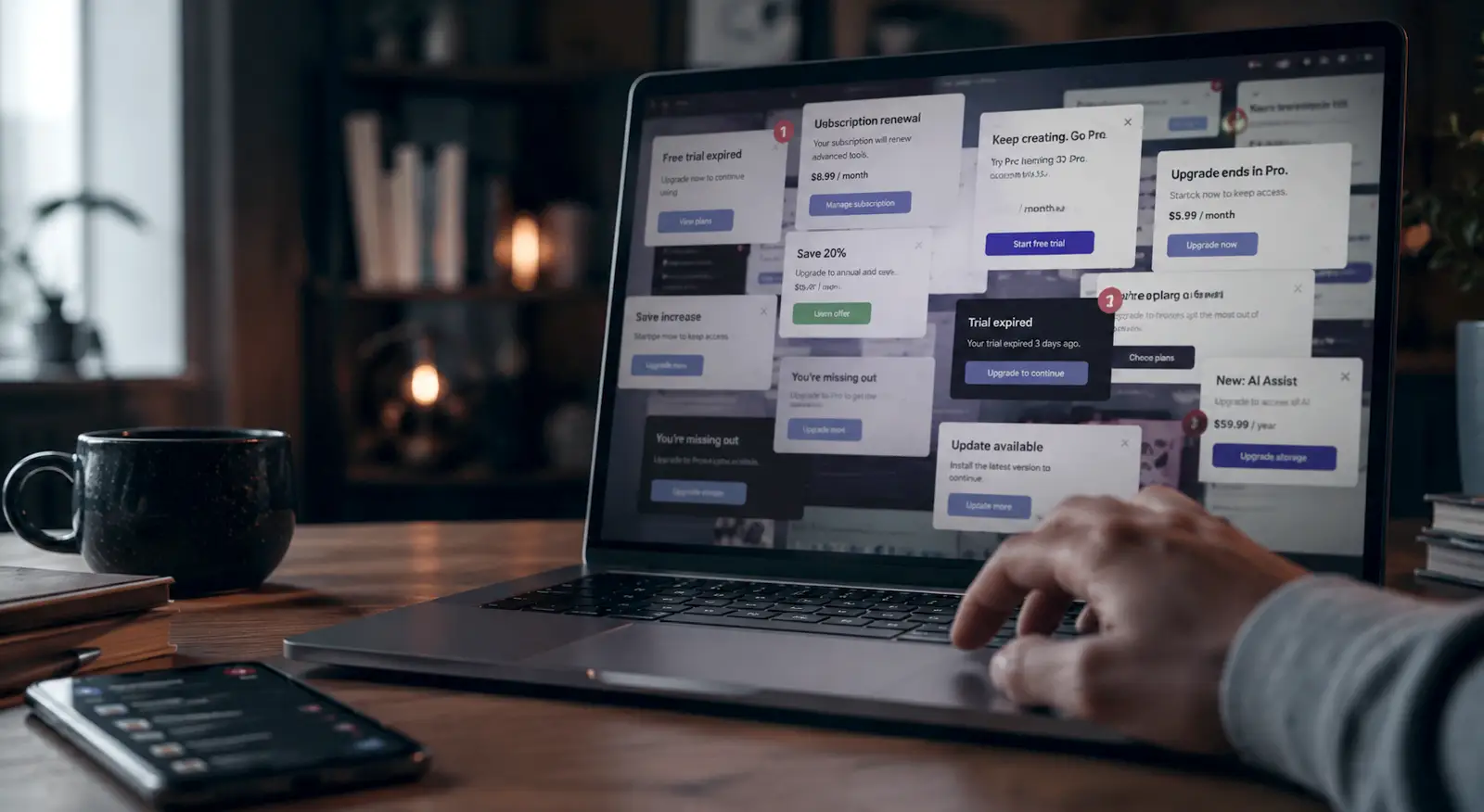
There's a moment every shopper knows. You go to buy something, and there are two versions in front of you: the new one, glowing with this year's launch, and last year's model, quietly a little cheaper. The instinct is to reach for the new one — it's newer, so it must be better, and who wants to buy the thing that's about to feel old?
I wanted to know how often that instinct is actually right. So I took seven products where a new generation had just replaced an old one, put the prices side by side, and asked the only question that matters: is the new version really the better value, or are you paying a tax for the word "new"?
The answer surprised me. Sometimes the new one is genuinely the smarter buy — and not for the reason you'd think. But more often, last year's model is the one I'd tell a friend to get.
The tell is the price tag
Here's the pattern that jumped out once I lined them all up: whether the new version is worth it has almost nothing to do with how impressive the upgrades sound, and almost everything to do with one boring decision the manufacturer made — did they hold the price, or raise it?
When a company keeps the price flat (or drops it) and improves the product, the new version quietly becomes the better deal. When they raise the price — or leave it the same while barely changing the product — the discount that lands on last year's model is where the value goes. That's the whole game, and once you see it, you can't unsee it.
Apple, of all companies, kept holding and even cutting prices this cycle. Sony and Samsung raised them or stood still. Watch what that does to the verdicts.
The few times the new one wins
iPhone 17 — the upgrade that didn't cost more. The iPhone 17 starts at $799, exactly what the iPhone 16 cost at launch. Except Apple doubled the base storage from 128GB to 256GB and handed the regular model two features that used to be Pro-only: the 120Hz ProMotion display and Always-On. Same price, meaningfully more phone. The discounted iPhone 16 at $699 is still a fine budget pick if you don't care about the smoother screen — but at $799, the new one is the better buy, full stop.
AirPods Pro 3 — same $249, roughly double the noise cancelling. Apple held the price again, and the Pro 3's noise cancelling is about twice as effective as the Pro 2's — enough that reviewers now put it level with Sony and Bose. Better fit, longer earbud battery, a heart-rate sensor thrown in. The one regression is a smaller case battery (24 hours versus 30). If money's tight, the outgoing Pro 2 around $199 is still excellent — but Apple didn't charge more for a real leap, so the new one wins.
MacBook Air M4 — cheaper and better. This is the cleanest of all. Apple cut the starting price to $999 (the M3 launched at $1,099) and doubled the base memory to 16GB. You get a faster laptop for a hundred dollars less than last year's. The only reason to chase the old one is a refurbished M3 around $679 — genuinely the budget play — but for anyone buying new, the newest Air is also the best-value Air.
Notice what those three have in common. Not one of them is worth it because the upgrades are dazzling. They're worth it because the price didn't go up. Hold that thought.
More often, last year's model wins
Sony WH-1000XM6 — a $50 raise for a modest polish. Sony bumped the flagship price from $399 to $449, and what you get for it is real but small: the headphones fold again, the noise cancelling is a touch better, the sound a little more balanced. Meanwhile the XM5 — still a superb pair — routinely sells for around $300. That's $150 of daylight for improvements most people won't notice on a train. Nearly every reviewer landed in the same place: the XM6 is the better product, but the XM5 is the better deal.
iPad Pro M5 — a faster chip nobody's iPad was waiting for. Same $999 and $1,299 as the M4 it replaced, and on paper the M5 is 15–30% quicker. In practice, almost nothing anyone does on an iPad comes close to taxing the M4 — a point MacRumors made bluntly, telling M4 owners there's "no general-purpose reason to upgrade." With the M4 now discounted below its old price and the two-year-old M2 cheaper still, the value move is to buy the outgoing chip and never feel the difference.
Galaxy S26 Ultra — the rare update that went backwards. Samsung's newest Ultra is thinner and a bit faster, but it carries the same cameras as the S25 Ultra, a screen that tested slightly dimmer, and — the strange part — an aluminum frame where last year's had titanium. The S25 Ultra ($1,299 at launch) gets the same seven years of software updates, so you lose nothing long-term, and it's now heavily discounted. On a deal, reviewers were blunt: the older Ultra is the better buy.
LG C4 OLED — the oldest trick in the TV aisle. LG priced the new C5 identically to last year's C4 at launch, and the upgrades are the usual iterative stuff: a newer processor, roughly 200 more nits, slightly better upscaling. The C4, meanwhile, has fallen as much as 50% — a 65-inch that launched near $2,600 now runs about $2,000, and the 55-inch under $1,200. As one reviewer put it, the C4 delivers "90%+ of the C5 experience" for a lot less. Buying last year's flagship TV isn't a compromise; in this category it's practically the strategy.
A marketer's confession
I should tell you which side of this I've worked on. I'm a marketer, and the machine that makes "new" feel non-negotiable is a machine I've helped run. The launch, the countdown, the spec no one asked for presented as the thing you can't live without, the quiet retirement of last year's model so the comparison gets harder to make — none of that is an accident. Manufacturing the feeling that the old thing is suddenly not enough is one of the most effective things marketing does.
Which is exactly why, when I'm the one holding the wallet, I slow down. Wanting the newest thing is a real feeling, and it's a perfectly good reason to buy — some of my favorite purchases were pure want. But "it's the newest" is a story, not a value calculation, and the two only overlap when the maker decided to let them. The upgrade tax isn't charged by force. It's charged to people who assumed newer had to mean better and didn't check. Check, and half the time you'll still want the new one — but now it's a choice.
The seven, side by side
| Category | New version | The older model | Better value |
|---|---|---|---|
| Smartphone | iPhone 17 — $799 (256GB) | iPhone 16 — $699 (128GB) | New — same launch price, double the storage, ProMotion added |
| Earbuds | AirPods Pro 3 — $249 | AirPods Pro 2 — ~$199 | New — same price, roughly 2× the noise cancelling |
| Laptop | MacBook Air M4 — $999 | MacBook Air M3 — ~$679 refurb | New — price cut $100, base RAM doubled to 16GB |
| Over-ear headphones | Sony WH-1000XM6 — $449 | Sony WH-1000XM5 — ~$300 | Old — $50 dearer for minor gains; the XM5 is the deal |
| Tablet | iPad Pro M5 — $999 | iPad Pro M4 — discounted | Old — the M5's gains are invisible for real iPad use |
| Flagship phone | Galaxy S26 Ultra — full price | Galaxy S25 Ultra — discounted | Old — same cameras, aluminum vs titanium, dimmer screen |
| OLED TV | LG C5 — this year's MSRP | LG C4 — up to 50% off | Old — about 90% of the picture for far less |
Three wins for the new version, four for the old — and every single "new wins" is a case where the price held or fell.
How to not pay the tax
The test takes about thirty seconds. Find the two prices — the new version and the outgoing one, at what it actually sells for today, not its old sticker. Then ask what the gap is buying. If the new model costs the same or less and genuinely does more, buy it and enjoy being right. If it costs more, make the upgrades justify every dollar of the difference — and remember that a spec sheet's "30% faster" is often a real-world "you'll never notice." When the old model is deeply discounted and gets the same software support, the burden of proof sits squarely on the new one.
And if you just want the new thing because it's new? That's allowed. Just spend the money knowing that's what you're buying.
Methodology
I compared seven products where a new generation replaced a direct predecessor, using each model's launch price and its current selling price as of July 2026. "New version" figures are the current retail or launch price; "older model" figures are the typical street or refurbished price now that the successor has shipped — and because those move constantly, treat them as a snapshot, not a promise. Each verdict weighs three things: the price gap, whether the upgrades change real-world use (not just benchmarks), and whether the older model still gets meaningful software support. Where a call rests on judgment rather than a number — how much a brightness bump or a chip generation matters in daily life — I've tried to say so. Prices and availability shift with sales and stock; the direction of each verdict is more durable than any single figure.