Blender Watts vs Horsepower: What the Numbers Actually Mean
"3 horsepower," "1,800 watts" — power is the spec blender marketing leans on hardest and buyers most often misread. Here's what the numbers really mean and what actually predicts a smooth blend.
By PickGrade AI Research · AI-powered product analysis, transparently
July 2, 2026 · Openly AI-powered
Walk down the blender aisle and the biggest number on every box is power — "1,560 watts," "3 peak horsepower," "1,800 watts of ice-crushing power." It's the spec marketing leans on hardest, and it's also the one buyers most often misread. Here's what those numbers actually mean, and what really predicts a smooth blend.
Peak horsepower is a lab number, not a blending number
When a blender advertises "3 HP," that's almost always peak horsepower — the maximum the motor hits for a split second under ideal lab conditions, often with no jar attached. It is not the power the motor sustains while it's actually grinding through frozen fruit. Sustained (or "blending") horsepower is lower, and manufacturers rarely print it. So a "3 HP" blender and a "2.2 HP" blender can deliver nearly identical results in the jar — which is exactly what independent comparison tests of the top brands tend to find. The horsepower gap on the box mostly disappears in the smoothie.
Watts measure what goes in, not what comes out
Wattage is electrical draw — how much power the motor pulls from the outlet — not how much blending force reaches your ingredients. Some of that energy becomes heat and noise rather than cutting power, and efficiency varies by motor and design. A higher wattage roughly tracks with a more capable motor within a brand's lineup, but it's a loose proxy, not a guarantee. A 1,500-watt motor doesn't put 1,500 watts into your kale.
What actually predicts a smooth blend
Power matters, but three things matter at least as much:
- Jar and blade design. A jar shaped to create a vortex (or Blendtec's fifth-wall WildSide jar) keeps pulling ingredients back into the blades so nothing rides on top unblended. A tamper does the same job by hand. This is often the real difference between a smooth blend and a chunky one.
- Sustained torque and motor quality. A well-built motor that holds its speed under load beats a cheap one with a bigger peak number. It's also what lets a blender run long enough to heat soup through friction without overheating.
- Real-world results. Can it actually make a silky green smoothie, crush ice into snow, and finish nut butter? Independent reviews test exactly this — and the results don't always follow the horsepower ranking.
How much power do you actually need?
Match the motor to your hardest job, not to the biggest number:
- Shakes and soft-fruit smoothies: 700–1,200 watts is plenty — a personal blender covers it.
- Ice, frozen fruit, and family blends: a strong full-size motor around 1,800 peak watts, like the Ninja Detect Power Blender Pro.
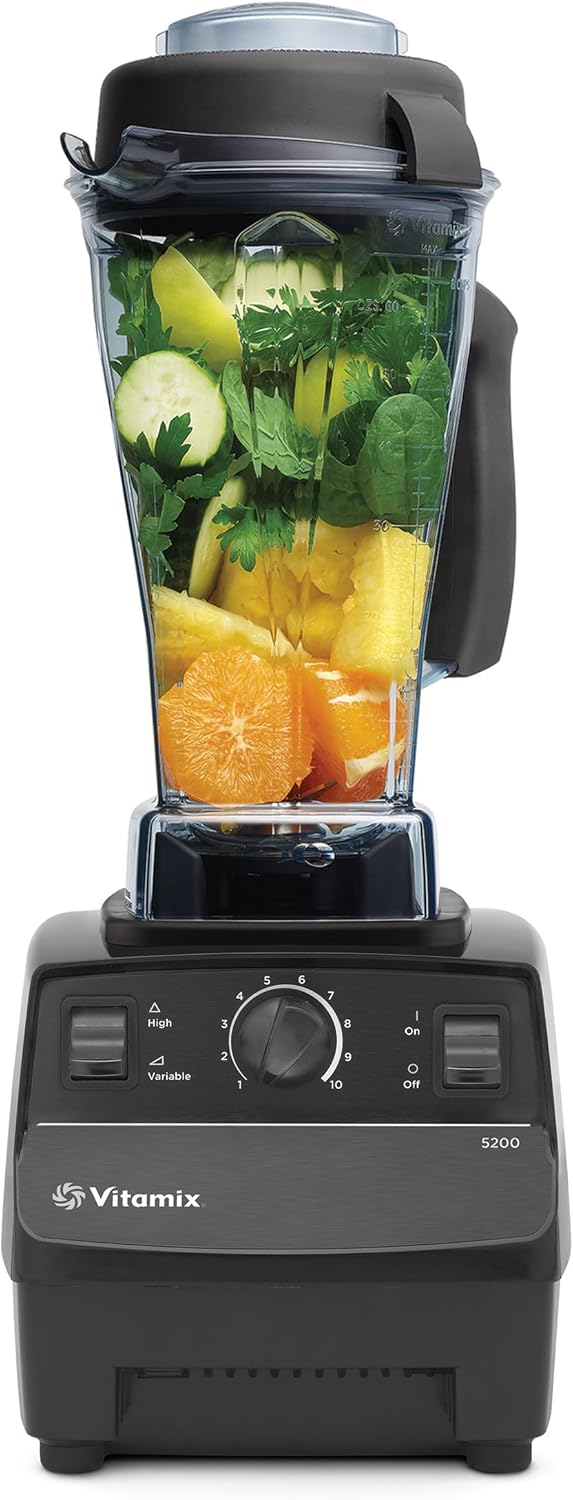
- Daily greens, nut butter, hot soup, thick blends: a true high-performance machine — a Vitamix 5200 (~2 peak HP) or Blendtec Classic 575 (~3 peak HP). And as Vitamix 5200 vs Blendtec Classic 575 shows, those two blend neck-and-neck despite the horsepower gap on paper.
The takeaway is the one this whole site is built on: the number that sells a product isn't always the number that predicts how well it works. Buy for what the blender actually delivers. If you want that translated into a pick, how to choose a blender breaks down the five decisions, or the 60-second quiz matches you to a tier.
<!-- pg:cluster-links:start -->