What Humidity Level Stops Mold? The Number to Set Your Dehumidifier To
Mold and dust mites both need humidity to thrive. The EPA's guidance is clear, and it gives you the exact target to set — here's the science.
By Dr. Yocheved Yorkovsky · Science Editor, Health, Chemistry & Environment
July 11, 2026 · Openly AI-powered
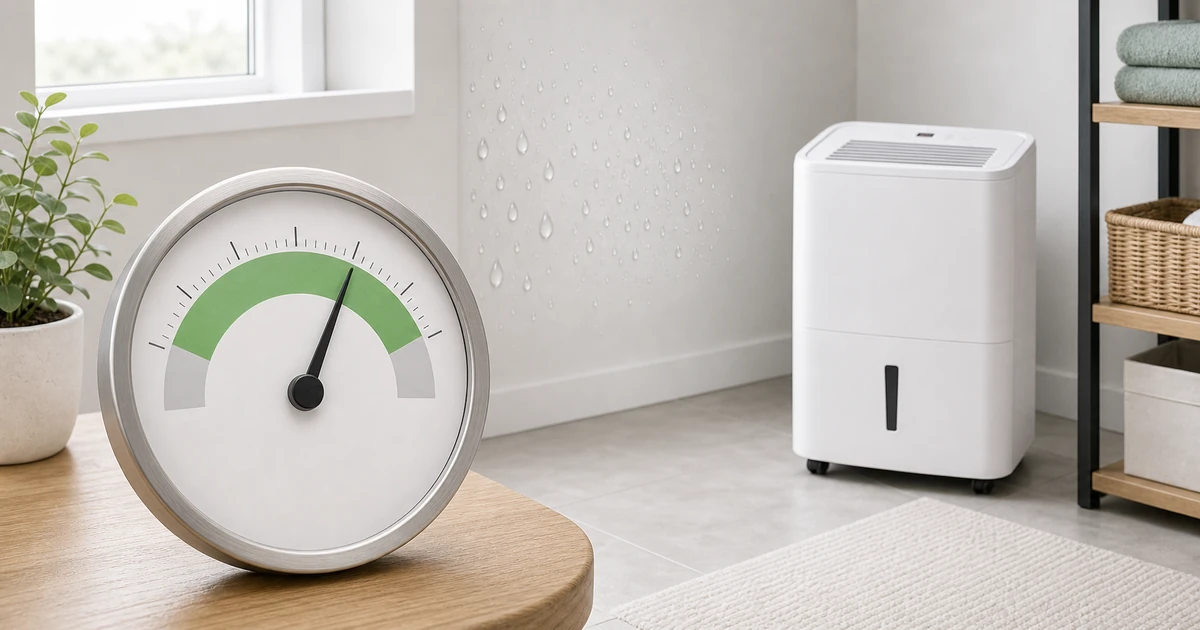
Of all the reasons people buy a dehumidifier, health is the one I care most about as a chemist, because here the advice is unusually clear-cut. There is a humidity range that discourages the two things most people are actually fighting — mold and dust mites — and it's easy to hit.
The number: below 60%, ideally 30–50%
The EPA's guidance is explicit: keep indoor relative humidity below 60%, and ideally between 30% and 50%. That single band does most of the work.
Here's why the ceiling matters. Mold doesn't need standing water to grow; it needs moisture in the air and on surfaces. Above about 60% relative humidity, walls, grout, fabric, and settled dust hold enough moisture for mold spores — which are always present in the air — to germinate and spread. Bring the air below 60% and you starve them of the water they need.
Dust mites have a threshold too
Dust mites are the other target, especially for anyone with allergies or asthma. They don't drink; they absorb moisture from the air through their skin, and they can't survive below about 50% relative humidity. Keeping a bedroom in the 40–50% range doesn't just reduce mites — over weeks it collapses the population.
Why you don't want it too dry
There's a floor for comfort and health, which is why the recommendation isn't "as dry as possible." Below about 30% relative humidity, dry air irritates airways, dries out skin and sinuses, and can worsen some respiratory symptoms. It also stresses wood floors and furniture. The 30–50% band is a genuine sweet spot, not a compromise.
Setting it in practice
Every full-size dehumidifier here has a humidistat: set it to 45–50% for a living space or bedroom, a little lower (40–45%) for a damp basement where you're fighting musty odor and want a margin. Then let it cycle — you don't need to chase the driest possible reading. Hitting the range is the goal, and holding it there is what protects the room.
An inexpensive hygrometer (about $10) is worth having to confirm what the room actually sits at, since built-in sensors vary. If your readings stay stubbornly above 60% no matter the setting, the unit is likely undersized for the space — our sizing guide covers how to match capacity to the room, and the quiz will recommend one.