Head-to-head
Midea Duo vs Whynter NEX: The Only Portable AC Matchup That Matters
This is the portable AC matchup that actually matters, because these are the two units that fixed the category's dirty secret. A single-hose portable exhausts indoor air outside, pulling hot outdoor air back in through every gap — it fights itself all day. Both of these run dual hose-in-hose designs plus inverter compressors, which is why they embarrass the spec-sheet-identical competition in independent testing. The Midea Duo's case is efficiency and civility: the highest real-world (SACC) cooling of any portable measured by Consumer Analysis, around 9.2 SACC per watt where rivals manage ~8.0, a 124.7 pints/day dehumidification monster, and a 42 dB floor that makes it the portable you can sleep next to. The Whynter NEX ARC-1230WN is the lab-test brawler — TechGearLab's Editors' Choice, an 11.9°F-per-hour pull-down that nearly matches big window units, a 600 sq ft rating, and self-evaporation that rarely needs draining. It's louder at full tilt (58.4 dBA measured) and slightly less efficient, but at $555.75 against the Duo's $659.99 it's the value play in a premium tier.
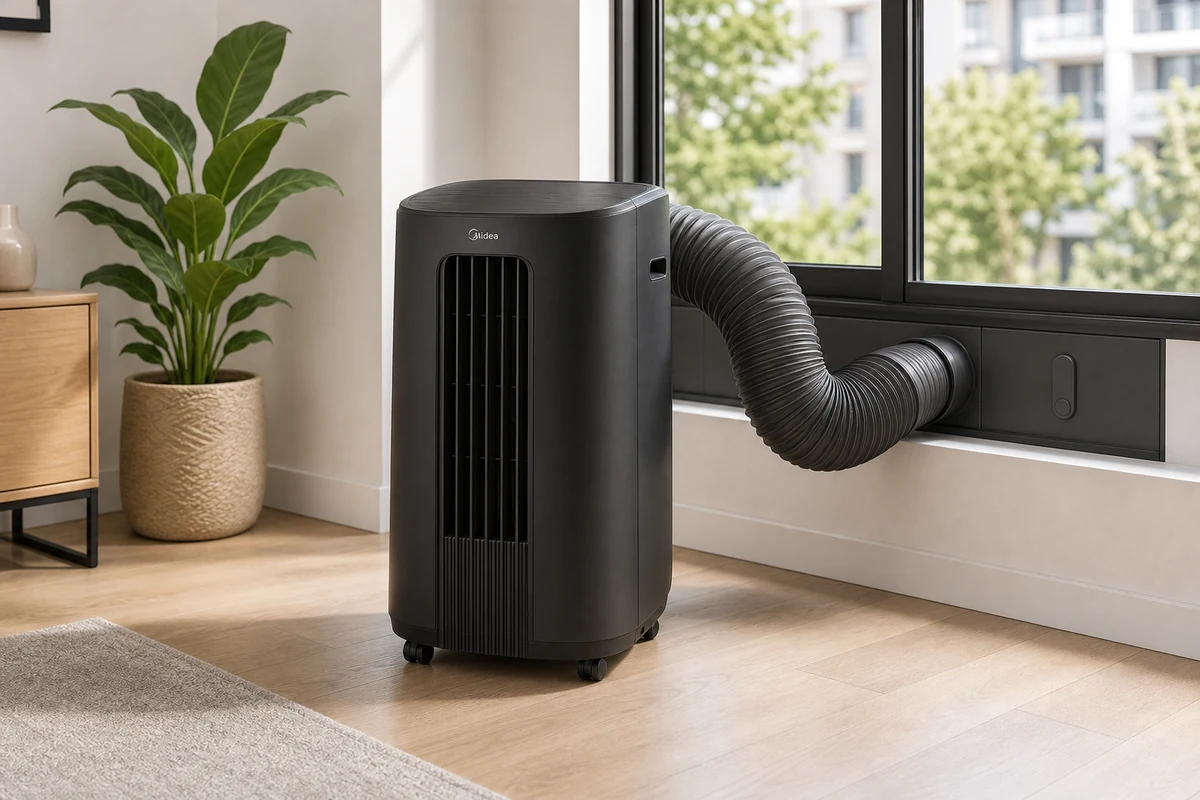 Midea Duo Smart Inverter Portable AC (14,000 BTU / 12,000 SACC, MAP14S1TBL) Midea | 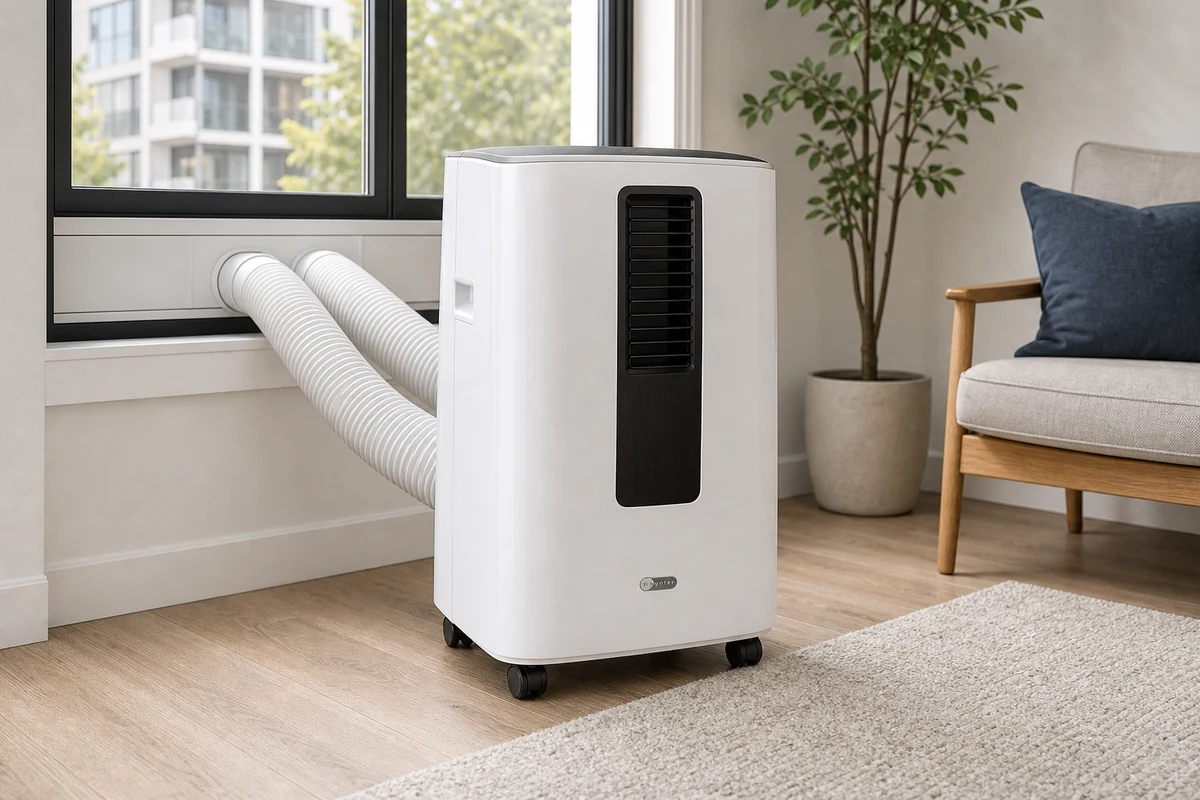 Whynter NEX Inverter Dual Hose Portable AC (14,000 BTU / 12,000 SACC, ARC-1230WN) Whynter | |
|---|---|---|
| Score | 8.4 | 8.2 |
| Price | $659.99 | $555.75 |
| Verdict | The Duo's hose-in-hose dual design delivers the highest real (SACC) cooling capacity and best efficiency of any portable measured — the one to buy when a window unit isn't allowed. Accept the tradeoffs of the format: 85 lb, three feet tall, and loud at full fan. | Rtings' and TechGearLab's top-tested portable pulls a hot room down nearly 12°F in an hour and installs faster than any rival thanks to its stowaway hose. Choose it over the Duo for raw cooling in brutal rooms; choose the Duo for efficiency and a quieter idle. |
| Best for | your lease, window type, or HOA rules out a window unit and you still need real cooling for up to 550 sq ft | you're fighting a genuinely hot space — west-facing, top-floor, or up to 600 sq ft — where weaker portables stall |
| Avoid if | a window unit is an option — the Midea U+ cools the same room for less money and power | seasonal running cost matters more than peak cooling, or the unit has to travel stairs regularly |
| Score breakdown | ||
| value | 7.8 | 7.6 |
| quietness | 8.0 | 7.6 |
| cooling power | 9.2 | 9.0 |
| smart features | 8.5 | 8.0 |
| installation fit | 8.0 | 8.6 |
| energy efficiency | 8.8 | 8.0 |
| Specs | ||
| model | MAP14S1TBL (MAP14HS1TBL adds heat) | ARC-1230WN (ARC-1230WNH adds heat) |
| weight | ~85 lb on casters | ~73–77 lb on casters |
| airflow | ~389 CFM, up to 26 ft throw | — |
| warranty | 1 year | 1 year (compressor longer) |
| compressor | Variable-speed inverter | Variable-speed inverter |
| efficiency | 9.2 SACC/watt — highest measured among portables | — |
| hose design | Dual hose-in-hose (intake and exhaust both outdoors) | NEX dual hose-in-hose, pre-installed and stowable |
| noise level | As low as 42 dB | — |
| room coverage | Up to 550 sq ft | Up to 600 sq ft |
| smart control | Midea Air app, Alexa, Google Assistant | NetHome Plus app, Alexa, Google Assistant |
| cooling capacity | 14,000 BTU ASHRAE / 12,000 BTU SACC | 14,000 BTU ASHRAE / 12,000 BTU SACC |
| dehumidification | ~124 pints/day (dry mode) | — |
| vent | — | 80° automatic swing louver |
| noise | — | 58.4 dBA measured on high at 4 ft; sleep mode available |
| measured cooling | — | 11.9°F drop in 60 minutes (TechGearLab lab test) |
| Buy → | Buy → | |
Final verdict
The Duo is the better portable for most rooms that need one: it moves more heat per watt, runs quieter at the settings you'll actually sleep near, and pulls more moisture out of humid air than anything else in the class. Its premium over the Whynter buys real performance, not badge. The Whynter is the right call in two cases: the room is genuinely punishing — a sun-baked upper floor, a space pushing past 550 sq ft — where its lab-proven pull-down speed and 600 sq ft rating earn their keep, or the ~$100 saving matters and you'll run it during the day, where its higher noise ceiling is irrelevant. Both are dual-hose inverters, which is the real headline: either one embarrasses every single-hose portable at any price.
PickGrade may earn a commission from purchases made through links on this page, at no extra cost to you. This never affects our grades. Full disclosure.