The deepest no-code stack for real SaaS and marketplaces
Bubble
Reviewed by
Eran Yorkovsky · Founder, PickGrade
The most flexible, mature no-code platform: it builds genuinely complex SaaS and marketplaces with custom logic, a real database, and strong Stripe support. The catches: Workload-Unit pricing is hard to predict, there's no code export, and the learning curve is steep.
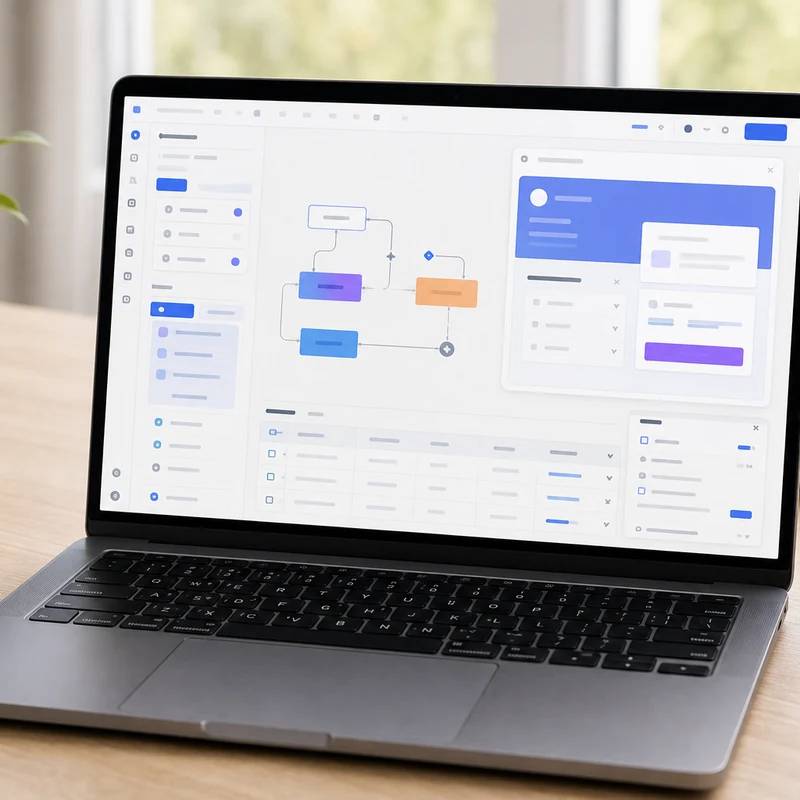
One of the strongest no-code platforms for when the project is really a web app, a SaaS product, a two-sided marketplace, a portal, or anything that needs a database, user accounts, and custom logic. Bubble pairs an integrated relational database with a powerful visual workflow engine, 1000+ plugins, an API connector, and a mature Stripe integration that's become the no-code standard for subscriptions and marketplaces, and it now has beta native iOS and Android builders sharing the same backend. The honest trade-offs: its Workload-Unit pricing is hard to predict and can trigger overages as traffic grows, there's no source-code export so leaving means rebuilding, and the learning curve is steep. For founders building genuinely complex apps, it's the most capable no-code option; for a brochure site or portfolio, it's overkill.
$29
PickGrade may earn a commission from purchases made through links on this page, at no extra cost to you. This never affects our grades. Full disclosure.
Last reviewed Jun 21, 2026
What we like
- ✓The most flexible and mature no-code platform — builds complex SaaS, marketplaces, and social apps with custom backend logic
- ✓Integrated relational database and a powerful visual workflow engine, plus 1000+ plugins and an API connector
- ✓Mature Stripe integration makes it the no-code standard for subscriptions, marketplaces, and escrow
- ✓New beta native iOS and Android builders share the same backend as your web app, avoiding duplicate work
- ✓Genuinely useful free tier (50K WUs) with full platform access for learning and prototyping
Trade-offs
- −No source-code export — if you outgrow Bubble, you rebuild from scratch elsewhere
- −Workload-Unit pricing is hard to predict; a medium-traffic app can consume ~500K WUs/month and trigger overages
- −Steep learning curve compared to template-based or AI builders
- −The native mobile builders are still in beta and lack some device features (biometrics, advanced sensors)
- −Costs and complexity climb quickly as traffic and workflow depth grow
Best for
Founders and operators building no-code web apps, MVPs, portals, marketplaces, dashboards, or workflow products.
Avoid if
you only need a simple marketing website, portfolio, or local business page.
The three lenses
How we grade →- 8.4/10
Value & Longevity · Eran Yorkovsky
- 9.1/10
Design & Fit · Michal Zucker
Score breakdown
- fit9.1/10
- quality8.8/10
- value8.6/10
- ease7.8/10
Specs
- Logic
- Visual workflow engine plus 1000+ plugins and an API connector
- Plans
- Free (50K WUs, no live publish) → Starter $29/mo (175K WUs) → Growth $119 → Team $349 → Enterprise
- Mobile
- Beta native iOS/Android builders (React Native) sharing the web app's backend
- Best for
- Complex custom web apps — SaaS, marketplaces, fintech, and social platforms
- Database
- Integrated relational database (one-to-many, many-to-many, calculated fields)
- Payments
- Mature Stripe integration — subscriptions, marketplaces, and escrow
- Community
- Large, mature community and template ecosystem
- Code export
- No source-code export — you are locked into the platform
- Pricing note
- Annual billing saves ~20%
- Pricing model
- Usage-based Workload Units — every query, workflow, and API call consumes WUs; overages cost extra
How we know
High confidenceLast checkedBubble is a full-stack visual development platform — the most flexible and mature general-purpose no-code tool — for building complex custom web apps without writing code: dynamic data, workflows, user authentication, and API integrations. It runs on a usage-based model built around Workload Units (WUs), which aggregate the server resources every database query, workflow, and API call consumes. The 2026 Web-track plans (annual) are Free (50K WUs/month, full platform access but no live publish), Starter at $29/month (175K WUs, custom domain), Growth at $119/month (250K WUs, recurring workflows), Team at $349/month (500K WUs, roles and version control), and custom Enterprise, with roughly 20% annual savings. Its strengths are depth and maturity: an integrated relational database (one-to-many and many-to-many relationships), a powerful visual workflow engine, 1000+ plugins, an API connector, and a mature Stripe integration that makes it the no-code standard for subscriptions, marketplaces, and escrow. It has also added beta native iOS and Android builders (React Native) that share the web app's backend. The main trade-offs are well known: there's still no source-code export, so you're locked into the platform and would rebuild from scratch to leave; WU pricing is hard to predict and can trigger overages as traffic grows (a medium-traffic app can use ~500K WUs/month); the learning curve is steep; and the mobile builders remain in beta. It's the right pick for SaaS products, two-sided marketplaces, fintech, and social platforms that need custom backend logic, and overkill for a simple portal or brochure site.
Compare Bubble with the top alternates side-by-side.
Compare picks →

Other expert reviews
Video reviews
YouTube — Bubble.io Review 2025 | Pros and Cons
From real owners
Human reviews that sharpen our AI grade
No owner reviews yet. Be the first to share what you think.
Own this? Write a review
Related guides
All website builder guides →Jun 9, 2026
Cheapest and Best Free Website Builders
How to get a website online cheaply or free — Square Online, WordPress.com, Wix, and GoDaddy — plus the trade-offs of free tiers and how to look professional for less.
Jun 9, 2026
AI Website Builders vs Traditional Builders
AI website builders vs traditional builders: AI generates a site from a prompt and wins on speed and custom projects; traditional builders win on predictability and maintenance.
Jun 9, 2026
Best Website Builder for Portfolios and Creators
The best website builders for portfolios and creators — Squarespace, Framer, Wix, and WordPress.com — chosen for presentation, ease, and easy updates.
Head-to-head matchups
All website builders matchups →VS · 2 products
Wix vs GoDaddy: Room to Grow or Cheapest Way Live?
Wix vs GoDaddy: Wix offers more design flexibility and room to grow; GoDaddy is the cheaper, simpler way to get a basic small-business site live fast.
VS · 2 products
Lovable vs Bolt.new: Polished Output or Framework Freedom?
Lovable vs Bolt.new: Lovable ships more polished apps with a built-in Supabase backend; Bolt.new gives framework choice and full code control for builders.
VS · 2 products
Shopify vs WordPress.com: Store Platform or Content Engine?
Shopify vs WordPress.com: Shopify is the purpose-built store that sells out of the box; WordPress.com wins on content, SEO, and flexibility with WooCommerce.
Was this review useful?