Lenovo Legion Go 2 vs ROG Xbox Ally X
The two premium Windows handhelds of 2026, compared. The Legion Go 2 has the best screen on any handheld; the Ally X is lighter, longer-lasting, and runs the slicker Xbox front end.
June 22, 2026 · Openly AI-powered
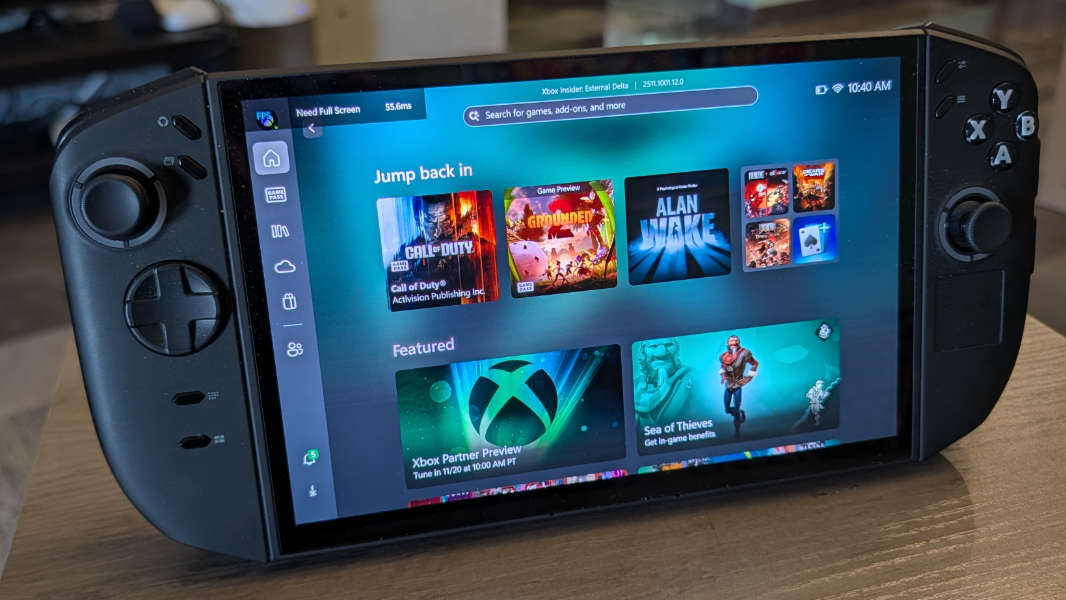
If you've decided your next handheld is a premium Windows machine rather than a Steam Deck, the real fight is between the Lenovo Legion Go 2 and the ASUS ROG Xbox Ally X. Both run AMD's top Ryzen Z2 Extreme silicon, both cost around a thousand dollars, and both are excellent. They make opposite bets about what a flagship handheld should be.
The display gap is enormous
This is where the two diverge most. The Legion Go 2 has an 8.8-inch 1920x1200 144Hz OLED that peaks over 1,100 nits — reviewers near-unanimously call it the best screen on any handheld, and it dwarfs the Ally X's 7-inch panel. The Ally X, surprisingly at this price, uses a 1080p 120Hz IPS screen — bright and smooth, but IPS, not OLED, which is a genuine disappointment given what you're paying. If the screen is what you'll stare at for hundreds of hours, the Legion is in a different league.
Performance and battery: closer than the screen
Both run the Ryzen AI Z2 Extreme, so raw horsepower is in the same tier; the Ally X pairs it with 24GB of RAM and the Legion offers up to 32GB. The difference shows in stamina. The Ally X carries an 80Wh battery — the largest in its class — which offsets some of Windows' efficiency penalty, while the Legion's 74Wh pack drains quickly under load. The Ally X is also the lighter machine at about 715g versus the Legion's roughly 920g with controllers attached. For actual handheld-in-the-hands play, the Ally X is the more practical performer; the Legion is happiest as a lap or tabletop machine.
Form factor and software
The Legion keeps the line's party trick: fully detachable TrueStrike controllers with hall-effect sticks (one doubles as a mouse) and a built-in kickstand, so it converts into a Switch-style tabletop setup and doubles convincingly as a primary gaming PC when docked. The Ally X has fixed but genuinely comfortable contoured grips that many reviewers rate as the most ergonomic in the category.
On software, both run Windows 11 — but the Ally X layers on Microsoft's new Xbox Full Screen Experience, a console-like front end that boots into an Xbox library, runs Game Pass, and plays every PC launcher. It's a real step up from raw Windows on a handheld. Lenovo has announced a SteamOS edition of the Legion Go 2 arriving June 2026 (around $1,199) for buyers who'd rather skip Windows entirely.
Verdict
Choose the Lenovo Legion Go 2 if the display leads your decision, you want detachable controllers and tabletop play, or you'll treat it as a primary machine that docks — it's the most luxurious handheld made, with the best screen, period. Choose the ROG Xbox Ally X if you want the more practical performer: lighter, longer-lasting, more comfortable to hold, with the slicker Xbox front end and Game Pass built in — and it's a bit cheaper.
Both are expensive flagships. If value drove you to handhelds in the first place, weigh them against the Steam Deck OLED, and read SteamOS vs Windows handhelds in 2026 before you commit. Full lineup on the gaming handhelds page.
Still choosing?
- Take the Gaming Handhelds quiz
- The Best Budget Gaming Handheld Under $300 in 2026
- The Best Handheld for Xbox Game Pass in 2026
- Switch 2 vs Steam Deck OLED vs ROG Xbox Ally: Which Handheld Wins in 2026?
- The Steam Deck Got Expensive: The 5 Best Alternatives in 2026
- Nintendo Switch 2 vs Steam Deck OLED: Which Handheld Should You Buy?