Written by
Dr. Yocheved Yorkovsky · Science Editor, Health, Chemistry & Environment with Eran Yorkovsky, Michal Zucker
Head-to-head
Levoit vs Coway: This Is a Room-Size Question Wearing a Brand Costume
"Levoit or Coway" is one of the most common questions in air purifiers, and it's the wrong question. These two aren't really rivals. They're different sizes of machine, and the answer is decided by your room, not by the badge on the front.
PickGrade may earn a commission from purchases made through links on this page, at no extra cost to you. This never affects our grades. Full disclosure.
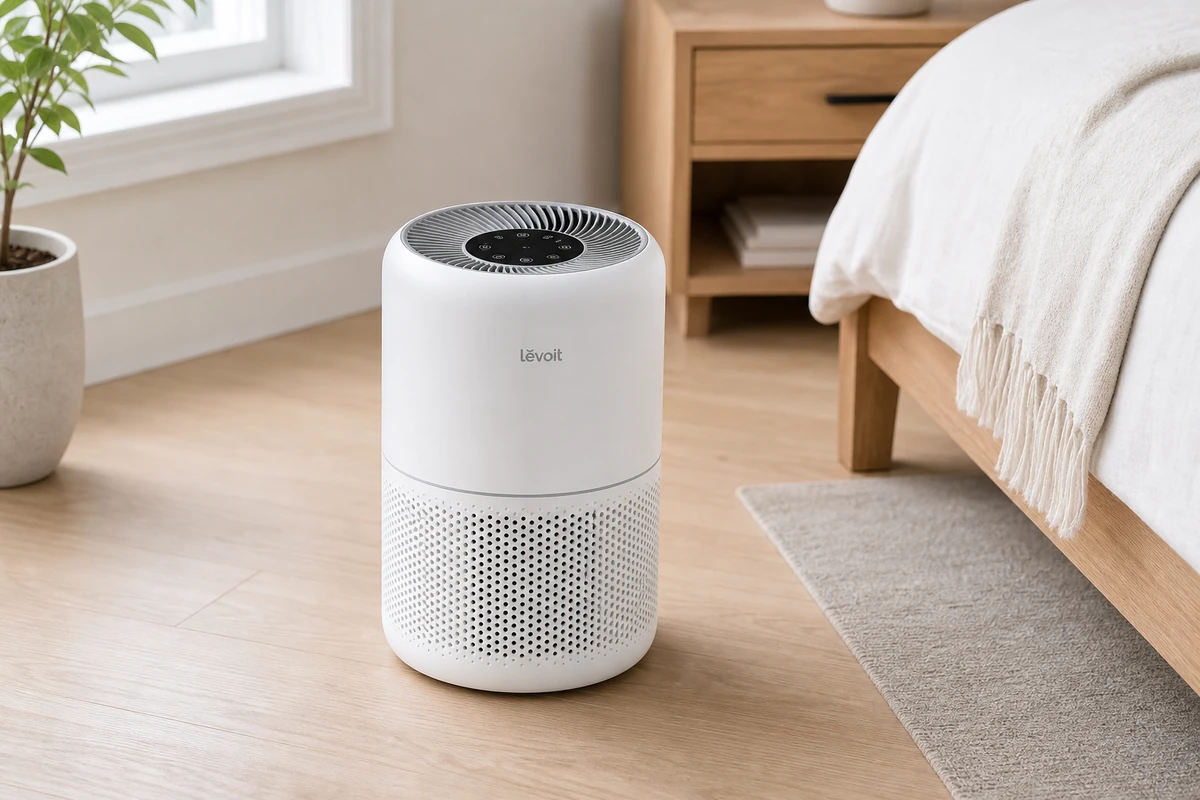
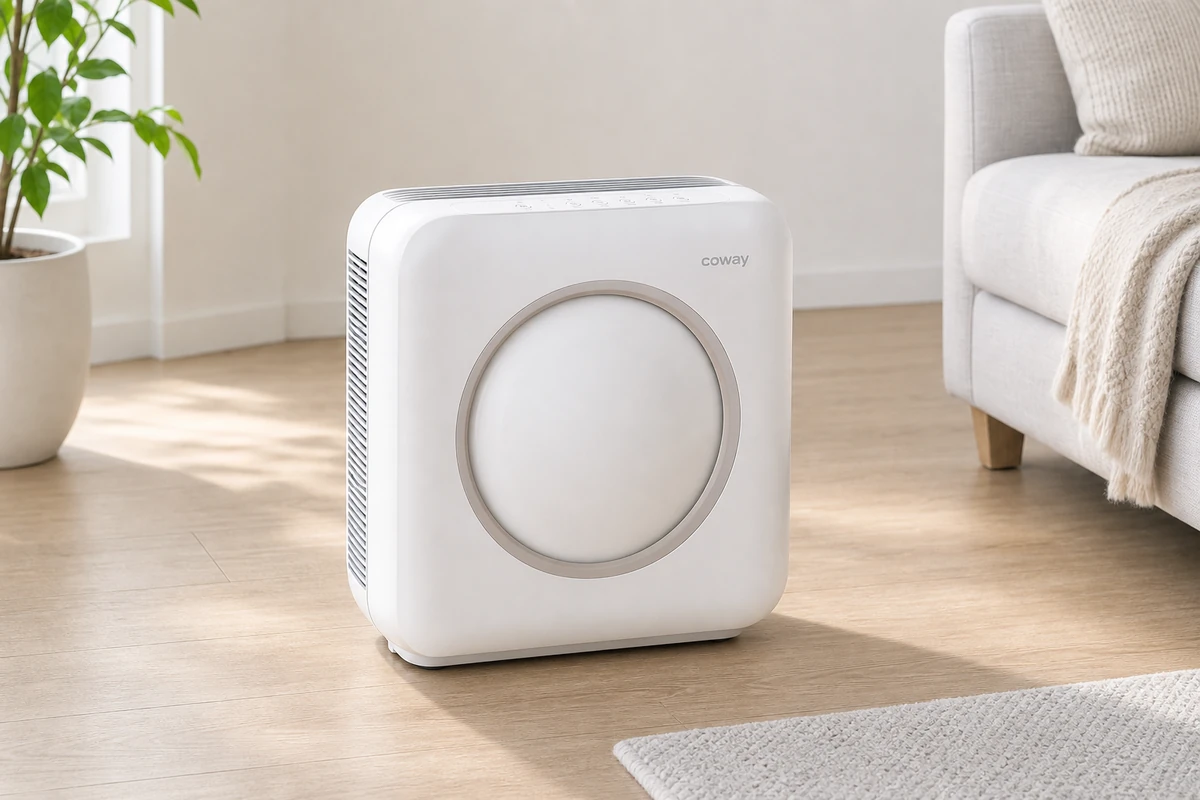
Two numbers settle it. The Levoit Core 300S ($129.99) has an AHAM CADR of 141 cfm and is rated for about 219 sq ft. The Coway Airmega AP-1512HH ($173.25) is AHAM-verified at 233 smoke CADR and covers about 361 sq ft. For roughly $43 more, the Coway moves about 65% more clean air. That's the whole comparison in one line.
Do the sizing math first, it takes ten seconds
Here's the rule I use, and you can stop reading after it if you like. For an 8-foot ceiling, aim for a smoke CADR of at least two-thirds of the room's square footage.
A 12 by 14 bedroom is 168 sq ft, which wants a CADR of about 112. Both machines clear that, and the Levoit is the better buy. A 15 by 20 room is 300 sq ft, which wants about 200 CADR, and now the Levoit cannot do the job no matter how long you leave it on. Measure the room. The brand is downstream of that.
And headroom is what buys you quiet. A purifier with room to spare runs on a low, soft setting. An undersized one runs flat out, so you switch it off, at which point it cleans nothing at all.
The setting I'd change on each of these
This is the part I care about most, so please don't skip it.
On the Coway, leave the Vital Ion mode off. It's optional, it ships off by default, and it should stay that way. Ionizers generate trace ozone, and ozone is a lung irritant rather than a genuine cleaner. You don't want to produce it in a room where you sleep eight hours a night. The Coway is an excellent purifier with that mode off.
The Levoit, to its credit, has no ionizer at all. It's CARB certified and produces zero ozone, so there's nothing to switch off. In a small enclosed bedroom or a nursery, I count that as a real point in its favor.
On the Levoit, don't trust auto mode. Its PM2.5 sensor is lenient: it will call air around 35 µg/m³ "very good," which is well above WHO guidance. The machine then under-runs while you assume it's working. Run it on a manual speed instead.
Filtration, honestly
The Coway is the more serious filter: 4 stages, with a washable pre-filter, an activated-carbon deodorizer, and True HEPA, backed by a 3-year warranty. The washable pre-filter matters more than it sounds, because it catches the big stuff and costs nothing to maintain.
The Levoit is a 3-stage pre-filter, HEPA-grade filter, and carbon design. Levoit dropped the "True HEPA" label in 2023 after a dispute, though the filter is still rated to capture 99.97% of particles at 0.3 micron. For dust, pollen, and dander in a small room, it filters perfectly well.
Neither is an odor machine. Both carry a thin carbon layer, which handles light household smells and will not handle heavy cooking smoke or wildfire smoke. If odors are your actual problem, neither of these is your purifier.
Where the Levoit genuinely wins
It's cheaper to buy, cheaper to run, and smarter. It draws 26 watts against the Coway's 77, its replacement filters are inexpensive, and at about 7 lb you can carry it between rooms one-handed (the Coway is 12.3 lb). It also has the whole smart suite the base Coway lacks: the VeSync app, Alexa and Google voice, scheduling, and an air-quality light. It's a touch quieter too, at about 24 dB in sleep mode.
The panel: two lenses I don't own
The chemistry and the air are mine. What these cost to keep running, and whether you'll tolerate one in your bedroom, aren't.
Eran Yorkovsky, Value & Longevity lens: "Price the filters, not the purifier. The Levoit is the cheaper machine and it also draws 26 watts against the Coway's 77, so it's cheaper every hour it runs. But the Coway carries a 3-year warranty against Levoit's one, and its pre-filter is washable, which is a recurring cost that simply goes away. Over three years those two things close most of the $43 gap."
Michal Zucker, Design & Fit lens: "The one you'll actually leave running is the one that fits where it needs to go. The Levoit is about 7 lb and you can move it one-handed between a nursery and a bedroom. The Coway is 12.3 lb and looks dated, and it's a piece of furniture you commit to. If it has to live on a nightstand, measure first, because the Coway is wider than people expect."
How we picked
No lab, no theater. Here's the process, so you can weigh it.
- Sized by CADR against real room area, using AHAM-verified figures rather than marketing coverage claims.
- Specs verified against manufacturer documentation: CADR, coverage, noise, filter type, power draw, and ozone status.
- Owner complaints scanned for the noise, filter-cost, and lenient-auto-mode patterns these two are known for.
- Graded on PickGrade's three lenses: Value & Longevity, Design & Fit, and Health & Environment.
- We don't fake hands-on testing. PickGrade doesn't run its own lab and never pretends to. My job is to hold the claims up against the underlying airflow and health science.
Last updated: July 2026.
Still choosing?
Final verdict
Measure your room, then choose.
Buy the Levoit Core 300S ($129.99) for a small bedroom, nursery, or office up to roughly 220 sq ft. Within that footprint it does everything you need, for less money, on a third of the electricity, with an app, a sensor, and voice control the base Coway doesn't offer. It has no ionizer and produces zero ozone, which in a small enclosed room where someone sleeps carries real weight. Just run it on a manual speed rather than trusting its lenient auto mode.
Buy the Coway Airmega AP-1512HH ($173.25) for a normal-to-large bedroom or a medium living space, roughly 250 to 360 sq ft. It's the better machine: 233 verified smoke CADR against 141, a washable pre-filter, True HEPA, a 3-year warranty, and enough headroom to clean your room while running quietly instead of screaming at full speed. It takes clean-air delivery, particle filtration, and odor handling on our scorecard, and for most real bedrooms it's the one I'd buy. Only, please, leave the Vital Ion mode switched off.
And if heavy smoke or strong cooking odors are the reason you're shopping, buy neither. Both have thin carbon. Size up to a purifier with a deep carbon bed instead.
Frequently asked
Is Levoit or Coway better for a bedroom?
It depends on the bedroom's size, which is why the brand question is the wrong one. For a small bedroom or nursery up to about 219 sq ft, the Levoit Core 300S is enough and it's cheaper, quieter, and smarter. For a normal-to-large bedroom of roughly 250 to 360 sq ft, the Coway AP-1512HH is the better machine, because its 233 verified smoke CADR against the Levoit's 141 lets it clean the room while running at a low, quiet speed instead of flat out.
Is the Coway AP-1512HH worth $43 more than the Levoit Core 300S?
If your room is bigger than about 220 sq ft, yes, and it isn't close: you're buying 65% more clean-air delivery, True HEPA, a washable pre-filter, and a 3-year warranty instead of one. If your room is smaller than that, no. You'd be paying for capacity you can't use, and giving up the Levoit's app, voice control, PM2.5 sensor, and much lower running cost.
Do Levoit or Coway air purifiers produce ozone?
The Levoit Core 300S has no ionizer at all. It's CARB certified and produces zero ozone, which is a genuine advantage in a small enclosed bedroom or nursery. The Coway AP-1512HH has an optional Vital Ion mode that emits trace ozone. It ships switched off, and I'd leave it that way: ozone is a lung irritant rather than a genuine cleaner. With that mode off, the Coway is an excellent purifier.
What CADR do I need for my room?
For an 8-foot ceiling, aim for a smoke CADR of at least two-thirds of the room's square footage. A 168 sq ft bedroom wants about 112 CADR, which both of these clear. A 300 sq ft room wants about 200, which only the Coway (233) reaches. Give yourself extra headroom if you want to run it quietly, since a purifier with room to spare can do the job on a low speed.
Can either of these handle smoke or cooking odors?
Not really, and I'd rather tell you now. Both carry only a thin activated-carbon layer, which manages light household smells but not heavy cooking smoke or wildfire smoke. Odors and gases need a deep carbon bed, not a HEPA filter. If smoke is the reason you're shopping, neither of these is the right purchase and you should size up to a unit built for it.
Why shouldn't I use the Levoit's auto mode?
Its PM2.5 sensor is lenient. It will label air around 35 µg/m³ as "very good," which is well above WHO guidance, so the purifier runs slower than it should while you assume it's handling things. The fix is simple: run the Core 300S on a manual fan speed rather than leaving it to decide for itself.
Is the Levoit Core 300S still True HEPA?
Levoit dropped the "True HEPA" label in 2023 after a dispute, but the filter is still rated to capture 99.97% of particles at 0.3 micron, which is the same performance the label describes. For dust, pollen, and dander in a small room, it filters perfectly well. The Coway does still carry the True HEPA label, in a 4-stage system with a washable pre-filter.
Which is cheaper to run over time?
The Levoit, on electricity: it draws 26 watts against the Coway's 77, and its replacement filters are inexpensive. But the Coway's pre-filter is washable rather than replaceable, and it carries a 3-year warranty against Levoit's one year. Over about three years those two things close much of the gap, so the running-cost advantage is real but smaller than the wattage alone suggests.
Was this comparison useful?