Buying guide
Best Air Purifier for Smoke: Cooking, Wildfire, and Odor Guide
Reviewed by
Dr. Yocheved Yorkovsky · Science Editor, Health, Chemistry & Environment
Smoke is the hardest job for a portable air purifier: it's fine particles and odor at once, so you need more airflow than for dust, real carbon for smell, and the right technique. Here are the picks by room size and smoke source, plus a wildfire playbook and what to avoid.
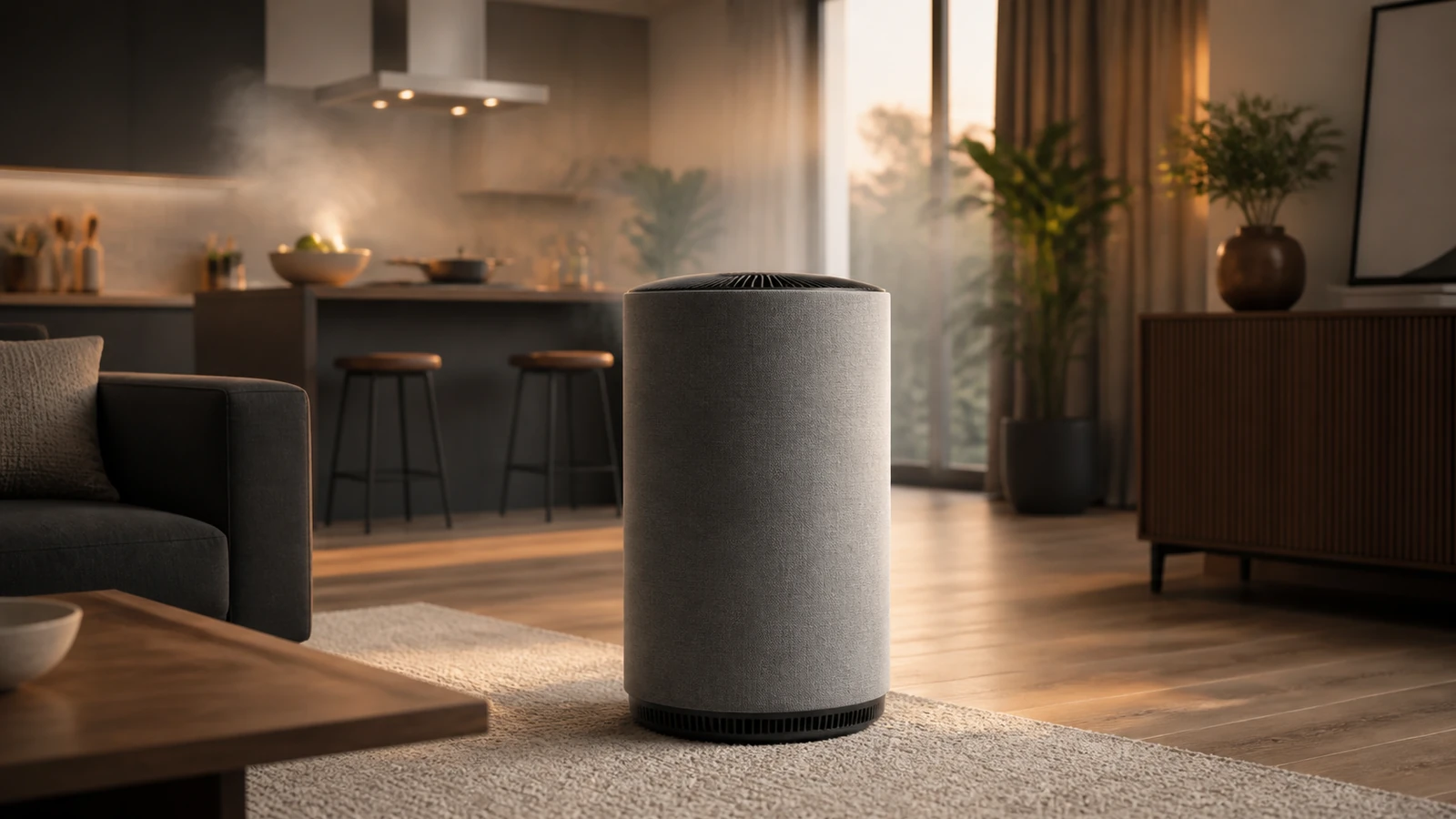 Find the best smoke air purifier →
The short answer
Smoke is the hardest job a portable air purifier takes on, so the rule is oversize, don't undersize, and make sure there's real carbon for odor. Quick picks by situation:
- Large room or wildfire season — Blueair Blue Pure 211i Max ($300) or Levoit Core 600S ($300). Both push ~410 cfm and clear ~635 sq ft fast; the Blueair runs quieter (23–53 dB) with PM1 sensing, the Levoit matches it on power.
- Bedroom or mid-size room — Coway Airmega AP-1512HH (~$175) for quiet nightly use, or the value Winix 5510 ($180), whose pelleted AOC carbon handles odor better than most at the price.
- What to skip: tiny desk units for whole-room smoke (hopeless), and anything marketed as an "ozone" or "ionizing" purifier — see the safety note below.
One honest caveat up front: every consumer purifier here uses a relatively light carbon layer, so they take the edge off smoke odor rather than erasing heavy cigarette or cannabis smell. For that, source control and ventilation matter as much as the machine.
Smoke is really two problems
Smoke is fine particles and odor compounds (VOCs), and they need different filters:
- Particles — the haze and the health concern — are captured by a good HEPA filter. This is where airflow (CADR) matters.
- Odor and gases need activated carbon. HEPA does nothing for smell. Thin carbon layers help a little; deeper carbon beds help more.
A purifier that nails particles can still leave a room smelling smoky if its carbon is minimal. Judge a smoke purifier on both, and be realistic: no portable unit fully removes heavy, persistent smoke odor.
Size it bigger for smoke
For ordinary dust, the rule of thumb is a smoke-CADR of about two-thirds of the room's square footage. For smoke, aim higher — closer to the room's full square footage, or treat the room as larger than it is. Smoke particles are fine and re-suspend easily, so you want enough air changes to keep clearing them on heavy days, ideally with headroom so the unit runs on a lower, quieter speed most of the time and ramps up when needed.
Concretely: a 300 sq ft living room that a dust guide would size at ~200 cfm should get ~300 cfm or more for smoke — which is why the ~410 cfm 600S and 211i Max are the picks for any room where smoke is a recurring problem. The room-size calculator does the math; add a margin for smoke.
The picks in depth
Blueair Blue Pure 211i Max — big-room smoke, quietly
~410+ cfm · ~635 sq ft · HEPASilent + activated carbon + washable pre-filter · 23–53 dB (QuietMark) · PM1/2.5/10 sensor · CARB-compliant, zero-ozone · $300
The 211i Max is the large-room smoke pick when you also want quiet and control. It clears ~635 sq ft fast, runs notably quieter than most high-CADR units (23 dB on low), and its rare PM1 sensor sees the fine particles smoke is made of — so auto mode reacts to a smoky room that PM2.5-only sensors might underread. It's pricey, big (~16 lb), and the electrostatic stage can't be switched off, but it's CARB-compliant and zero-ozone verified. The top Blue Pure for smoke season.
Levoit Core 600S — equal power, smart sensing
~410 cfm (AHAM-verified) · ~635 sq ft · True HEPA + activated carbon · 26–59 dB · PM2.5 sensor · app + voice · $300
The Core 600S matches the Blueair on raw airflow — a verified ~410 cfm that cleans a 600+ sq ft open room about every 12 minutes — with a responsive PM2.5 auto mode, app and voice control, and a quiet 26 dB sleep speed. It gets loud on turbo (~59 dB), and like the Blueair its carbon is thin, so it's built for smoke particles more than heavy odor. For a big living room or open plan in smoke season, it's a lot of clean air for the money.
Coway Airmega AP-1512HH — the quiet bedroom choice
Verified 233.6 cfm · ~360 sq ft · True HEPA + carbon · quiet at usable speeds · ~$175
For a bedroom where smoke leaks in — or for someone who wants smoke protection where they sleep — the Coway AP-1512HH delivers a verified 233.6 cfm quietly enough to run all night. It won't cover a great room, but in a properly sized bedroom it's the trusted, affordable particle pick.
Winix 5510 — the value pick with better carbon
~248 cfm · ~372 sq ft · True HEPA + pelleted AOC carbon + washable pre-filter · ~$180
The Winix 5510 stands out for smoke value because its pelleted AOC activated-carbon filter is more substantial than the thin carbon mats in most sub-$200 units — so it does more for cooking and smoke odor than its price suggests. Strong mid-size coverage, a washable pre-filter, and smart auto mode round it out. It's loud at full speed, but for a mid-size room on a budget it's the smoke value pick.
The wildfire smoke playbook
Wildfire smoke is the hardest case, and in an apartment or any home the machine is only half the job. Do all of this together:
- Seal the room. Keep windows and doors closed during smoke events — an open window undoes the purifier instantly.
- Make one clean room. Run a properly-sized purifier continuously in the room where you spend the most time (usually the bedroom), rather than trying to clean the whole home at once.
- Run it before it's bad, and keep it running. Cleaning is fan speed times time. Start the purifier early and leave it on; don't wait until the room already smells smoky.
- Upgrade your HVAC filter. If you have central air, a higher-MERV filter (MERV 13 where your system allows) helps the whole home between purifier runs.
- In a pinch, build a box-fan filter. A box fan taped to a MERV-13 furnace filter (a "Corsi-Rosenthal" style box) is an EPA-acknowledged emergency measure that moves a lot of air cheaply when you can't get a purifier or need extra capacity fast.
Cooking smoke and odor
For cooking, the range hood is your first line of defense — a purifier is the backup that catches what the hood misses and clears lingering odor afterward. Run the hood while cooking, then let a carbon-equipped purifier (the Winix or a 600S/211i Max in an open kitchen-living space) mop up. A purifier can't replace ventilation at the source.
Cigarette and cannabis odor: be realistic
This is where consumer purifiers struggle most. Heavy cigarette or cannabis smell saturates soft furnishings and needs deep carbon plus source control — ventilation, smoking outside, cleaning fabrics. A HEPA-plus-light-carbon purifier reduces airborne particles and takes the edge off, but it won't make a room used heavily for smoking smell clean. Set expectations accordingly, and prioritize the most carbon you can get.
A safety note: avoid ozone generators
Some devices sold as "air purifiers" or "ionizers" for smoke work by producing ozone, which is itself a lung irritant and makes indoor air quality worse, not better — exactly the wrong thing during a smoke event. Stick to mechanical HEPA-plus-carbon purifiers, and look for CARB compliance and zero-ozone verification (every pick here qualifies). If a product promises to "oxidize" smoke or odor with ozone, skip it.
Still choosing?
Take the quiz and we'll match a purifier to your room size and smoke source — wildfire, cooking, or odor.
- Take the air purifier quiz
- Best large-room air purifiers — size up for open spaces
- Best bedroom air purifiers — quiet picks for sleep
- Air purifier room-size calculator
- See all air purifiers we cover
Frequently asked
What kind of air purifier is best for smoke?
Look for strong airflow (high smoke CADR), a true HEPA filter for particles, and meaningful activated carbon for odor. Large-room picks like the Blueair 211i Max or Levoit Core 600S (~410 cfm, ~635 sq ft) help most; for a bedroom, the quieter Coway AP-1512HH works. Size up for smoke rather than down, and skip tiny desk units and any ozone-producing device.
Do air purifiers help with wildfire smoke?
Yes. A properly sized HEPA purifier, run continuously with windows and doors closed, meaningfully reduces indoor smoke particles during wildfire events. The keys are enough airflow for the room (size up for smoke), sealing the space, and running it before and throughout the event rather than only once the air already smells smoky.
What's the best way to handle wildfire smoke in an apartment?
Create one clean room rather than trying to clean the whole apartment. Run a correctly-sized HEPA purifier continuously in the room where you spend the most time, keep all windows and doors closed, and if you have central air, fit a higher-MERV filter. In a pinch, a box fan taped to a MERV-13 filter is an EPA-acknowledged way to add cheap cleaning capacity fast.
Can an air purifier remove cooking smoke and smells?
It helps, especially with carbon filtration, but it shouldn't replace your range hood or ventilation. Run the hood while cooking to capture smoke and grease at the source, then let a carbon-equipped purifier clear the lingering odor and fine particles afterward. Cooking odors are far easier to control at the source than after they've spread.
Is a HEPA filter enough for smoke odor?
No. A HEPA filter captures smoke particles but does nothing for odor and gases, which need activated carbon. Most consumer purifiers use only a light carbon layer, so they reduce smoke smell rather than eliminate it. For odor specifically, prioritize the deepest carbon you can get and pair it with ventilation and source control.
Can an air purifier remove cigarette or cannabis smoke smell?
Largely, no — this is the hardest case for a portable purifier. Heavy cigarette or cannabis odor saturates fabrics and needs deep carbon plus source control (ventilation, smoking outside, cleaning soft furnishings). A HEPA-plus-light-carbon unit reduces airborne particles and takes the edge off the smell, but it won't make a heavily smoked-in room smell clean.
Are ozone air purifiers good for smoke?
Avoid them. Some devices sold as air purifiers or ionizers for smoke produce ozone, which is a lung irritant that worsens indoor air quality — the opposite of what you want during a smoke event. Choose mechanical HEPA-plus-carbon purifiers that are CARB-compliant and zero-ozone verified. If a product claims to 'oxidize' odor with ozone, skip it.