Buying guide
Air Purifier Room Size Calculator
Reviewed by
Dr. Yocheved Yorkovsky · Science Editor, Health, Chemistry & Environment
Start with room size, not brand. Use this simple CADR rule to see whether an air purifier is strong enough for your room before comparing noise, filters, and price.
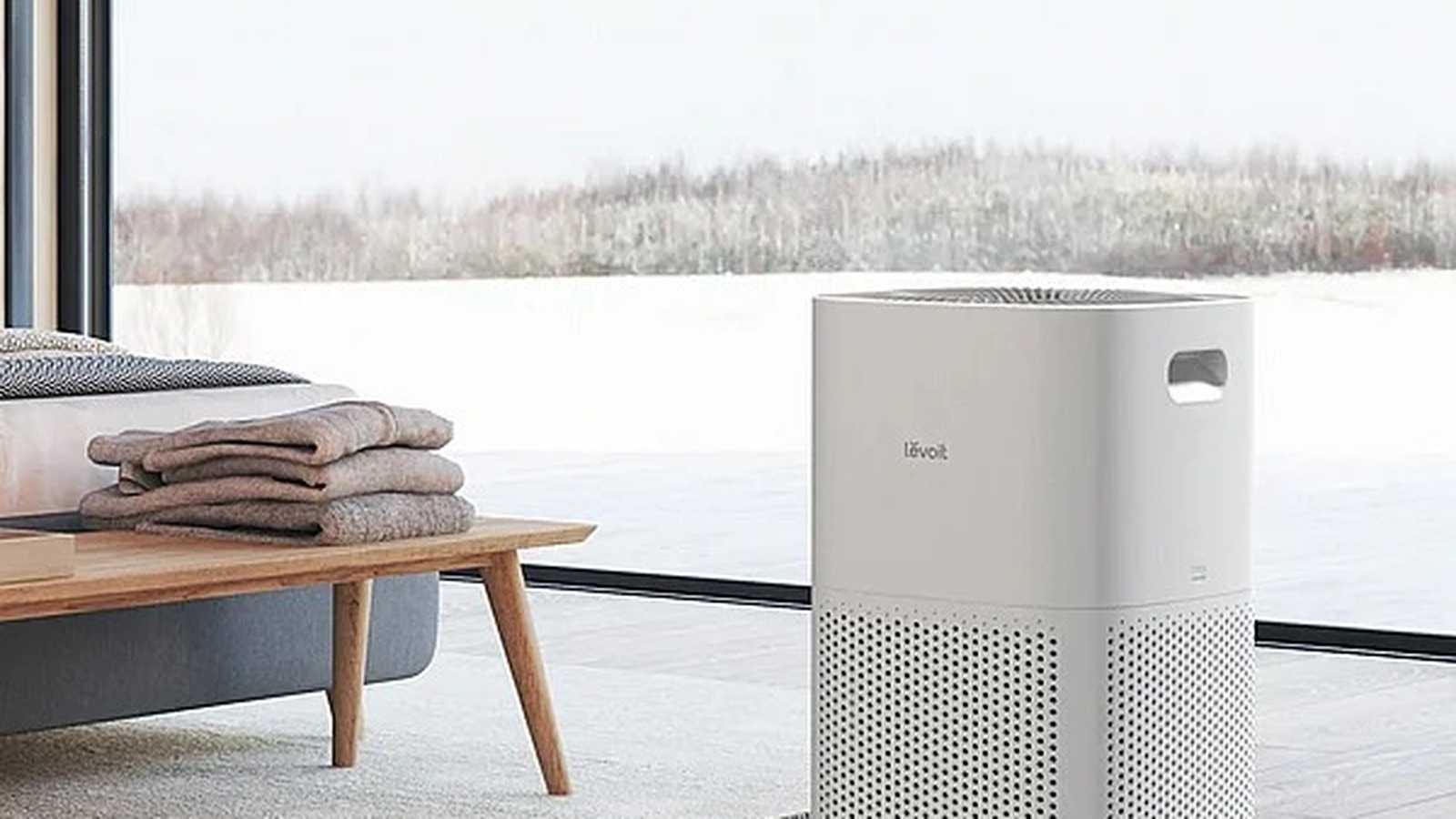 Match an air purifier to my room →
The quick answer
For a normal 8-foot ceiling, use this baseline:
Room square footage × 0.67 = minimum smoke CADR
This gives you a practical starting point for particle filtration. It isn't a promise that one purifier will solve every indoor-air problem.
The EPA says to choose a portable air cleaner with a CADR large enough for the room or area where it will be used, and notes that higher CADR means the unit can filter more particles and serve a larger area. The EPA also says CADR is for particles, not gases, and that source control and ventilation still matter.
CADR chart by room size
| Room size | Minimum smoke CADR to start with | Better target for smoke, pets, or quiet use |
|---|---|---|
| 100 sq ft | ~67 cfm | 100+ cfm |
| 150 sq ft | ~101 cfm | 150+ cfm |
| 200 sq ft | ~134 cfm | 180+ cfm |
| 250 sq ft | ~168 cfm | 220+ cfm |
| 300 sq ft | ~201 cfm | 260+ cfm |
| 400 sq ft | ~268 cfm | 350+ cfm |
| 500 sq ft | ~335 cfm | 430+ cfm |
| 600 sq ft | ~402 cfm | 500+ cfm |
| 700 sq ft | ~469 cfm | 600+ cfm |
| 1,000 sq ft | ~670 cfm | Often two purifiers |
Use the first number as the minimum. Use the stronger target when you care about lower fan noise, smoke events, pet dander, cooking particles, or an open layout.
Adjust for ceiling height
Most simple CADR charts assume an 8-foot ceiling. If your ceiling is higher, adjust the room size first:
Adjusted room size = square footage × ceiling height ÷ 8
Example: a 200 sq ft room with a 10-foot ceiling behaves more like a 250 sq ft room. So instead of 200 × 0.67 = 134 cfm, use 250 × 0.67 = 168 cfm.
Room examples
12 × 12 bedroom
A 12 × 12 bedroom is 144 sq ft. Baseline smoke CADR: about 96 cfm. A real bedroom pick should exceed this comfortably so it can run on a quieter setting.
12 × 14 bedroom
A 12 × 14 bedroom is 168 sq ft. Baseline smoke CADR: about 112 cfm. This is where a full-size bedroom purifier usually makes more sense than a tiny desk purifier.
20 × 20 living room
A 20 × 20 living room is 400 sq ft. Baseline smoke CADR: about 268 cfm. For smoke, pets, open layout, or quiet operation, aim higher.
1,000 sq ft open space
A 1,000 sq ft open-plan space needs about 670 cfm at the baseline. That's more than many single portable purifiers deliver — in many homes, two well-placed mid-size purifiers make more sense than one unit pushed to its loudest setting.
When to add headroom
Choose a stronger purifier when the purifier will run in a bedroom and noise matters; you have pets; you're buying for allergies; you deal with cooking or wildfire smoke; the room opens into a hallway, kitchen, or living area; the ceiling is above 8 feet; or the unit will sit far from the main source of particles.
A purifier with extra headroom can usually clean acceptably at a lower, quieter fan speed. We ranked air purifiers by clean air per decibel to show which units move the most clean air for each decibel of noise — the bigger ones win.
What CADR does not tell you
CADR is useful, but it doesn't answer everything. It doesn't tell you whether replacement filters are expensive, doesn't guarantee odor removal, and doesn't tell you whether the unit is quiet enough on the setting you'll actually use. It also doesn't replace source control: reducing smoke, moisture, mold, dust, or other pollutant sources matters. For gases and odors, look for a real activated carbon filter — the EPA notes that CADR is a particle rating system and that filters for gases are different from filters for particles.
PickGrade shortcut
Use CADR to avoid the biggest mistake: buying too small. Then use the quiz to choose between a quiet bedroom purifier, a mid-size automatic purifier, a stronger large-room purifier, or a tiny-space option for desks, bathrooms, or dorm corners. Room size narrows the field; noise, pets, smoke, filter cost, and budget decide the final pick.
Once the room is sized, the value tiebreaker is CADR per dollar. We ranked the AHAM-verified purifiers by clean air per dollar and found the most expensive unit was actually the best value — handy once your shortlist all fits the room.
Source notes
This page uses the EPA's public guidance on portable air cleaner sizing and CADR. The EPA's chart lists minimum CADR values such as 65 cfm for 100 sq ft, 130 cfm for 200 sq ft, 195 cfm for 300 sq ft, and 260 cfm for 400 sq ft rooms with 8-foot ceilings. See the EPA's Guide to Air Cleaners in the Home.
Related guides
Frequently asked
How do I calculate the right air purifier size?
For an 8-foot ceiling, multiply room square footage by 0.67 to estimate the minimum smoke CADR. Add headroom for smoke, pets, high ceilings, open layouts, or quiet operation.
What CADR do I need for a 200 sq ft room?
For an 8-foot ceiling, start around 134 cfm smoke CADR. A stronger purifier may be better if you plan to run it quietly or have pets, smoke, or high ceilings.
What CADR do I need for a 400 sq ft room?
Start around 268 cfm smoke CADR for a normal 8-foot ceiling. For smoke, pets, odors, or open layouts, choose more headroom.
What CADR do I need for a 1,000 sq ft room?
For a normal 8-foot ceiling, start around 670 cfm smoke CADR, or split the space across two purifiers. Few single portable units are ideal for that much space at quiet speeds.
Can an air purifier be too big for a room?
Usually not in a practical sense. A larger purifier can often run at a lower, quieter speed. The trade-offs are size, price, and replacement-filter cost.