Buying guide
Best Faucet Filter for Lead Reduction (NSF 53)
Reviewed by
Dr. Yocheved Yorkovsky · Science Editor, Health, Chemistry & Environment
If lead is your concern, one detail outranks everything else: the filter must carry NSF/ANSI Standard 53 certification for lead reduction. Here's how to read the certifications, which faucet filters carry the right one, and why knowing your water matters as much as the filter.
 Find a certified lead-reduction filter →
Why lead needs a specific certification
"Filters water" and "reduces lead" are not the same claim. Lead reduction is covered by NSF/ANSI Standard 53, and a filter is only trustworthy for lead if it carries that specific certification — not a general "filtered" label or a vague "reduces contaminants" line on the box. This is the single most important thing to check, and it's where cheap filters quietly cut the corner.
If lead is your concern, the buying rule is simple: look for an explicit NSF/ANSI 53 lead-reduction certification, and ignore everything else until you've confirmed it.
Our lead-focused faucet picks
All three of these carry NSF/ANSI 53 certification that includes lead reduction:
Best overall: PUR PLUS Faucet Mount. Certified to NSF/ANSI 42 and 53 (including lead) with one of the broader certified contaminant profiles among clip-on filters, plus a filter-life indicator.
Best budget: Culligan FM-25. The cheapest filter here that still carries certified lead reduction — proof you don't have to overspend to get the certification that matters.
Faucet won't take a clip-on: Aquasana Countertop. A no-drill diverter filter, NSF-certified across a broad list including lead, for pull-down and specialty faucets — see the renters guide.
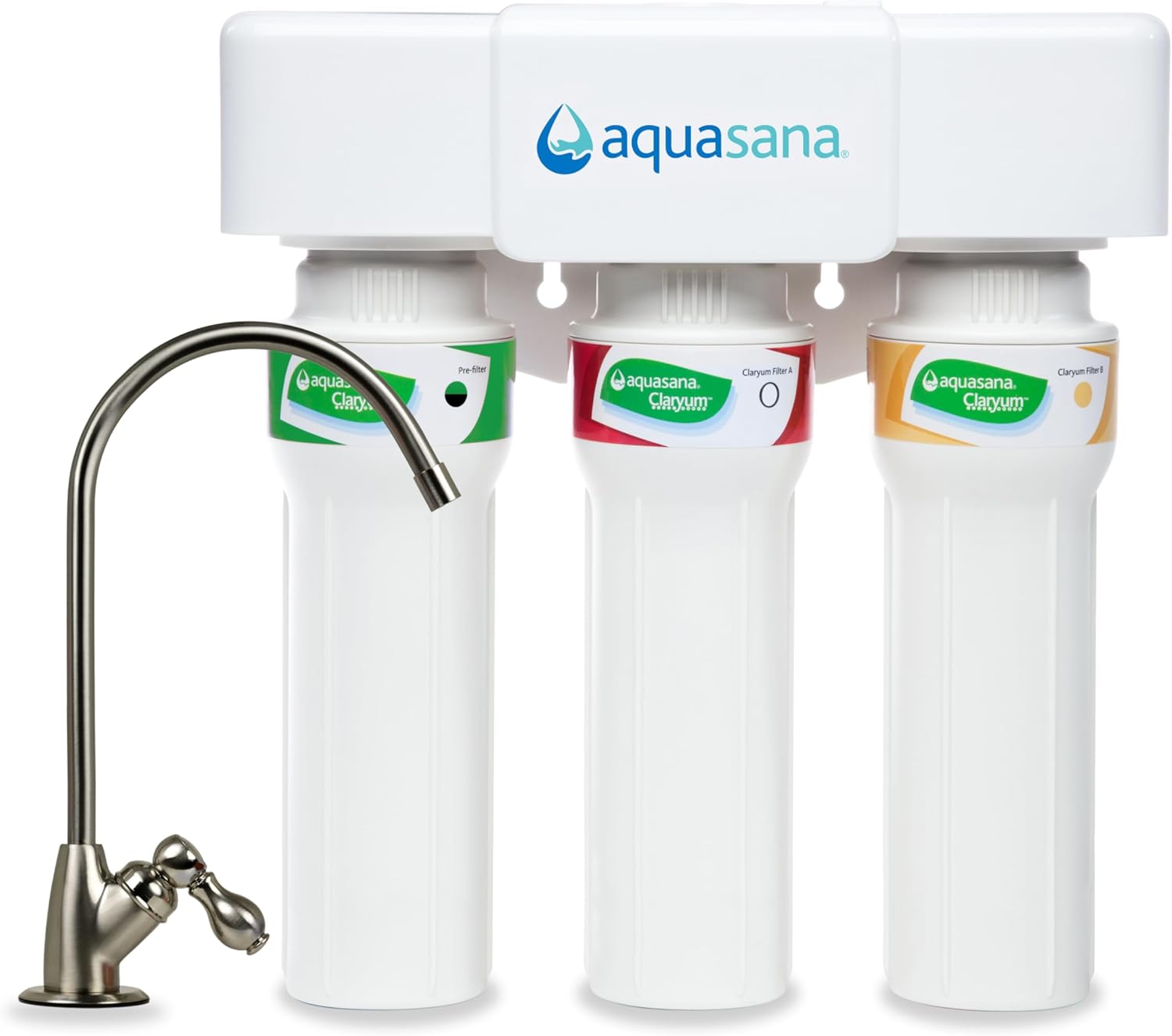
Heavy daily use: Aquasana Claryum 3-Stage Under-Sink. The step up when you want full flow and the broadest certified reduction.
Know your water first
A certified filter reduces lead at the tap, but it works best when you know what you're treating. Check your utility's annual water quality report, and if you live in older housing or suspect lead service lines or solder, test your water — many local health departments offer testing, and the result tells you whether a Standard 53 filter is sufficient or whether you need a more comprehensive system. The NSF 42 vs 53 guide explains exactly what each certification does and doesn't cover.
A faucet filter is a meaningful, affordable layer of protection — not a substitute for fixing lead plumbing where that's the real issue. Match the certified reduction to your actual water, replace the cartridge on schedule (a spent filter stops protecting you), and take the faucet filter quiz to narrow to a certified pick in your budget.
Still choosing?
- See all Faucet Water Filters
- Faucet Filter Replacement Cost: What It Really Costs to Own
- Culligan FM-25 Review: Certified Lead Reduction on a Budget
- PUR Plus vs Culligan FM-25 Faucet Filter (2026)
- Aquasana Countertop Filter
- Aquasana Claryum 3-Stage Under-Sink
Our faucet filter picks
Frequently asked
Which certification covers lead reduction?
Look for an explicit NSF/ANSI Standard 53 certification that lists lead among the reduced contaminants. A general 'filtered' or 'reduces contaminants' claim is not the same as a certified lead reduction.
Can a faucet filter remove lead from old pipes?
A filter certified to NSF/ANSI 53 for lead reduces lead at the tap, but it isn't a permanent fix for lead service lines or solder. If your plumbing is the source, a certified filter is a protective layer while you address the pipes.
How often must I replace a lead-reduction cartridge?
On schedule — typically every 2–4 months — and never past it. A spent cartridge stops reducing lead effectively, so the replacement schedule is part of the protection, not optional.
How do I know if I have lead in my water?
Check your utility's annual water quality report, and test if you have older plumbing or suspect lead lines. Knowing your water lets you match the filter's certified reductions to your actual situation.