Buying guide
Best Mouse for Wrist Pain: Shapes That Actually Help
Reviewed by
Eran Yorkovsky · Founder, PickGrade
Wrist pain from mousing usually comes from holding the forearm twisted flat for hours. The fix is shape: vertical "handshake" mice and sculpted ergonomic mice both reduce that strain in different ways. Here is how to choose between them — and how to test cheaply before spending premium money.
 Take the computer mouse quiz →
Why mouse shape matters for wrist pain
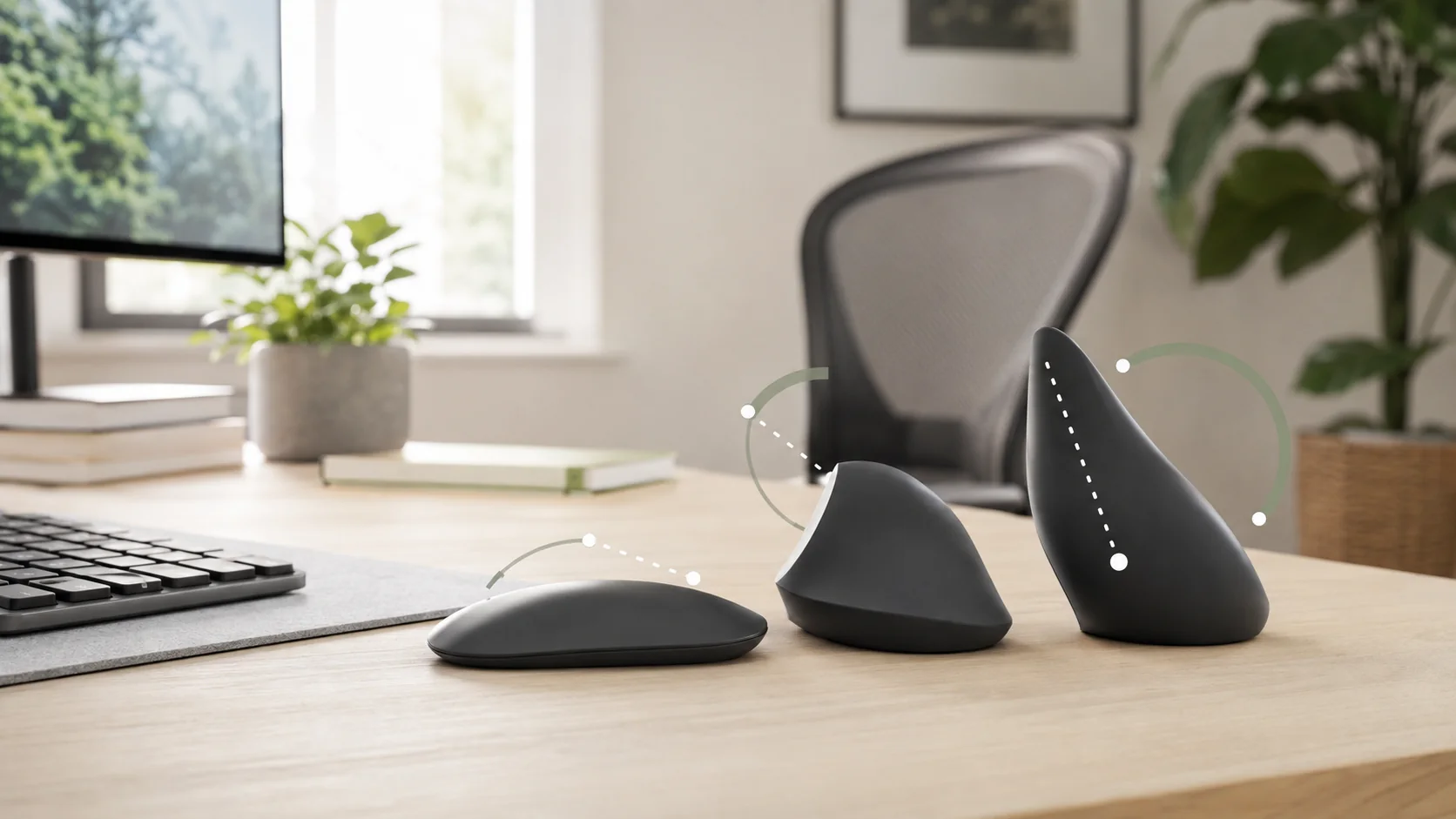
A flat mouse holds the forearm in full pronation — palm facing down — for hours. For many people that sustained rotation, combined with small repetitive movements, is what aches by mid-afternoon. Two shape changes address it:
Vertical mice rotate the hand toward a neutral "handshake" position, reducing forearm twist. The adjustment period is real — aiming feels different for a few days — but for sore wrists this is the most direct fix.
Sculpted ergonomic mice keep a conventional layout but add a tilted, contoured shell that supports the hand and reduces grip effort. Less dramatic relief than vertical, but no learning curve.
Pain that persists or worsens is worth raising with a doctor — a mouse helps posture, it does not treat an underlying condition.
The picks
Best cheap way to try vertical: Anker 2.4G Vertical Ergonomic Mouse. The handshake grip at an experiment-friendly price. If the shape helps, you have your answer; if not, little is lost. Read the Anker vertical mouse review.
Best sculpted comfort for daily work: Logitech MX Master 3S. A tilted, contoured shape that supports the hand through long days, plus the category's best scrolling — which itself reduces repetitive finger strain. Read the MX Master 3S review.
If you also game: the Razer Basilisk V3 Pro has a supportive right-handed shape with a thumb rest, making it the most comfortable option that still plays seriously.
Beyond the mouse
Shape is half the fix. Keep the mouse close to the keyboard so the arm is not reaching, keep the wrist floating rather than planted on a hard edge, and take micro-breaks — no mouse survives eight uninterrupted hours of bad posture. A sit-stand setup helps too; see the best standing desks if your whole workstation needs the rethink.
For the full field of options by grip, features, and budget, browse the best computer mice.
Still choosing?
- Take the Computer Mice quiz
- Logitech G Pro X Superlight 2 vs Razer Basilisk V3 Pro: Speed vs Versatility
- Logitech G Pro X Superlight 2 Review: The Esports Pick
- Logitech MX Master 3S vs G Pro X Superlight 2 (2026)
- Logitech MX Master 3S
- Logitech G Pro X Superlight 2
- Razer Basilisk V3 Pro
- Anker 2.4G Vertical Ergonomic Mouse
Frequently asked
Do vertical mice really help with wrist pain?
They help many people by rotating the forearm into a more neutral handshake position, which reduces the sustained twist of a flat mouse. Expect an adjustment period of a few days, and see a doctor if pain persists — a mouse improves posture but does not treat an underlying condition.
Should I buy an expensive ergonomic mouse first?
Start cheap. A budget vertical mouse like the Anker tells you whether the handshake grip helps before you spend premium money. If it works, you can stay with it or upgrade to a nicer ergonomic mouse later.
What if I can't get used to a vertical mouse?
A sculpted, tilted mouse like the Logitech MX Master 3S is the usual answer: conventional layout, no learning curve, but a shape that supports the hand and reduces grip effort through long workdays.
What else reduces mouse-related wrist pain besides the mouse?
Keep the mouse close to the keyboard, avoid planting your wrist on a hard desk edge, lower your sensitivity so movements come from the arm rather than the wrist, and take short breaks. Shape plus posture together do far more than either alone.