Buying guide
Best Humidifier for Bedroom: Quiet Overnight Picks
Reviewed by
Dr. Yocheved Yorkovsky · Science Editor, Health, Chemistry & Environment
A bedroom humidifier has to do three things at once: humidify the whole room, stay quiet enough to sleep next to, and last until morning on one tank. Here's the checklist that actually predicts satisfaction — and the picks that pass it.
 Take the humidifier quiz →
What a bedroom actually demands
A bedroom humidifier has one job description with three clauses: enough output for the room, quiet enough to sleep next to, and a tank that lasts until morning. Most disappointing purchases fail one of the three — usually runtime, because a small tank on medium output dies at 3 a.m.
The bedroom checklist:
- Runtime over tank size. A "4L tank" means nothing without output context; look for 20+ hours at the setting you'll actually use, which comfortably covers a night with margin.
- Noise character, not just decibels. Ultrasonic units hum near-silently; evaporative units have fan noise that some sleepers find soothing and others find intolerable. Know which sleeper you are.
- A humidistat if you're sensitive. Auto mode that holds 40–50% beats waking up in a swamp. Comfortable indoor humidity is roughly 30–50%; above that invites condensation and dust mites.
- Top-fill design. You will refill this thing hundreds of times. Top-fill turns a chore into a non-event.
Our bedroom picks
Best overall: Levoit Classic 300S. Near-silent, 6L top-fill tank that outlasts the night, and an auto mode that holds your target while you sleep. The full reasoning is in the Classic 300S review.
Lowest maintenance: Honeywell HCM-350. Evaporative, so no white dust and no over-humidifying — the gentle fan noise doubles as white noise. The evaporative vs ultrasonic guide explains the trade.
Cold-winter bedrooms: Dreo HM713S. Warm-mist mode stops the unit from chilling an already-cold room.
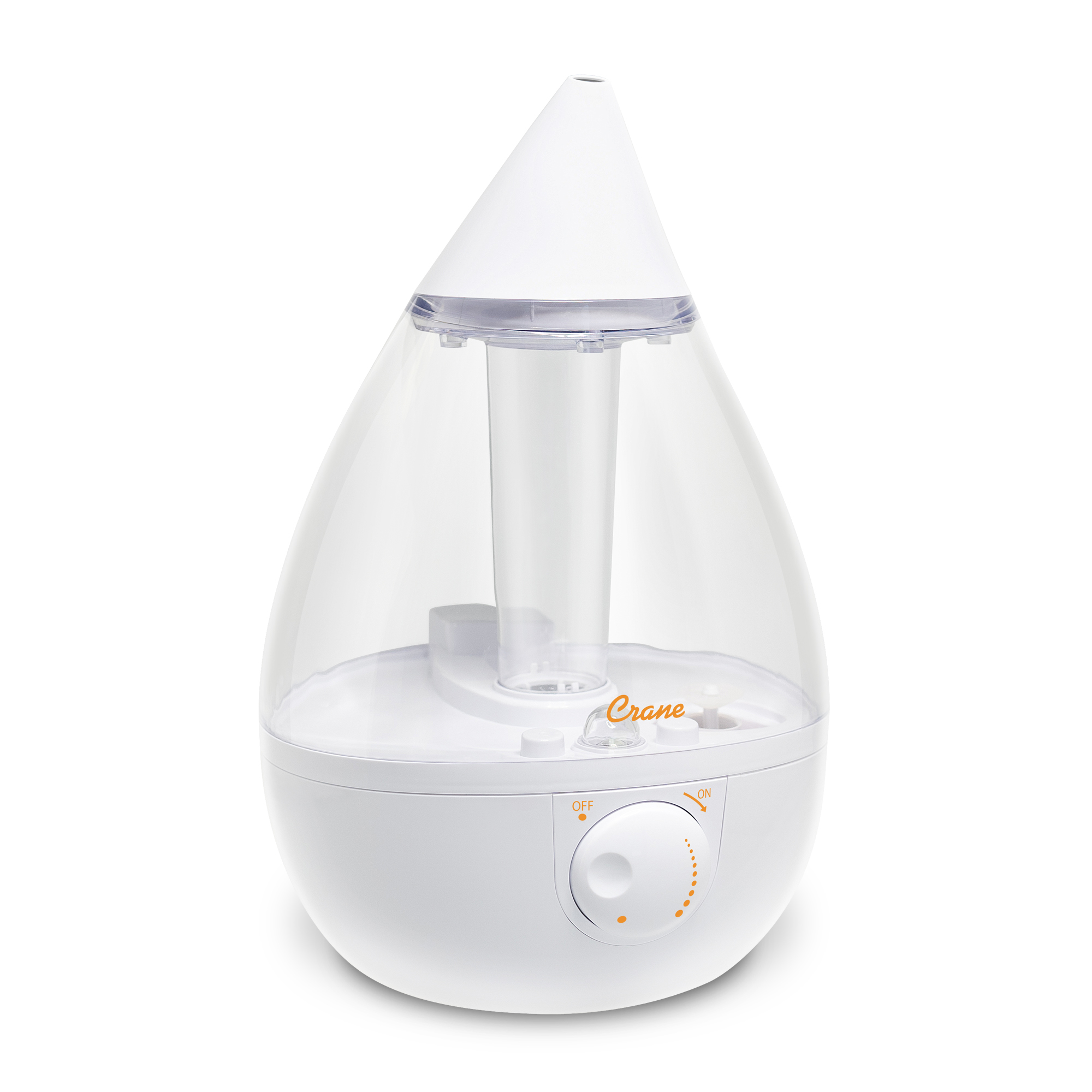
Kids' rooms and budgets: Crane Drop. Cool-mist only, whisper-quiet, under $50.
The placement details that matter
Keep the unit a few feet off the floor and away from walls so mist disperses instead of dampening surfaces, don't aim it at electronics or directly at the bed, and use distilled water in ultrasonic units if your tap water is hard — our cleaning guide covers the white-dust issue and the weekly routine that keeps the tank healthy.
If your dry-air problem is skin or sinuses specifically, the dry skin guide reorders the priorities. Or take the humidifier quiz and let it weigh room size, mist type, features, and budget for you.
Still choosing?
- See all Humidifiers
- Humidifier vs Air Purifier: Different Machines, Different Problems
- Levoit Classic 300S vs Honeywell HCM-350 (2026)
- Crane Drop Cool Mist Humidifier
- Levoit OasisMist 1000S
Our humidifier picks
Frequently asked
What humidity level is best for sleeping?
Roughly 30–50% relative humidity. A unit with a humidistat and auto mode holds that range overnight; above ~50% encourages condensation and dust mites.
Are ultrasonic or evaporative humidifiers quieter?
Ultrasonic models are quieter — near-silent on low. Evaporative models have soft fan noise that some sleepers actually prefer as white noise.
Can I run a humidifier all night?
Yes, if it has the runtime: look for 20+ hours at your typical setting so the tank outlasts the night. Auto shutoff handles the empty tank safely.
Where should I place a bedroom humidifier?
A few feet off the floor, away from walls, electronics, and direct contact with bedding — so mist disperses into the air instead of settling on surfaces.