Buying guide
How to Clean a Humidifier: The Routine That Keeps It Safe
Reviewed by
Dr. Yocheved Yorkovsky · Science Editor, Health, Chemistry & Environment
A humidifier you don't clean becomes the problem it was meant to solve. Here's the realistic routine — two minutes per refill, one vinegar soak per week — plus the white-dust fix and the designs that make maintenance nearly automatic.
 Find an easy-clean humidifier →
Why cleaning is the whole ballgame
A humidifier is a warm water reservoir running in your bedroom — skip maintenance and it can aerosolize exactly what you don't want to breathe. The good news: the effective routine is short, and choosing the right design makes it shorter. This guide covers the weekly routine, the deep clean, and the white-dust question.
The 2-minute routine (every refill or two)
- Dump remaining water — never let it sit for days.
- Rinse the tank, wipe the reservoir with a clean cloth.
- Refill with fresh water (distilled, for ultrasonic units in hard-water areas).
- Air-dry the tank with the cap off when the unit's not in use.
The weekly deep clean
- Unplug; empty all water.
- Fill the tank with a 50/50 white vinegar and water mix; let it sit 20–30 minutes.
- Wipe the basin and any mineral scale with a vinegar-dampened cloth; a soft brush handles corners.
- Rinse thoroughly until the vinegar smell is gone, then air-dry.
- Evaporative models: check the wick — replace when it's crusty, discolored, or per the manual (typically every 1–2 months of heavy use).
Skip harsh chemicals in the tank; they can end up in the mist. Vinegar handles minerals; thorough rinsing handles the vinegar.
White dust, explained
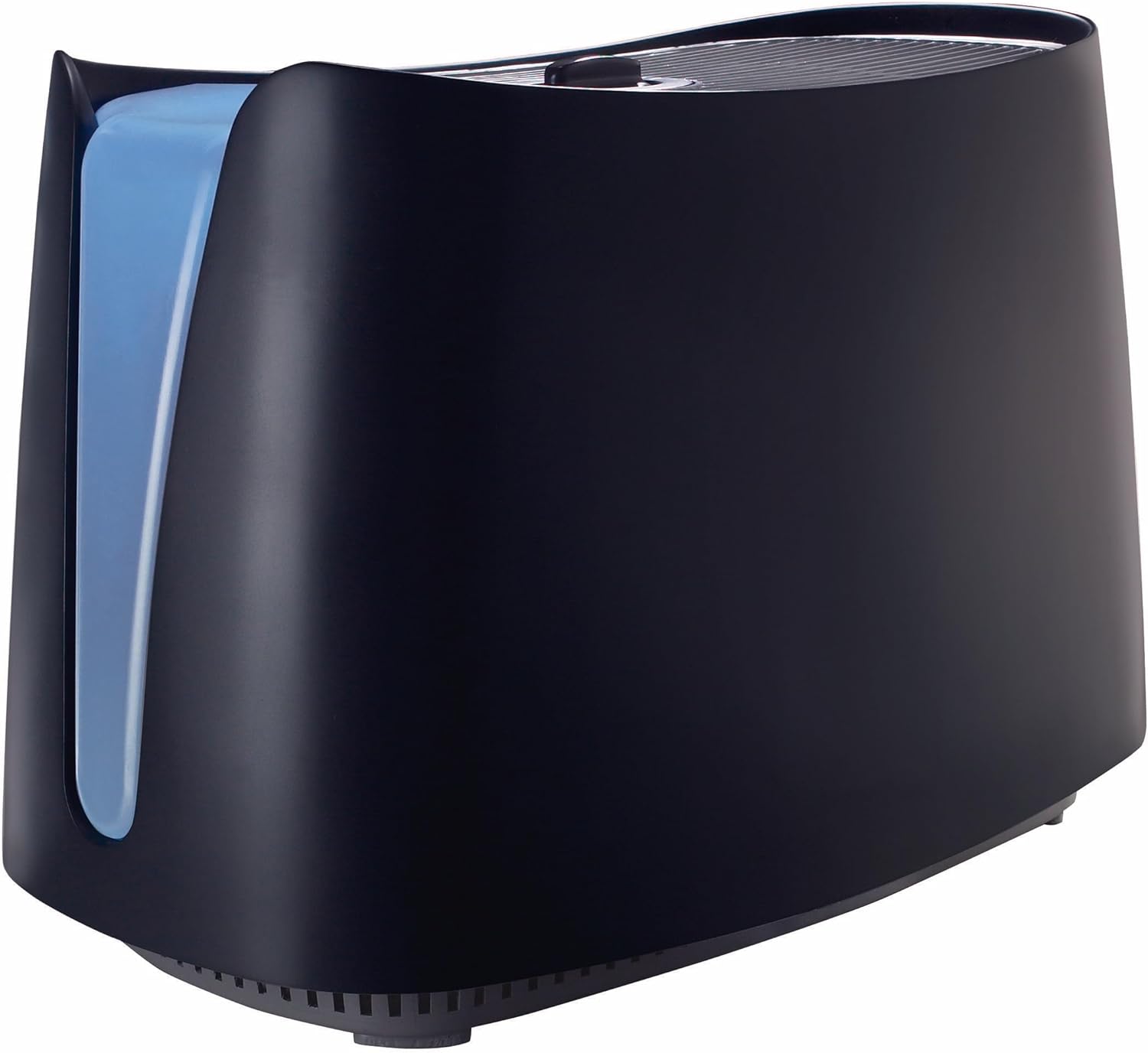
Ultrasonic humidifiers turn everything in the water into mist — including dissolved minerals, which settle as fine white dust on nearby surfaces. Three fixes, in order of effectiveness: use distilled water; use a model with a demineralization cartridge; or choose an evaporative design like the Honeywell HCM-350 or Vornado EV100, where minerals stay in the wick and white dust is physically impossible. The evaporative vs ultrasonic guide goes deeper on this trade.
Cleaning burden by design
| Design | Weekly effort | White dust | Recurring cost |
|---|---|---|---|
| Ultrasonic (Levoit, Dreo, Crane) | Vinegar soak + wipe | Yes, unless distilled water | Distilled water or cartridges |
| Evaporative (Honeywell, Vornado) | Rinse + occasional vinegar | Never | Wick filters ($10–20, 1–2× per season) |
Dishwasher-safe parts (the HCM-350's headline feature) and wide top-fill openings (the Levoit Classic 300S) are the two design details that most predict whether maintenance actually happens.
If you're choosing a unit partly on cleaning burden — a wise way to choose — the humidifier quiz asks about it directly, and every pick on the humidifiers hub lists its maintenance trade-off.
Still choosing?
- Best Humidifier for Bedrooms: Quiet, Overnight, Set-and-Forget
- Best Humidifier for Dry Skin: Hold the Number That Helps
- Humidifier vs Air Purifier: Different Machines, Different Problems
- Levoit Classic 300S vs Honeywell HCM-350 (2026)
- Crane Drop Cool Mist Humidifier
- Levoit OasisMist 1000S
Our humidifier picks
Frequently asked
How often should I clean a humidifier?
Rinse and refresh the water every day or two, and do a vinegar deep clean weekly during heavy use. Never let water sit in the tank for days.
What's the best way to descale a humidifier?
A 50/50 white vinegar and water soak for 20–30 minutes dissolves mineral scale. Rinse thoroughly afterward. Avoid harsh chemicals that could end up in the mist.
What is the white dust from my humidifier?
It's mineral residue from tap water aerosolized by ultrasonic units. Use distilled water, a demineralization cartridge, or an evaporative model to eliminate it.
How often do evaporative wick filters need replacing?
Replace evaporative wicks every 1–2 months of heavy use, or when crusty or discolored — a spent wick cuts output dramatically and defeats the purpose.