Buying guide
Best Humidifier for Dry Skin: Hold the Number That Helps
Reviewed by
Dr. Yocheved Yorkovsky · Science Editor, Health, Chemistry & Environment
Dry winter skin is usually an indoor-humidity problem: heated air below 30% relative humidity pulls moisture out of you all day. Here's why a humidistat matters more than mist power, and which humidifiers hold the 40–50% range that actually helps.
 Take the humidifier quiz →
Why dry skin changes the spec
If winter means tight skin, cracked knuckles, nosebleeds, or waking up with a scratchy throat, the cause is usually indoor relative humidity dropping below ~30% when heating runs. The fix isn't a special "skin" humidifier — it's sustained, measured humidity in the rooms where you spend hours, which reorders what matters:
- A humidistat is non-negotiable. Skin benefits come from holding 40–50% for hours, not from blasting mist. A sensor with auto mode does this; a manual dial means you're guessing.
- Runtime beats burst output. You want the unit running all night, every night, through the heating season — so tank size and refill convenience compound daily.
- Coverage where you actually are. One unit in the bedroom (8 hours of exposure) does more for your skin than one in the hallway. Add the home office second.
- Maintenance you'll actually do. A neglected tank becomes its own problem; pick the design you'll realistically clean. The cleaning guide shows the 2-minute weekly routine.
Our picks for dry skin
Bedroom base: Levoit Classic 300S — sensor-held 40–50% all night with a tank that lasts; the full review covers the details.
Whole-day rooms: Vornado EV100 — its circulation distributes moisture evenly through a home office instead of pooling by the desk, with a built-in humidistat.
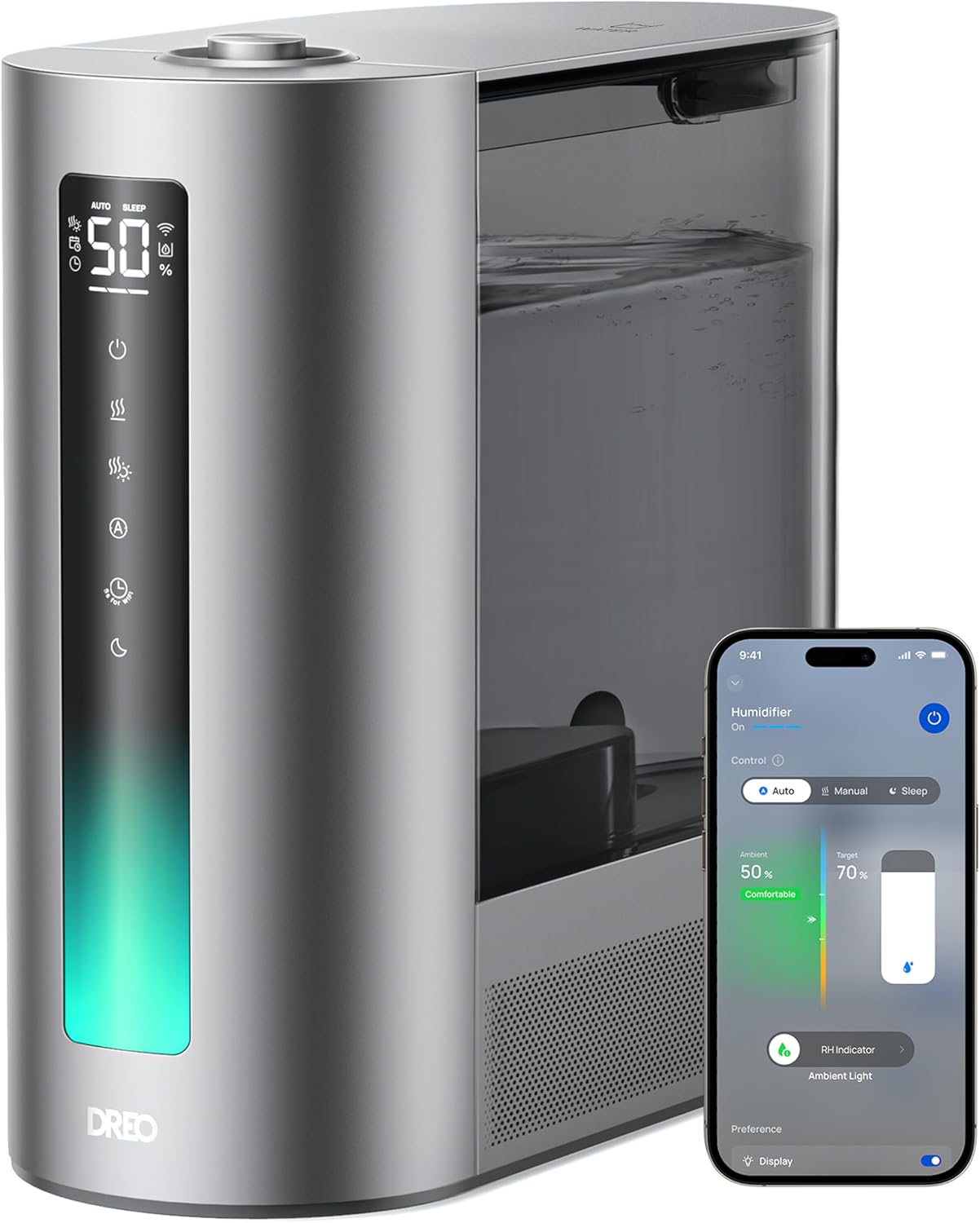
Cold bedrooms: Dreo HM713S — warm mist disperses faster in winter air and won't chill the room.
Set-and-forget reliability: Honeywell HCM-350 — evaporative, self-limiting, and the easiest to keep clean through a five-month heating season. The evaporative vs ultrasonic comparison explains why low maintenance matters more than peak output here.
Honest limits
A humidifier addresses dryness caused by dry air. If skin problems persist year-round, worsen, or come with other symptoms, that's dermatologist territory — eczema and similar conditions have humidity as one factor among many, and a device isn't a diagnosis. Pair the humidifier with the boring basics: moisturizer after showering, lukewarm rather than hot water, and a humidity gauge so you're managing a number instead of a feeling.
Ready to match a unit to your rooms and budget? Take the humidifier quiz or browse all picks on the humidifiers hub.
Still choosing?
- Best Humidifier for Bedrooms: Quiet, Overnight, Set-and-Forget
- Humidifier vs Air Purifier: Different Machines, Different Problems
- Levoit Classic 300S vs Honeywell HCM-350 (2026)
- Crane Drop Cool Mist Humidifier
- Levoit OasisMist 1000S
Our humidifier picks
Frequently asked
Does a humidifier actually help dry skin?
Yes — when indoor humidity sits below ~30%, skin loses moisture to the air faster. Holding 40–50% in rooms where you spend hours measurably reduces dryness for most people.
Is warm or cool mist better for dry skin?
Either works for skin — what matters is sustained humidity. Cool mist is the default; warm mist is nicer in cold bedrooms. Pick by room and maintenance preference.
How long should I run a humidifier for dry skin?
Run it whenever you're in the room, especially overnight — 8 hours of sleep is your longest single exposure window, which is why the bedroom unit matters most.
When is dry skin not a humidity problem?
See a dermatologist if dryness persists year-round, worsens, cracks or bleeds, or comes with rashes — air humidity is one factor, but persistent symptoms deserve a professional look.