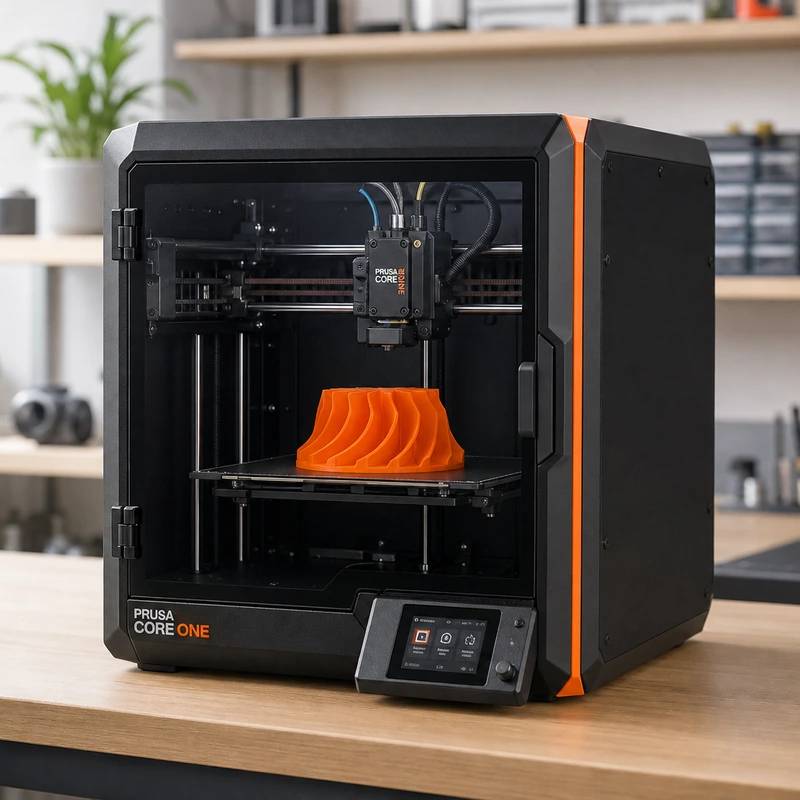
The open-source workhorse built to outlast everything.
Prusa CORE One
Prusa
Reviewed by
Eran Yorkovsky · Founder, PickGrade
The thinking maker's printer: open-source, endlessly repairable, and built to run for years. You pay a premium and give up some speed, but you own the machine completely.
The CORE One is Prusa's first enclosed CoreXY printer, and it's the pick for makers who value control and longevity over raw speed. It's fully open-source and offline-capable — no cloud account, firmware you can audit, and parts you can replace for years with a screwdriver. The all-steel exoskeleton is nearly indestructible, the Nextruder uses a load-cell for dead-accurate first layers, and the actively managed chamber (to ~55°C) prints ABS, ASA, PC, and nylon with the door closed. It's slower than Bambu and has no built-in multicolor (MMU3 is optional), but nothing else matches its repairability and support.
$1,199
PickGrade may earn a commission from purchases made through links on this page, at no extra cost to you. This never affects our grades. Full disclosure.
Last reviewed Jun 21, 2026
What we like
- ✓Fully open-source and offline — no cloud lock-in
- ✓Active chamber heating prints ABS, ASA, PC, and nylon
- ✓Nearly indestructible steel frame; lifetime repairability
- ✓Excellent first-layer accuracy via load-cell Nextruder
- ✓Outstanding documentation, support, and upgrade paths
Trade-offs
- −Premium price for a single-toolhead printer
- −Smaller 250 × 220 mm build volume than cheaper rivals
- −Slower in benchmarks than Bambu CoreXY machines
- −No built-in camera or multicolor (both optional add-ons)
Best for
Makers, educators, and small businesses who want a repairable, open-source, offline printer that handles engineering materials and runs reliably for years.
Avoid if
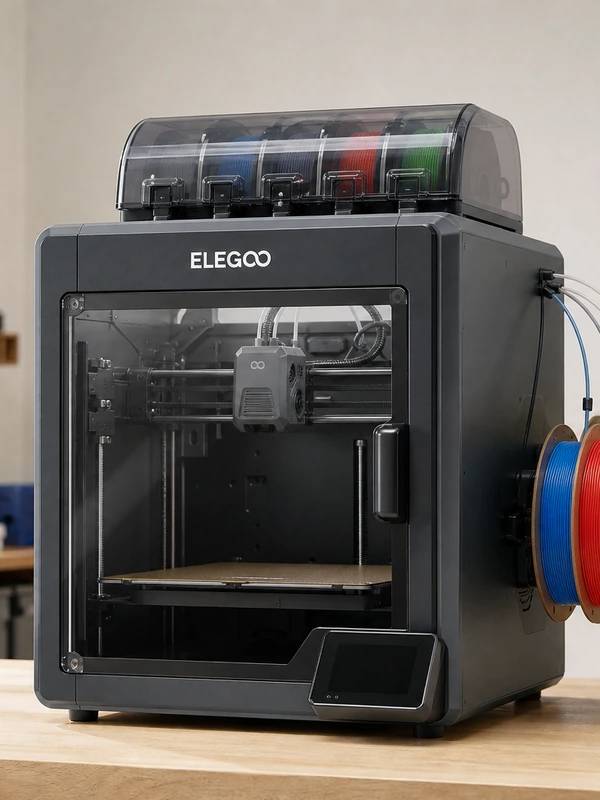
You want the fastest machine, built-in multicolor, or the most build volume per dollar — a Bambu P2S or Elegoo Centauri Carbon delivers more spec for less money.
The three lenses
How we grade →- 8.5/10
Value & Longevity · Eran Yorkovsky
- 7.0/10
Design & Fit · Michal Zucker
Score breakdown
- print quality9.2/10
- materials8.8/10
- ease of use8.6/10
- speed7.8/10
- value7.5/10
- build volume7.0/10
Specs
- Type
- Enclosed CoreXY (FDM)
- Build
- All-steel exoskeleton, fully repairable
- Chamber
- Actively managed, up to ~55°C
- Extruder
- Nextruder, load-cell first layer, tool-free nozzles
- Software
- PrusaSlicer (open-source), offline-capable
- Materials
- PLA, PETG, ABS, ASA, PC, PA, TPU
- Multicolor
- Optional MMU3 (up to 5 colors)
- Build volume
- 250 × 220 × 270 mm
How we know
High confidenceLast checkedReviewers — Tom's Hardware, LayerDepth, VoxelMatters — consistently frame the CORE One as Prusa's long-awaited enclosed CoreXY, prized for reliability, repairability, and material capability rather than headline speed. Its active chamber heating (to ~55°C) handles ABS, ASA, PC, and nylon without workarounds, and the open-source, offline-capable platform with lifetime support draws fierce loyalty (about 95 percent of Amazon reviewers are enthusiasts). The honest knock is value-per-spec: at around $1,199 it's slower and smaller than cheaper CoreXY rivals — buyers are paying for engineering confidence and longevity, not benchmarks.
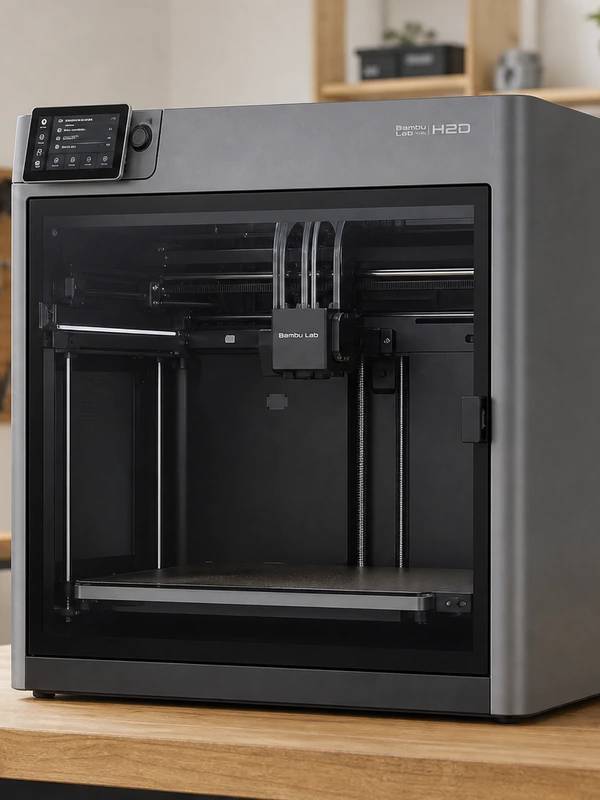
Compare Prusa CORE One with the top alternates side-by-side.
Compare picks →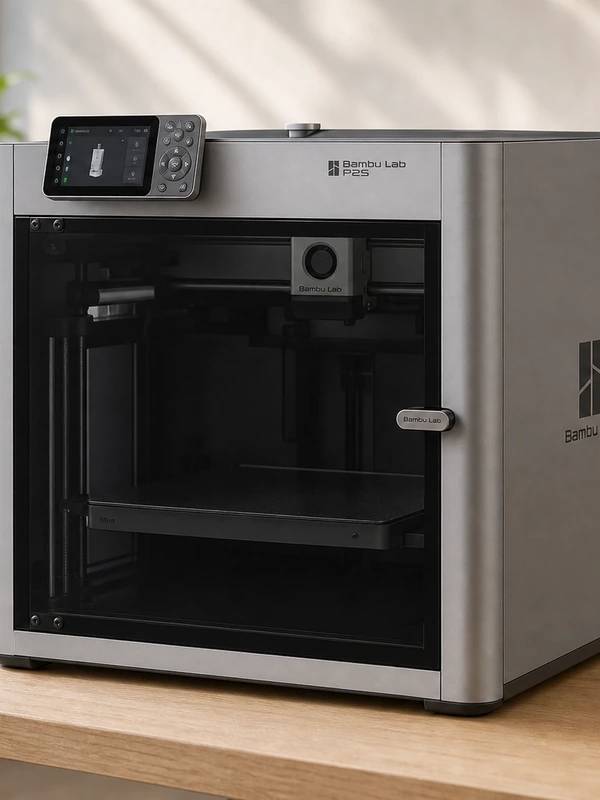
Other expert reviews
Video reviews
YouTube — Prusa CORE One In-Depth Review: Reliable, Future-Proof CoreXY
From real owners
Human reviews that sharpen our AI grade
No owner reviews yet. Be the first to share what you think.
Own this? Write a review
Related guides
All 3d printer guides →Jun 21, 2026
Bambu Lab vs Prusa: Which 3D Printer Brand Is Right for You?
Bambu optimizes for speed and convenience; Prusa for openness and repairability. Here's how the two leading 3D printer brands differ — and which fits you.
Jun 21, 2026
FDM vs Resin 3D Printing: Which Should You Choose?
FDM melts filament for versatile, functional, low-fuss prints; resin cures liquid for unmatched miniature detail. Here's how to choose — and why many makers end up with both.
Was this review useful?