Buying guide
Best Office Chairs for Working From Home
Reviewed by
Michal Zucker · Fitness, Movement & Wellbeing Editor
I spend my days thinking about how bodies hold up under repetition: on a bike, in a yoga hold, and in the chair where you'll sit longer than you do almost anything else awake. The best work-from-home chair isn't the fanciest one; it's the one that fits your body and makes it easy to keep moving. Here's how I'd choose.
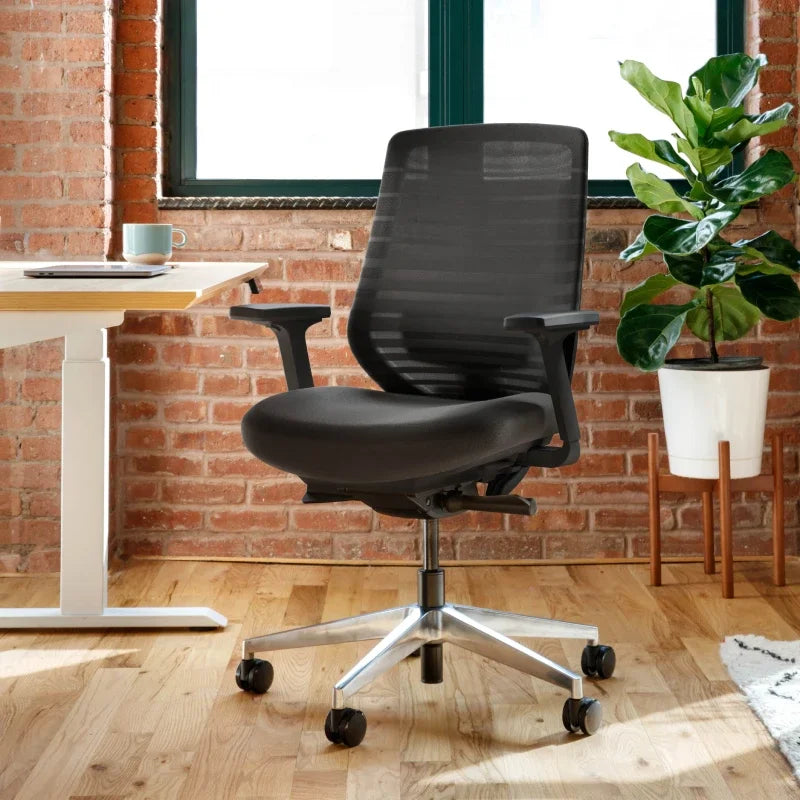 Find my office chair →
The short answer
For most people working from home, the Sihoo Doro C300 ($300) is the chair I'd buy first. It's the rare sub-$300 chair whose ergonomics actually adjust (a self-adaptive lumbar, weight-sensing tilt, full breathable mesh), which is most of what your back needs for most of the day. If you sit all day and want to buy once, the Steelcase Series 1 ($499) and the Herman Miller Aeron ($799) are the buy-it-for-a-decade chairs. And if the same seat is also your gaming seat, the Secretlab Titan Evo ($669) is the cushioned one that's still supportive enough to work in.
- Best for most WFH setups: Sihoo Doro C300, $300. Real, adjustable ergonomics that stay under budget.
- Best under $500, buy-once: Steelcase Series 1, $499. A back that flexes with you and a 12-year warranty.
- Best value all-rounder: Branch Ergonomic Chair, $389. Premium-style adjustability without the premium price.
- Premium benchmark: Herman Miller Aeron, $799. The all-day standard, if you get the size right (A/B/C).
- Best work-and-gaming: Secretlab Titan Evo, $669. Firm cushion for long mixed sessions.
Quick pick by need
| You want… | The pick | Why |
|---|---|---|
| Best for most people | Sihoo Doro C300 | Adjustable ergonomics under $300 |
| Buy-once, sit all day | Steelcase Series 1 / Aeron | 12-year warranties, built to last |
| Best value | Branch Ergonomic Chair | The most adjustability per dollar |
| Runs hot / tight space | Sihoo C300 / Steelcase Series 1 | Full mesh, cooler and compact |
| Work + gaming, one seat | Secretlab Titan Evo | Cushioned but supportive |
The chair is the smaller half of the problem
I'll say the thing the chair industry won't: no chair, at any price, fixes sitting for eight hours straight. Your body is built to change position, and the healthiest thing you can do at a desk is move: stand up every half hour, shift your weight, let your spine change shape through the day. A good chair's real job is to make that easy: to fit your body so well that moving is effortless and staying put doesn't ache.
So before you shop by brand, shop by fit (seat height, seat depth, lumbar position, armrest height) and by whether the chair invites movement or locks you into one 'correct' posture. A $1,000 chair that doesn't fit your frame is worse than a $300 one that does. The best chair for you is the one your body stops noticing.
The picks in depth
Sihoo Doro C300: the one most people should buy
Self-adaptive lumbar · weight-sensing auto-tilt · full breathable mesh · adjustable arms · ~$300
The Sihoo Doro C300 is where I'd start almost everyone, because it does the thing budget chairs usually fake: it actually adjusts to you. A self-adaptive lumbar tracks your lower back as you move, the tilt senses your weight so the recline resists you correctly, and the full mesh keeps air moving so you're not sitting in trapped heat by mid-afternoon. For the hours most people work from home, that's the bulk of what your body needs, and it lands under $300. It's not built like a $800 chair and the arms aren't infinitely adjustable, but as the chair that gets fit right for the least money, nothing here beats it.
Steelcase Series 1: buy-once, under $500
Back that flexes with you · weight-activated recline · adjustable arms · compact footprint · 12-year warranty · $499
The Steelcase Series 1 is the chair to buy before you spend Herman Miller money. It carries real Steelcase engineering (a back that flexes and follows your spine, a recline weighted to your body) in a compact shape that fits a real home desk, and it's backed by a 12-year warranty, which tells you what the company expects of its lifespan. If you sit all day and want one chair you won't rethink for a decade, this is the value-sane version of that decision.
Branch Ergonomic Chair: the value all-rounder
Broad adjustability · firmer build · clean look · $389
The Branch Ergonomic Chair gets you most of a premium chair's adjustability (seat, arms, lumbar, recline) at a mid-range price, in a design that looks at home in a room people also live in. It's firmer than the Sihoo and a step up in build, and it's the pick if you want more adjustment range than the C300 without stepping to $500+. The trade-off is it's less plush and the mesh isn't as airy as the full-mesh options; test the seat firmness against your preference.
Herman Miller Aeron: the premium benchmark
Three sizes (A/B/C) · PostureFit sacral support · breathable Pellicle mesh · 12-year warranty · $799
The Herman Miller Aeron is the benchmark for a reason: decades of refinement, a suspension mesh that breathes, sacral support that holds your pelvis in a healthy position, and a 12-year warranty behind it. But here's the part the price tag won't tell you: it comes in three sizes (A, B, C), and the Aeron only works if you buy the right one for your body. A size-B on a small frame or a size-A on a tall one undoes the whole point. Get the size right and it's a buy-once, sit-all-day chair. Guess the size online and you may be better served by a one-size chair that fits.
Secretlab Titan Evo: for work and gaming
Firm cushioned seat · magnetic head pillow · 4D arms · adjustable lumbar · $669
If the same seat serves your workday and your evening gaming, the Secretlab Titan Evo is the cushioned pick that's still supportive enough to work in: a firm, dense seat (not a marshmallow), genuinely adjustable arms and lumbar, and a build that holds up to long sessions. The honest trade-off versus the mesh chairs: cushion runs warmer and doesn't breathe, so if you sit hot or in a warm room, a mesh task chair will be more comfortable over a full day. Buy it if you actively want the cushioned, wrap-around feel; skip it if pure desk ergonomics are the whole job.
Fit before brand: how to size a chair to your body
This is the part I care about most, because it decides everything and almost no one checks it. Four measurements, in order:
- Seat height. Feet flat on the floor, thighs roughly parallel to the ground, knees near 90°. If your feet dangle, the chair's too high (or you need a footrest); if your knees are above your hips, it's too low.
- Seat depth. With your back against the lumbar, you want about two to three fingers of gap between the seat's front edge and the back of your knees. Too deep and you can't use the backrest; too shallow and your thighs aren't supported. Taller and shorter bodies need adjustable depth; this is where the Aeron's sizing matters.
- Lumbar height. The support should press into the inward curve of your lower back, not your mid-back or your belt line. Adjustable lumbar height is worth more than a bigger lumbar.
- Armrests. Set so your shoulders stay relaxed and your elbows rest near 90° with your forearms level to the desk. Armrests that shove your shoulders up cause more neck and shoulder trouble than any seat.
Run a chair through those four before you judge it on brand or looks. If it can't be made to fit, it's the wrong chair, full stop.
Mesh vs cushion for a home office
- Mesh (Sihoo C300, Aeron, Steelcase Series 1) breathes, runs cooler through a long day, and tends to hold posture without a plush layer masking the support. Best if you sit for hours, run warm, or want the chair to disappear under you.
- Cushion (Secretlab) feels firmer and warmer, with a wrap-around, sink-in comfort some people strongly prefer, but it traps heat and can feel swampy in a warm room. Best if you want that feel and don't sit hot.
For most full-day WFH setups, I lean mesh. For mixed work-and-gaming where you want the cushioned feel, the Titan Evo earns it.
The panel: two lenses I don't own
PickGrade grades every pick on three lenses. Fit and the body are mine, but the money and the materials aren't, so I asked my co-editors.
Eran Yorkovsky, Value & Longevity lens: "Run the cost-per-year, not the sticker. An $800 Aeron with a 12-year warranty is about $66 a year; a $150 chair you replace every couple of years is often more, and it's worse the whole time you own it. For something you sit in every workday, the durable chair is usually the cheaper chair: buy the one that lasts and fits, not the one that's cheapest today."
Dr. Yocheved Yorkovsky, Health & Environment lens: "You sit inside this thing for eight hours a day, so the materials matter more than people think. Cheap polyurethane foam and PVC upholstery can off-gas volatile organic compounds for weeks; that 'new chair smell' is a chemical exposure, not a feature. Breathable mesh isn't only cooler; it means less heat and moisture trapped against your body all day. Air a new chair out in a ventilated room before daily use, and where you can, favor mesh or foams with a low-emission certification like GREENGUARD or OEKO-TEX."
When to spend more (and when not to)
Spend more when you sit 8+ hours a day, already have back, neck, or shoulder discomfort, or want a chair you won't rethink for a decade. There, fit and durability genuinely pay off, and the Steelcase or a correctly-sized Aeron is worth it. Don't spend more if you sit only a few hours a day, or, the big one, if you're guessing on fit: a premium chair that doesn't fit your body is money worse spent than the Sihoo C300 that does. And whatever you buy, buy where you can return it. Fit is the single biggest variable in whether a chair works, and you can't fully judge it until you've sat in it for a week.
Gaming chair or task chair?
A gaming chair can be right if you genuinely prefer a firm, cushioned, wrap-around seat and use one chair for work and play; the Titan Evo is the version that's actually supportive. But for pure desk work, adjustable ergonomic task chairs (mesh, adaptive lumbar, real arm adjustment) do more for your body than racing-seat styling. Don't buy the aesthetic if the job is eight hours of work.
Real-body realities
The chair is one part of a system. A few things that matter as much as the seat:
- Move on a timer. Stand, stretch, or walk every 30–45 minutes. No chair replaces movement; it just makes sitting between moves comfortable.
- Screen at eye height. If you're looking down at a laptop all day, your neck pays for it no matter how good the chair is. Raise the screen so the top is near eye level.
- Support your feet. Feet flat, or on a footrest if the desk forces the chair high. Dangling feet undo good seat-height setup.
- Give it a week. A chair that feels great in the store can wear on you by day five, and vice versa. Judge it over a real work week, which is why a return window matters.
How we picked
No lab, no theater: here's the actual process, so you can weigh how much to trust these picks.
- Specs verified against manufacturer documentation: adjustability, materials, sizing, and warranty.
- Expert-review consensus synthesized across the outlets that do hands-on testing and long-term ergonomic assessments: we read the reviews so you don't have to.
- Owner complaints scanned for the recurring fit, durability, and comfort patterns, not just the marketing.
- Price and value weighed against real lifespan, and graded on PickGrade's three lenses: Value & Longevity, Design & Fit, and Health & Environment.
- We don't fake hands-on testing. PickGrade doesn't run its own lab and never pretends to. Our edge is buying logic: reading the specs, the independent reviews, and the ownership reality against each other.
Last updated: July 2026.
Still choosing?
Tell the quiz your sitting hours, support needs, material preference, desk setup, and budget, and it points you to the chair that fits your body and routine.
Frequently asked
What is the best office chair for working from home?
For most people, the Sihoo Doro C300 (~$300) is the best starting point: it's the rare sub-$300 chair with genuinely adjustable ergonomics (self-adaptive lumbar, weight-sensing tilt, full mesh). If you sit all day and want to buy once, the Steelcase Series 1 ($499) or a correctly-sized Herman Miller Aeron ($799) are built to last a decade. The best chair is the one that fits your body, so prioritize fit over brand.
How much should I spend on a work-from-home chair?
You can get real, adjustable ergonomics for around $300 (the Sihoo Doro C300 is the example). Spend more, $500 to $800, if you sit 8+ hours a day, already have discomfort, or want a chair that lasts a decade, since fit and durability pay off over time. Don't spend more if you sit only occasionally or you're guessing on fit; a chair that fits at $300 beats a pricey one that doesn't.
Is mesh or cushion better for a home office?
For most full-day setups, mesh is better: it breathes, runs cooler over long hours, and tends to hold posture well (the Sihoo C300, Steelcase Series 1, and Aeron are mesh). Cushion feels firmer and warmer with a wrap-around comfort some people prefer (the Secretlab Titan Evo), but it traps heat. Choose cushion if you actively want that feel and don't sit hot; otherwise lean mesh.
Are gaming chairs good for working from home?
A gaming chair can work if you prefer a firm, cushioned seat and use one chair for work and play: the Secretlab Titan Evo is supportive enough to work in. But for pure desk work, an adjustable ergonomic task chair does more for your body than racing-seat styling. Don't buy the aesthetic if the real job is eight hours of work.
What matters more, lumbar support or cushion?
Fit and support matter more than softness. A very plush chair can still cause discomfort if it lacks adjustability or doesn't fit your desk and body. Prioritize adjustable seat height and depth, adjustable lumbar height that hits the curve of your lower back, and armrests that keep your shoulders relaxed, then worry about how soft the seat feels.
How do I know if an office chair fits me?
Check four things: seat height (feet flat, thighs parallel, knees near 90°), seat depth (two to three fingers of gap behind your knees with your back against the lumbar), lumbar height (support pressing into your lower-back curve, not your mid-back), and armrests (shoulders relaxed, elbows near 90°). If a chair can't be adjusted to meet all four, it's the wrong chair for you, regardless of brand.
Is the Herman Miller Aeron worth it?
If you sit all day and buy the correct size, yes: it's a durable, breathable, buy-once chair with a 12-year warranty. The catch is sizing: the Aeron comes in three sizes (A, B, C), and it only delivers its ergonomics if you get the right one for your body. Guess the size online and a well-fitting one-size chair may serve you better.
Does a new office chair off-gas or smell?
It can. Cheap polyurethane foam and PVC upholstery can release volatile organic compounds (VOCs) for days to weeks: that 'new chair smell.' It usually fades, but it's worth airing a new chair out in a ventilated room before daily use. Breathable mesh chairs tend to off-gas less and trap less heat and moisture; where you can, favor mesh or foams with a low-emission certification such as GREENGUARD or OEKO-TEX.