Buying guide
Ergonomic Chair vs Gaming Chair: The Gaming Chair Isn't the Budget Option
Reviewed by
Michal Zucker · Fitness, Movement & Wellbeing Editor
Almost everyone approaches this backwards. They assume the ergonomic chair is the expensive, sensible one and the gaming chair is the affordable, fun one. Look at the prices and that story falls apart immediately. What you're really choosing between is a chair designed to support you while you work and a chair designed to look like a car seat, and those are not the same object at all.
 Find my office chair →
The short answer
If you sit at a desk to work, buy an ergonomic task chair. If you sit at a desk to play, and you like a firm, enveloping seat, a gaming chair is a legitimate choice, but buy it because you want that feel, not because you think it's the cheaper or more supportive option. It is usually neither.
- Best for most desk workers: Steelcase Series 1, $499. Genuine Steelcase engineering, a back that flexes with you, 12-year warranty.
- Best value ergonomic: Sihoo Doro C300, $299.99. Self-adaptive lumbar and full breathable mesh, for under $300.
- Best work-from-home value: Branch Ergonomic Chair, $389. Most of a premium chair's adjustability at a mid-range price.
- The benchmark, if you get the size right: Herman Miller Aeron, $799. Three sizes, 12-year warranty, breathable mesh.
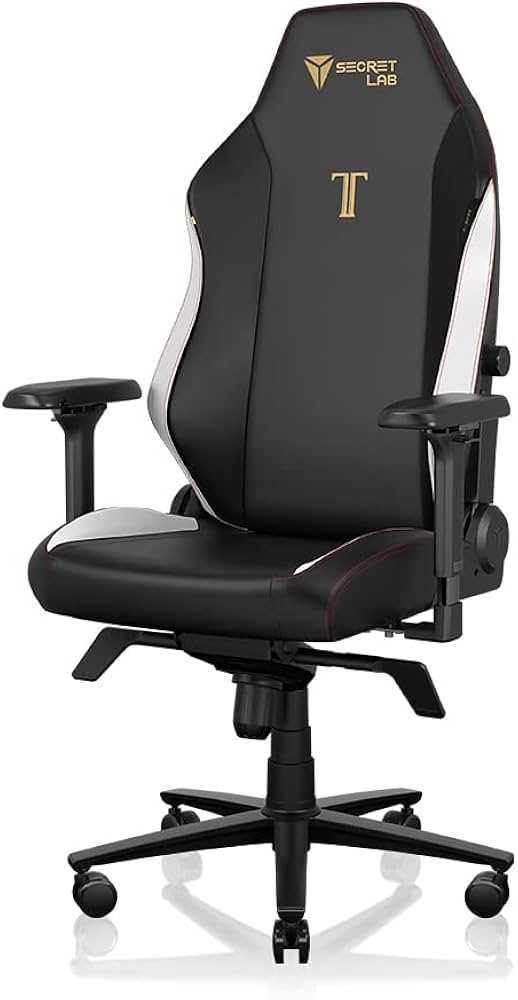
- Best gaming-style chair: Secretlab Titan Evo, $669. The one gaming chair supportive enough to genuinely work in. Note the price.
Which direction fits you
| Your situation | Buy this | Why |
|---|---|---|
| Full-time desk work, 6+ hours | Ergonomic task chair | Adjustability and a seat edge built for long sitting |
| Back pain or existing discomfort | Ergonomic task chair | Adjustable lumbar that fits you, not a fixed bolster |
| Hot room, or you run warm | Mesh ergonomic chair | PU leather traps heat; mesh breathes |
| Mostly gaming, some work | Gaming chair is reasonable | If you genuinely like the firm, contained feel |
| Tight budget | Ergonomic chair | The Sihoo is $300. Gaming chairs are not the cheap option |
| You want it to look like a race car | Gaming chair | An honest reason. Just know what you're trading |
Let's start with the thing nobody says out loud
The gaming chair is not the budget option. People believe it is, and the pricing says otherwise:
| Chair | Price |
|---|---|
| Sihoo Doro C300 (ergonomic) | $299.99 |
| Branch Ergonomic Chair (ergonomic) | $389 |
| Steelcase Series 1 (ergonomic) | $499 |
| Secretlab Titan Evo (gaming) | $669 |
| Herman Miller Aeron (ergonomic) | $799 |
The Titan Evo, which is the good gaming chair, costs $170 more than a Steelcase Series 1 and more than twice the Sihoo. So when someone tells me they're buying a gaming chair to save money, my honest answer is that they aren't saving money. They're spending more, on a shape.
And I want to be fair here: the Titan Evo is genuinely the best of its kind, and it is supportive enough to work in. That's why it's the one I'd pick if you want a gaming chair. But it should win your money on the merits, not because of a myth about the price.
What a racing seat is actually designed for
This is my lane, so let me be direct about it.
The bucket-seat shape, the high wings around your shoulders, the raised bolsters at the sides of the seat: that design comes from motorsport. Its purpose is to hold a driver's body in place against lateral G-forces while a car corners at speed. It is a restraint system.
You are not cornering at your desk.
So in an office, those same features do something quite different from what they do in a car. The shoulder wings narrow the space your shoulders have and tend to nudge them forward. The seat bolsters narrow the usable width of the seat, which is a real problem if you're broader than the designer assumed, or if you want to sit cross-legged, which lots of people do and which is fine. A chair that holds you rigidly in one position is not doing you a favour over eight hours. The best thing a chair can do for your back is let you move.
The four differences that actually matter
Forget the styling. These are the things your body will notice by 4pm.
1. The front edge of the seat. A good task chair has a waterfall edge: the front of the seat curves down and away, so it doesn't press into the underside of your thigh behind the knee. Gaming chairs typically use a flat, firm seat, often with a raised lip at the front. Over a long session that edge presses into the soft tissue behind your knee, and that's the pressure that makes your legs feel heavy and restless. This is the single most underrated difference between the two categories.
2. Lumbar support: adjustable, or fixed. Ergonomic chairs build lumbar support into a back that flexes with you, and let you adjust its height and depth to your spine. Gaming chairs typically use a fixed, aggressive lumbar curve plus a separate strap-on pillow. A pillow is not a bad thing, but a pillow that sits where the manufacturer put it, rather than where your lumbar curve actually is, will push some people into more discomfort than they started with. If your back already hurts, this is the difference that matters most.
3. Breathability. Most gaming chairs are PU leather or a heavy fabric over thick foam. It looks great and it traps heat. Mesh chairs (the Aeron, the Sihoo, the Steelcase's mesh options) let air through. If you run warm, or your room does, you will feel this every single day, and it is the complaint I hear most often from people who bought the leather chair.
4. Recline versus tilt. These sound the same and aren't. A gaming chair reclines, often dramatically, like a lounger. That's a resting position: excellent for watching something, useless for working. A task chair has synchronous tilt, where the back and seat move together, often weight-activated, so the chair follows you as you shift and lean while you work. One is for stopping. The other is for moving while you keep going.
When a gaming chair is genuinely the right call
I'm not anti-gaming-chair, and it would be dishonest to pretend the answer is always a task chair. Buy the gaming chair when:
- You like the firm, contained feel. Some people find soft, flexible task chairs unsupportive and actively prefer a firm seat with high sides. That's a real preference and your body is allowed to have it.
- You genuinely game more than you work in it. For a few hours of gaming, the recline and the cushioning are pleasant, and the ergonomics matter less than they do across a 40-hour week.
- You want a chair that doesn't look like an office. Aesthetics are a legitimate reason to spend your own money. Just be honest that that's what you're buying.
If that's you, buy the Secretlab Titan Evo ($669). It's the one gaming chair with enough real adjustability to survive a working day, and the head-to-head against a value task chair is in Branch Ergonomic Chair vs Secretlab Titan Evo.
What I'd skip
- Skip any chair bought for the look, if you'll sit in it 40 hours a week. You will spend more waking hours in your desk chair than in your bed. The styling wears off in a fortnight; the seat edge does not.
- Skip the cheap racing-style chair. A $150 gaming chair with a bucket seat is the worst of both worlds: the restrictive shape, thin foam that flattens within months, and no meaningful adjustability. If your budget is around $300, buy an ergonomic chair like the Sihoo instead. This is the single most common mistake I see.
- Skip the assumption that a chair fixes posture. No chair does. Movement does. Whatever you buy, get up regularly, and choose a chair that lets you shift position rather than one that locks you into a single "correct" one.
- Skip buying an Aeron without checking the size. It comes in three (A, B, C). It's the benchmark chair, and in the wrong size it's an expensive mistake. Fit beats prestige, always.
Which one is better for back pain?
An ergonomic task chair, and it isn't close, for one specific reason: adjustable lumbar support.
A fixed lumbar curve, however well designed, is built for an average spine. If your lumbar curve doesn't sit where the chair assumes it does, a firm fixed bolster can press in the wrong place and make things worse rather than better. An adjustable lumbar system lets you put the support where your back actually needs it, and that's the whole game.
The honest caveat: if you have real, persistent back pain, a chair is a tool and not a treatment. Talk to a physio or a doctor about what's actually going on, then buy the chair that supports the plan. Our office chairs for back pain guide goes deeper.
The panel: two lenses I don't own
The body and the fit are mine. What these cost over their life, and what they're made of, aren't.
Eran Yorkovsky, Value & Longevity lens: "Look at the warranty, because it's the manufacturer telling you how long it expects the chair to survive. The Steelcase Series 1 and the Herman Miller Aeron both carry 12-year warranties. That is an extraordinary statement of confidence, and it changes the maths entirely: an $799 Aeron across 12 years is about $66 a year. A cheaper chair you replace three times is not the cheaper chair. Check the warranty on whatever gaming chair you're considering and compare it against that number before you decide which one is expensive."
Dr. Yocheved Yorkovsky, Health & Environment lens: "That 'new chair smell' is not a bonus feature. It's volatile organic compounds off-gassing from the foam, the adhesives, and the PU leather, and heavily cushioned synthetic chairs, which is most gaming chairs, tend to have more of it than a mesh frame does. It isn't a reason to panic, and it fades. But unbox a new chair in a ventilated room, air it out for a few days before you spend forty hours a week breathing next to it, and if you're sensitive, a mesh chair simply gives you less of it in the first place."
How we picked
No lab, no theater. Here's the process, so you can weigh it.
- Judged on eight-hour sitting, not on a ten-minute showroom impression, because the things that hurt only start hurting late.
- Compared on the mechanisms that matter: seat edge shape, lumbar adjustability, breathability, and tilt versus recline.
- Prices and warranties verified against manufacturer documentation, and weighed over the life of the chair rather than at the till.
- Graded on PickGrade's three lenses: Value & Longevity, Design & Fit, and Health & Environment.
- We don't fake hands-on testing. PickGrade doesn't run its own lab and never pretends to. My edge is knowing what a body does over a long day of sitting, and what a chair has to do to support it.
Last updated: July 2026.
Still choosing?
Tell the quiz how long you sit, your body size, and your budget, and it points you to a chair that fits you rather than an average of everyone.
- Take the office chair quiz
- Best office chairs for long hours · for back pain · for working from home
- Branch Ergonomic Chair vs Secretlab Titan Evo · Herman Miller vs Steelcase vs Branch vs Secretlab
- Herman Miller Aeron vs Steelcase Series 1
- Office chair fit checklist
- Product pages: Sihoo Doro C300 · Branch Ergonomic · Steelcase Series 1 · Secretlab Titan Evo · Herman Miller Aeron
- See all office chairs
Frequently asked
Which is better, an ergonomic chair or a gaming chair?
For desk work, an ergonomic task chair, and the price argument people use for gaming chairs doesn't hold up. A Secretlab Titan Evo is $669, which is more than a Steelcase Series 1 ($499) and more than twice a Sihoo Doro C300 ($299.99). Ergonomic chairs give you an adjustable lumbar, a waterfall seat edge that doesn't press behind your knees, better breathability, and a synchronous tilt that follows you as you work. Buy a gaming chair because you like the firm, contained feel, not because you think it's cheaper or more supportive.
Are gaming chairs bad for your back?
Not inherently, but the design fights you over a long day. The bucket-seat shape comes from motorsport, where its job is holding a driver in place against cornering forces, and a chair that holds you rigidly in one position is not what your back wants across eight hours. The bigger issue is the fixed lumbar curve: if it doesn't sit where your spine actually curves, it can press in the wrong place. An adjustable lumbar lets you put support where you need it.
What is the real difference between a gaming chair and an ergonomic chair?
Four things your body notices by 4pm. The seat edge: task chairs use a waterfall curve so the seat doesn't press behind your knee; gaming chairs are usually flat and firm with a raised lip. The lumbar: adjustable and built-in versus a fixed curve plus a strap-on pillow. Breathability: mesh versus PU leather over thick foam, which traps heat. And recline versus tilt: a gaming chair reclines like a lounger (a resting position), while a task chair's synchronous tilt follows you while you work.
Is a gaming chair cheaper than an ergonomic chair?
Usually not, and this is the most common misconception here. The Secretlab Titan Evo is $669. The Steelcase Series 1 is $499, the Branch Ergonomic is $389, and the Sihoo Doro C300 is $299.99. Only the Herman Miller Aeron ($799) costs more than the good gaming chair. If your budget is around $300, an ergonomic chair is the better buy, and a cheap $150 racing-style chair gives you the restrictive shape with none of the support.
Which is better for back pain, a gaming chair or an ergonomic chair?
An ergonomic task chair, because of adjustable lumbar support. A fixed lumbar curve is designed for an average spine, and if yours doesn't match, a firm bolster can press in the wrong place and make things worse. Adjustable lumbar lets you put the support where your back actually needs it. One honest caveat: if you have real, persistent back pain, a chair is a tool and not a treatment. Speak to a physio or doctor first, then buy the chair that supports that plan.
Is the Secretlab Titan Evo good for office work?
Yes, genuinely, and it's the one gaming chair I'd trust for a working day. It has enough real adjustability to survive long sessions, which most gaming chairs don't. The trade-offs remain: it's PU leather over foam so it runs warmer than mesh, the bucket shape restricts how you can sit, and at $669 it costs more than several excellent task chairs. Buy it if you want that firm, enveloping feel, with your eyes open about what you're paying for.
What are the benefits of an ergonomic chair over a gaming chair?
Adjustability that fits your body rather than an average one, a waterfall seat edge that relieves pressure behind the knees, mesh breathability if you run warm, a tilt mechanism designed for working rather than reclining, and typically much longer warranties. The Steelcase Series 1 and Herman Miller Aeron both carry 12-year warranties, which is the manufacturer telling you how long it expects the chair to last.
Do I need an expensive chair, or is a cheap one fine?
You don't need to spend Herman Miller money, but the floor matters. The Sihoo Doro C300 at $299.99 gives you self-adaptive lumbar and full breathable mesh, and it's a genuinely good chair. What I'd avoid is the sub-$200 racing-style chair, where thin foam flattens within months and there's no meaningful adjustment. Spread over the years you'll own it, the gap between a bad chair and a good one is small; the gap in how you feel at 5pm is not.
Can I use an ergonomic office chair for gaming?
Absolutely, and plenty of people do. A good task chair supports you just as well while you play as while you work. The only thing you give up is the deep recline some people like for casual sessions, and the enveloping bucket feel. If you spend more hours working than gaming, the task chair is the better all-round choice.