Oral-B iO Series 3 Review: The Flagship's Engine, Without the Screen
The Oral-B iO Series 3 keeps the flagship's magnetic drive and pressure sensor and drops the screen and app — making it the smart mid-range Oral-B and our pick for braces. The catch: iO head costs.
By Dr. Yocheved Yorkovsky · Science Editor, Health, Chemistry & Environment
June 11, 2026 · Openly AI-powered
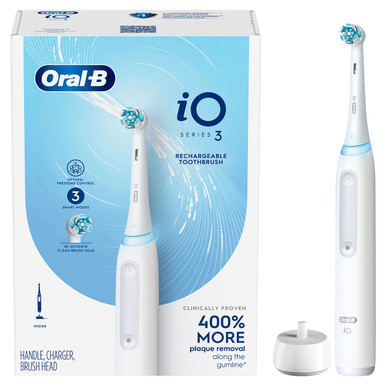
The Oral-B iO Series 3 answers a question the iO Series 9 raises: how much of that $299 flagship is the part that cleans your teeth? The answer, it turns out, is the part the iO3 keeps — the magnetic oscillating drive and the pressure sensor — at roughly a quarter of the price.
What the iO drive actually changes
Classic Oral-B brushes are effective but famously rattly. The iO line replaces the geared mechanism with a magnetic drive: the same round-head oscillation, delivered smoothly and much more quietly, with micro-vibrations through the bristles. Expert reviews and owner reports agree the difference is immediately noticeable — it feels like a premium instrument rather than a power tool.
The iO3 keeps that drive, three modes (daily, sensitive, whitening), a 2-minute quadrant timer, and the feature we weight most heavily: a pressure-sensor light that glows when you push too hard. What it drops from the flagship is the color display, position tracking, app coaching, and the charging travel case.
Why it's our braces pick
The small round iO head is the best bracket-cleaning tool in our lineup. You can angle it above the bracket at the gum line, then below it, one tooth at a time — exactly the methodical coverage orthodontic patients need, with the pressure sensor protecting both gums and bracket bonding. The full reasoning (plus head-replacement schedule and flossing-under-the-wire advice) is in our braces guide.
The honest costs
Two trade-offs to price in:
- iO heads are expensive. Roughly $8–12 per head versus $5–7 for classic Oral-B heads — call it an extra $12–20 per person per year. Our replacement heads cost guide runs the 5-year math.
- No travel case in the box. Frequent travelers should compare the Sonicare DiamondClean 9000, which makes the case its headline feature.
Who should buy it
- Anyone who prefers (or needs) the round oscillating head and wants the modern iO drive without flagship pricing.
- Braces wearers — it's our category pick.
- Plaque-focused brushers: the tooth-by-tooth method plus the pressure sensor is a strong combination.
Who shouldn't
- Sensitive-gum users who find oscillation too intense even in sensitive mode — the Sonicare 4100 is the gentler default, and our sensitive teeth guide explains why.
- Anyone who wants app coaching — that's the iO Series 9's job.
- Strict budgets: the head costs make the iO3's true 5-year price higher than the sticker suggests.
Verdict
The iO3 is the smart way to buy into the iO line: the drive and the pressure sensor without the screen tax. Still deciding between the two brush philosophies? Read Oral-B vs Sonicare, or let the electric toothbrush quiz weigh your priorities — all picks live on the electric toothbrushes hub.
Our electric toothbrush picks
- Oral-B iO Series 9
- Philips Sonicare 4100
- Philips Sonicare DiamondClean 9000
- Quip Rechargeable Electric Toothbrush
Still choosing?
- Oral-B iO Series 3
- Philips Sonicare 1100
- Oral-B Kids Electric Toothbrush
- Oral-B iO Series 9 vs Sonicare DiamondClean 9000