Philips Sonicare 4100 Review: The Rational Default
The Sonicare 4100 is the cheapest reputable brush with the two features that matter — a pressure sensor and a 2-minute timer. Here's what you get, what you skip, and who should spend more.
By Dr. Yocheved Yorkovsky · Science Editor, Health, Chemistry & Environment
June 11, 2026 · Openly AI-powered
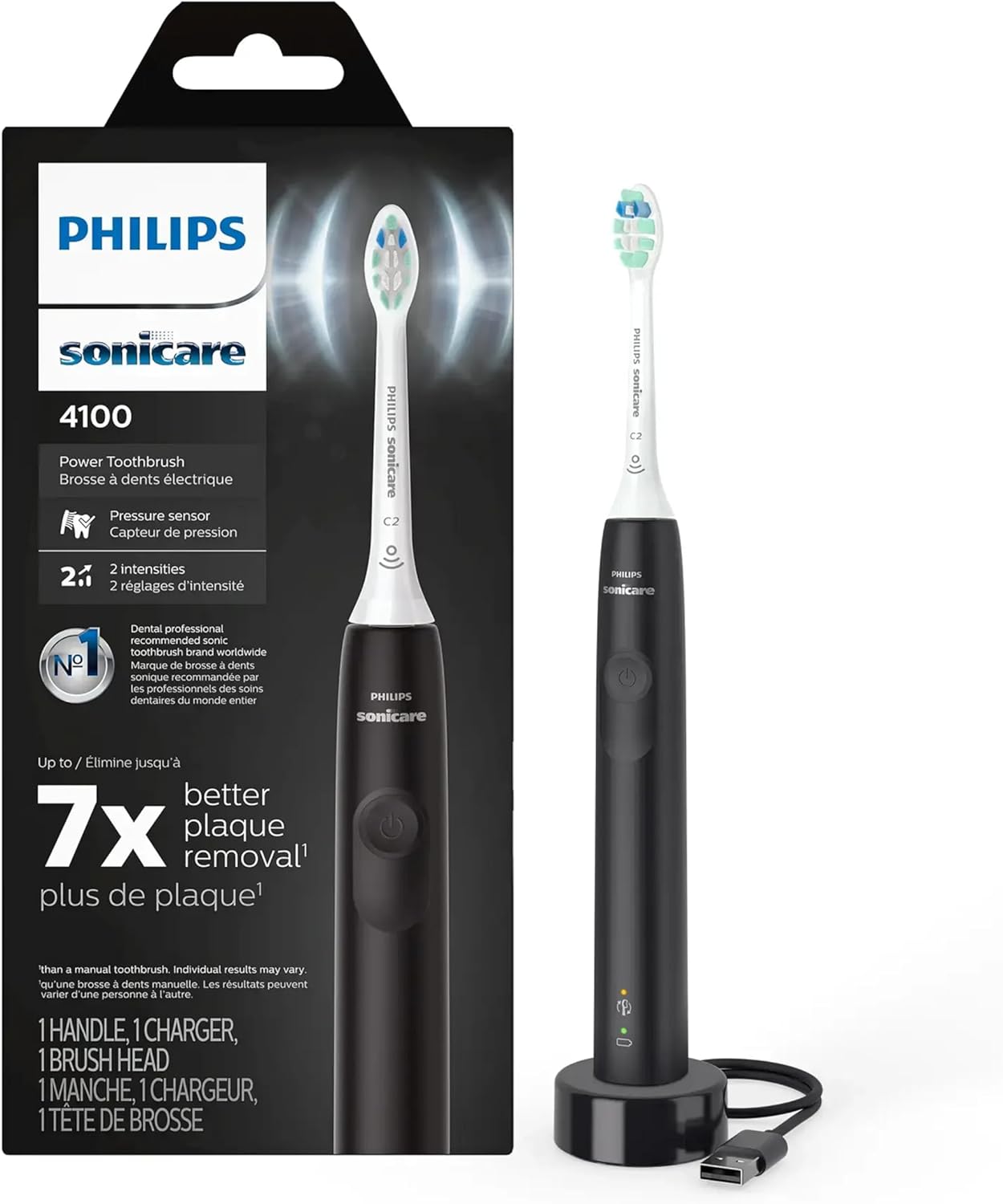
The Philips Sonicare 4100 is our pick for most people because of a simple observation that runs through dental guidance and owner reports alike: the features that actually change outcomes are a 2-minute timer and a pressure sensor, and the 4100 is the cheapest reputable brush that has both.
What you get
- Sonicare's sonic motion — the high-frequency vibration that lets you brush like a manual brush, just far more effectively, and that sensitive-gum users consistently describe as gentle.
- A pressure sensor that dampens vibration the instant you push too hard. You feel the correction; over a few weeks it retrains how hard you brush.
- A 2-minute quadrant timer that pulses every 30 seconds so each quarter of your mouth gets equal time.
- Two intensity levels — start low if your gums are tender, move up when comfortable.
- About 14 days per charge, with a battery light that turns when it's actually time, not as a sales tactic.
What you don't get
No app, no Bluetooth, no modes carousel, no travel case, one head in the box. That's the entire trade against the DiamondClean 9000 and the Oral-B flagships — and for most bathrooms, it's no trade at all. Expert reviews of the premium tiers repeatedly land on the same conclusion: the core clean doesn't change much as the price climbs; the coaching and convenience do.
Living with it
Owner reports over multi-year ownership are strong on reliability, and the handle is slim enough for smaller hands. The realistic ongoing cost is heads: genuine Sonicare heads run roughly $8–11 each, which our replacement head cost guide puts at $32–44 per person per year. Budget for that, buy multi-packs, and the 4100 is about as cheap as good brushing gets.
Who should buy something else
- Braces wearers are better served by a small round oscillating head — see the Oral-B iO Series 3 review and our braces guide.
- Strict sub-$40 budgets can drop to the Sonicare 1100 and lose the pressure sensor — only sensible if you already brush gently.
- Frequent travelers who want a charging case should look at the DiamondClean 9000.
- App-coaching fans should compare the Oral-B iO line in our Oral-B vs Sonicare guide.
Verdict
The Sonicare 4100 is the default answer to "which electric toothbrush should I buy?" — the clinically meaningful features, the gentle motion, and nothing you'll never use. If your situation is more specific (braces, sensitivity, travel, kids), take the electric toothbrush quiz or browse the full lineup on the electric toothbrushes hub.
Our electric toothbrush picks
- Oral-B iO Series 9
- Philips Sonicare 4100
- Philips Sonicare DiamondClean 9000
- Quip Rechargeable Electric Toothbrush
Still choosing?
- Oral-B iO Series 3
- Philips Sonicare 1100
- Oral-B Kids Electric Toothbrush
- Best Electric Toothbrush for Sensitive Teeth and Gums
- Oral-B iO Series 9 vs Sonicare DiamondClean 9000