Buying guide
Best Electric Toothbrush for Sensitive Teeth and Gums
Reviewed by
Michal Zucker · Fitness, Movement & Wellbeing Editor
Sensitive teeth flip the usual buying advice: the best electric toothbrush for you isn't the most powerful one, it's the one that stops you from over-brushing. Here's what actually matters — pressure sensors, gentle modes, and soft heads — and the picks that deliver them.
 Take the toothbrush quiz →
Why sensitive teeth change the recommendation
Most "best electric toothbrush" lists rank by cleaning power. For sensitive teeth and receding gums, that ordering is backwards: the biggest risk to your enamel and gum line is brushing too hard, and the most valuable features are the ones that stop you from doing it.
That reorders the priorities to:
- A pressure sensor — the single most useful feature for sensitive mouths. It warns you (by light, or by damping the motor) the moment you cross from cleaning into scrubbing.
- A gentler motion or lower intensity setting — sonic brushes like Sonicare are frequently described by owners with sensitivity as feeling gentler than oscillating heads, and a second intensity level lets you start soft.
- Soft brush heads — both Oral-B and Philips sell "sensitive" and "gum care" heads that fit their standard handles.
Our picks for sensitive teeth
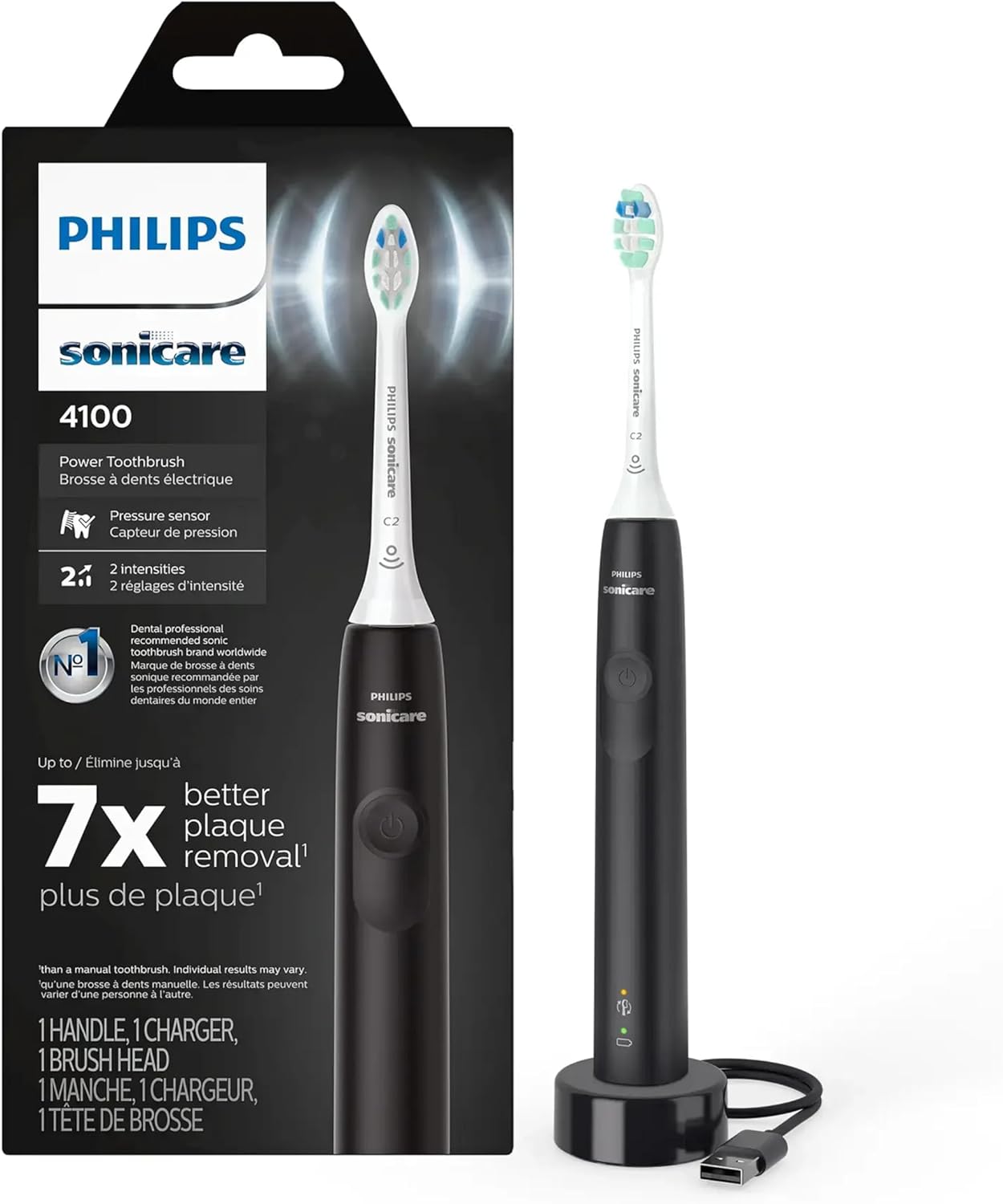
Best overall: Philips Sonicare 4100. It has the exact two features sensitivity demands — a pressure sensor that dampens vibration when you push too hard, and two intensity levels — wrapped in Sonicare's gentle sonic action. Read the full Sonicare 4100 review.
Budget alternative: Philips Sonicare 1100. Same gentle sonic motion and timer for under $40, but no pressure sensor — only pick it if you already brush with a light touch.
If you prefer a round head: Oral-B iO Series 3. The iO magnetic drive is noticeably smoother than older oscillating Oral-B models, and the pressure-sensor light is easy to see mid-brush.
Still torn between brush styles? The Oral-B vs Sonicare guide covers how the two motions feel on tender gums.
Technique matters as much as hardware
Whatever you buy: use the soft or sensitive head, let the brush do the work without scrubbing, and hold it at the gum line rather than sawing across it. If sensitivity is new, getting worse, or concentrated in one spot, that's a question for your dentist — a toothbrush can protect enamel you still have, but it can't diagnose why it hurts.
The fastest way to a personal pick is the electric toothbrush quiz — it asks about sensitivity, features, head costs, and budget before recommending a match.
Our electric toothbrush picks
- Oral-B iO Series 9
- Philips Sonicare 4100
- Philips Sonicare DiamondClean 9000
- Quip Rechargeable Electric Toothbrush
Still choosing?
- Oral-B iO Series 3
- Philips Sonicare 1100
- Oral-B Kids Electric Toothbrush
- Best Electric Toothbrush for Braces
- Electric Toothbrush Replacement Heads: The Real Cost of Ownership
- Oral-B iO Series 9 vs Sonicare DiamondClean 9000
Still choosing?
Frequently asked
Is sonic or oscillating better for sensitive teeth?
Many people with sensitive gums find sonic brushes like Sonicare feel gentler, but a smooth oscillating brush like the Oral-B iO with a sensitive mode also works well. The pressure sensor matters more than the motion type.
Can I use an electric toothbrush with receding gums?
Yes, when used with a soft head and light pressure. The built-in timer and pressure sensor typically lead to gentler, more consistent brushing than scrubbing with a manual brush.
Do I really need a pressure sensor?
It is the most valuable feature for sensitive mouths. Over-brushing is a major contributor to gum recession and enamel wear, and a sensor corrects it in real time.
When should I see a dentist about sensitivity?
Persistent or worsening sensitivity can signal recession, enamel erosion, or a cracked tooth. A gentler brush helps protect what you have, but a dentist should evaluate the cause.